
A Marine Navigation Beacon Tower is an aid to navigation that marks hazards, channel edges, harbor entrances, and other critical waterway points with a fixed visual reference. Understanding the main components of a Marine Beacon Tower helps explain how the structure signals danger, supports vessel routing, and remains readable in coastal conditions. This guide covers the marine beacon tower explained from a structural, operational, and selection standpoint, with attention to site conditions, specification differences, and maintenance needs.
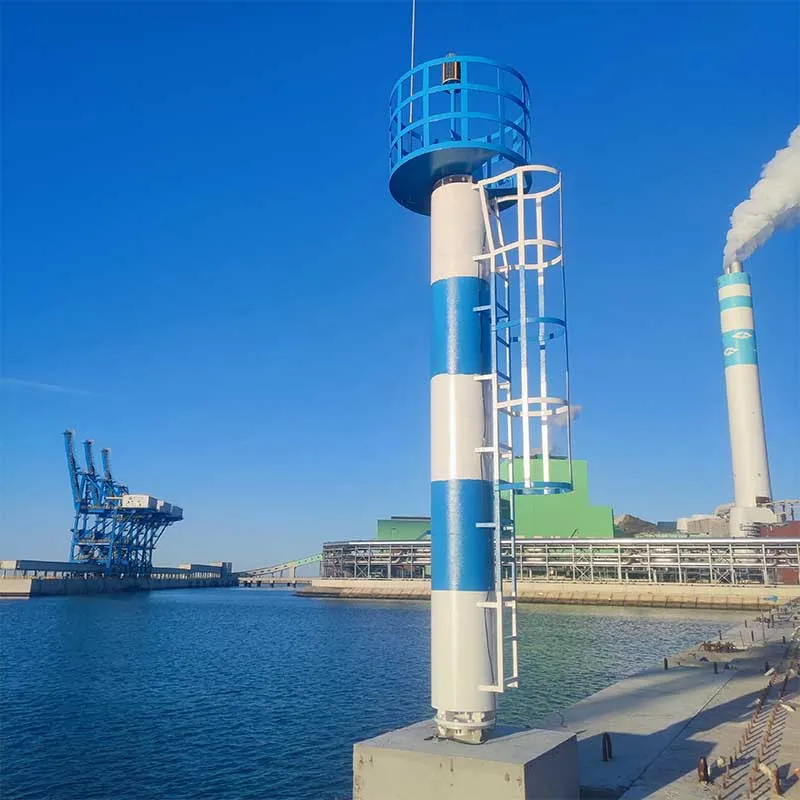
A marine beacon tower is a fixed aids to navigation structure that combines a support tower, a lantern or light unit, power supply, and control equipment to provide a visible signal at sea. In practical terms, the main components of a marine beacon tower are the parts that keep the light elevated, powered, protected, and visible under changing weather and visibility conditions. For harbor marking, breakwater protection, and offshore hazard indication, the structure must remain consistent in alignment and output.
Main components of a marine beacon tower:
Tower structure: steel, aluminum, or reinforced concrete support frame.
Beacon lamp assembly: light source, optics, and housing.
Power system: solar panel, battery bank, or grid connection.
Control cabinet: charge controller, relay, timer, and protection devices.
Foundation and anchoring: base that resists wind, wave, and corrosion loads.
Marking elements: dayboard, color pattern, or reflective surfaces.
Access and maintenance hardware: ladder, platform, inspection points, and fasteners.
These parts form the functional core of the marine signaling equipment used for coastal and harbor marking. When buyers compare different models, they are really comparing structure height, light range, power autonomy, and maintenance access. That is why a marine beacon tower guide should always begin with component-level inspection rather than only the exterior appearance.
A beacon tower works by elevating a light source above the waterline so the signal remains visible over distance and above wave splash. The tower increases the line-of-sight range, while the optical unit shapes the beam into a usable signal for mariners approaching from different angles. In many installations, the power system runs the beacon continuously or on a controlled flash cycle, depending on the marking requirement.
The signal output is not just about brightness. It also depends on focal height, beam pattern, flashing sequence, and local backdrop conditions such as harbor lights, shoreline clutter, and sea state. In marine beacon tower explained terms, the tower is a visual reference system that combines geometry, illumination, and identification.
Power is generated or stored by the electrical system.
The control cabinet regulates current and timing.
The beacon lamp assembly produces a defined light signal.
The tower height preserves visibility above obstacles.
Markings and colors help daytime identification.
The foundation keeps the structure fixed under environmental loads.
This is why marine beacon towers are often selected for locations where a buoy alone is not sufficient. A buoy can drift, tilt, or become obscured by waves, while a fixed tower remains in a known position. For entrances, shoals, and breakwater tips, fixed positioning is one of the primary operational advantages.
The easiest way to understand the parts of a marine beacon tower is to separate them by function. Structural parts hold the system in place, optical parts create the signal, electrical parts power the signal, and protection parts keep the asset operating in saltwater conditions. This division also helps teams plan inspections and replacement cycles.
The tower body may use tubular steel, lattice steel, aluminum sections, or concrete-supported frames. Material choice affects load capacity, corrosion resistance, fabrication cost, and installation logistics. For coastal sites with spray and wind exposure, material selection is one of the first specification decisions.
The beacon lamp assembly may include an LED light source, lens, reflector, and optical shielding. The optical system determines how the light is distributed and whether the signal is visible as a directional, omnidirectional, or sector-marking aid. For channel guidance, sector lights are used in some installations to define safe water more precisely.
Power options commonly include solar panels with batteries, AC grid power, or hybrid systems. The controller manages charging, switching, low-voltage protection, and operating schedules. In remote areas, autonomy time and battery reserve are critical because maintenance access may be limited.
The foundation may be a concrete block, pile-supported base, or bolted marine-grade platform. Anchoring must resist uplift, overturning, vibration, and corrosion at connection points. Fasteners, brackets, and mounting plates need material compatibility to reduce galvanic corrosion.
Daymarks, paint colors, reflectors, and sign panels help the structure function in daylight. These are especially important for a navigation light system for coastal hazards because many vessels identify structures visually before they identify them by chart. The daytime marking scheme must match the local buoyage and aid-to-navigation convention.
When evaluating a marine beacon tower comparison, buyers should focus on measurable specification differences instead of appearance alone. The same external shape can hide very different performance levels in brightness, autonomy, elevation, and environmental resistance. For professional procurement, three criteria matter most: operating environment, optical performance, and maintenance burden.
Operating environment: harbor entrance, offshore exposure, or breakwater installation each creates different wind, wave, and corrosion demands.
Optical performance: beam range, flash pattern, and focal height affect visibility and identification accuracy.
Maintenance burden: access design, battery replacement interval, and corrosion protection affect long-term service cost.
These criteria are essential because a tower that works well at a protected harbor entrance may not be suitable offshore. Likewise, a model designed for a small port may not meet the visibility and reserve-power demands of a wide channel. A practical marine beacon tower maintenance checklist should be tied to the site, not just to the equipment catalog.
Not all marine beacon towers are built for the same duty. Some are optimized for harbor entrances with moderate exposure, while others are designed for offshore visibility or breakwater edge marking under harsher conditions. The difference is usually found in height, material grade, mounting style, and power architecture.
| Tower Type | Typical Use Case | Structural Style | Power Setup | Maintenance Profile |
|---|---|---|---|---|
| Harbor entrance beacon tower | Channel entry, quay approach | Medium-height fixed tower | Solar or grid | Moderate access frequency |
| Breakwater beacon tower | Breakwater tip, turning basin edge | Reinforced corrosion-protected frame | Solar with battery backup | Higher inspection priority |
| Offshore beacon tower | Shoals, isolated hazards, exposed waters | Heavy-duty structure with stronger anchoring | Hybrid or larger автономous solar system | Lower access frequency, higher service complexity |
| Small port beacon tower | Small harbors, local navigation guidance | Compact tower | Solar compact system | Lower installation cost, simpler servicing |
These model differences matter because the wrong specification can create hidden costs. A compact unit may reduce first purchase cost, but if it requires frequent battery replacement or cannot maintain signal continuity during low-sun periods, total cost of ownership rises. That is why marine beacon tower pricing should always be compared together with duty cycle, access conditions, and service interval.
A beacon tower is fixed, elevated, and usually smaller in scale than a lighthouse, but more permanent than a buoy. A buoy floats and may shift with current, tide, or weather, while a beacon tower is permanently anchored and can provide a more stable reference point. A lighthouse typically serves a broader coastal or seaward navigation role, often with larger optics, longer range, and greater infrastructure support.
A lantern-only aid usually refers to the light unit itself without the larger structural and site-marking context. By contrast, a marine beacon tower includes the physical structure, power system, mounting, and often daylight markings. This makes it better suited to specific hazard marking where positional consistency matters.
For buyers asking marine beacon tower vs lighthouse difference, the key point is scale and mission. A lighthouse is often a long-range, multi-function coastal landmark, while a beacon tower is a targeted aid for local navigation control. For a marine beacon tower for small ports, the tower can provide adequate marking without the construction cost or footprint of a lighthouse.
A structured inspection begins with the tower base and ends with the light output. The most efficient approach is to inspect the system in the same order that failures would affect navigation safety. That means checking foundation, structure, electrical integrity, optical output, and visibility markings.
Check foundation cracks, corrosion, and bolt torque.
Inspect tower body for deformation, rust, or paint loss.
Verify the lamp assembly, lens condition, and flash pattern.
Review battery state, solar panel cleanliness, or grid supply integrity.
Test controller alarms, wiring insulation, and grounding.
Confirm daymark visibility and reflective surfaces.
Record findings in a maintenance log with date and location.
A practical inspection program should be repeated on a scheduled basis and after major weather events. Salt spray, ultraviolet exposure, and vibration can degrade fasteners and coatings earlier than expected. In coastal service, corrosion prevention is not optional; it is one of the main cost drivers in the lifecycle of the asset.
A marine beacon tower maintenance checklist should reflect both routine service and environmental risk. The best schedule depends on exposure class, power architecture, and whether the installation is accessible by land or boat. For example, a breakwater unit may need more frequent visual checks than a sheltered harbor marker because wave impact and spray accelerate wear.
Confirm lamp operation and flash cycle.
Check battery voltage and charging status.
Clean solar panels and optical surfaces.
Inspect for loose fasteners and corrosion spots.
Verify that markings remain legible from approach angles.
Measure structural alignment and foundation condition.
Test electrical protection and grounding.
Review controller logs and alarm history.
Replace damaged seals, gaskets, or cable glands.
Recoat or treat corrosion-prone areas if required.
Conduct full structural inspection.
Replace batteries if capacity has dropped below operational need.
Validate optical range and beacon identification accuracy.
Review whether the site still matches the original design assumptions.
This checklist helps control both failure risk and service cost. A tower that is inexpensive to purchase but expensive to inspect can become a poor choice over time. That is why buyers should assess maintenance access and replacement frequency alongside the initial quote.
The right tower depends on where it will be installed. A harbor entrance tower is usually selected for its ability to define the entrance line and guide traffic into a controlled channel. Offshore installations need stronger structural margins and longer autonomous power duration because access is harder and environmental forces are more severe.
For breakwater sites, the structure often serves as a close-range warning and turning reference. Here, visibility in spray, wave splash, and low-angle sunlight becomes more important than extreme range. For that reason, the best marine beacon tower examples for breakwaters often include higher corrosion resistance and simplified access hardware.
| Site Condition | Priority | Recommended Tower Features | Common Risk |
|---|---|---|---|
| Harbor entrance | Accurate marking and daytime identification | Medium height, sector or flashing light, clear daymarks | Misalignment with channel axis |
| Offshore hazard | Long autonomous operation | Higher focal height, larger battery reserve, stronger anchoring | Access delay during service |
| Breakwater | Spray resistance and close-range visibility | Corrosion protection, stable base, compact maintenance layout | Splash damage and coating wear |
| Small port | Cost control and simple upkeep | Compact tower, solar power, straightforward access | Under-specification for future traffic growth |
This selection logic supports better planning than a generic catalog choice. It also answers the practical question of how to choose a marine beacon tower without relying on marketing language. The right answer depends on traffic volume, exposure level, service access, and whether the structure must work as a primary or secondary aid.
A useful marine beacon tower comparison should include structural specification, optical range, power autonomy, corrosion protection, and maintenance interval. These variables affect both compliance and operating cost. Buyers often focus only on initial price, but the more important comparison is the sum of installation, service, and replacement costs over the life of the tower.
When comparing suppliers or models, ask for the following data:
Tower height and focal height.
Material grade and coating system.
Light type, flash pattern, and visibility range.
Battery capacity and solar input sizing.
Estimated service interval under local conditions.
Foundation and anchoring requirements.
Replacement lead time for critical components.
For procurement teams, this is also the best way to judge whether the tower is suitable for present needs and future traffic growth. A small port may start with a compact unit, but if vessel size or night traffic increases, the required optical and structural specification may change. That is why the marine beacon tower review process should include site plans and service projections, not just product brochures.
HUAZHONG supplies marine beacon tower solutions designed around navigation marking, structural durability, and practical maintenance access. In a procurement setting, the most useful questions are not only what the tower looks like, but what focal height, power setup, and corrosion protection it offers for the intended site. The company’s product category aligns with navigation tower components, fixed coastal marking, and harbor safety use cases.
For buyers reviewing manufacturer capability, the key evaluation points are specification transparency, parts replacement support, and the fit between the tower design and local waterway conditions. If the application is a harbor entrance, the system should prioritize stable visual identification. If the application is offshore or on a breakwater, structural reserve and service interval become more important than compact size.
The best marine beacon towers are the ones that match the site, not the ones with the largest headline specification. For a small port, the best choice may be a compact solar-powered unit with simple maintenance access. For offshore hazards, the best choice may be a heavier structure with a larger battery reserve and higher corrosion protection.
The selection should also reflect local traffic density and weather exposure. If the approach channel is narrow and well controlled, a shorter tower with a clear flash pattern may be enough. If the installation must be seen at longer distance or through cluttered shore lighting, higher focal height and stronger optical control are more important.
In practical terms, the best units are the ones that reduce three risks: visibility failure, service delay, and unnecessary lifecycle cost. That is why a technical review should compare not only the beacon lamp assembly, but also the foundation, controller, access design, and replacement logistics. For many buyers, the most suitable solution is a tower specification tailored to the site rather than a standard catalog model.
A professional marine beacon tower guide should start with the mission of the aid to navigation and end with operating cost. The structure should be specified to match the local hazard, the vessel approach angle, and the maintenance route. A tower that is easy to install but hard to service can create long-term operational strain.
Confirm the marking purpose: hazard, channel, entrance, or breakwater.
Measure required visibility range and focal height.
Identify the exposure class: sheltered, semi-exposed, or offshore.
Determine available power: solar, grid, or hybrid.
Review service access and replacement time for major parts.
Request structural and corrosion specifications in writing.
This checklist supports more accurate purchasing decisions and reduces the chance of under-specification. It also makes it easier to compare proposals from different suppliers on the same basis. In the marine aids to navigation field, clarity in specification is often the difference between predictable operation and recurring service issues.
By understanding the main components of a marine beacon tower, you can better evaluate its function, maintenance needs, and role in marine navigation. The core system includes the structure, beacon lamp assembly, power supply, control cabinet, foundation, and identification markings. When these elements are matched to the site, the tower can serve as a reliable aid to navigation for harbor entrances, breakwaters, and offshore hazards.
For buyers, the most practical approach is to compare tower types by site condition, power architecture, and maintenance access rather than by appearance alone. A strong marine beacon tower comparison should also account for total cost of ownership, not just initial price. If your project requires a small-port marker, an offshore hazard signal, or a breakwater reference, start with the site, define the visibility target, and then select the tower specification that fits the duty.
Previous: Types of Marine Beacon Towers Used in Ports and Waterways
Next: How to Choose the Right Marine Beacon Tower for Coastal Navigation
Copyright:@2020-2021

Comments Please sign in or sign up to post.
0
0 of 500 characters used