
Choosing the right Marine Beacon Tower for coastal navigation depends on visibility range, installation environment, power source, maintenance needs, and compliance requirements. This guide explains the key factors to evaluate so you can select a beacon tower that improves safety and performs reliably in coastal conditions. If you are comparing an aid to navigation for coastal waters against other coastal marking equipment, the right decision starts with the operating area, not the product brochure. The goal is to match the tower to the traffic density, weather exposure, and supervision level of the site.
Key Takeaways
The best marine beacon tower matches visibility range, site exposure, and maintenance capacity.
Rotating beacons suit some routes, but fixed-light systems often reduce mechanical complexity.
Coastal navigation buyers should compare power source, installation method, and service intervals.
Marine aids to navigation include buoys, marks, lights, and towers with different functions.
Total cost of ownership often depends more on maintenance access than on purchase price.
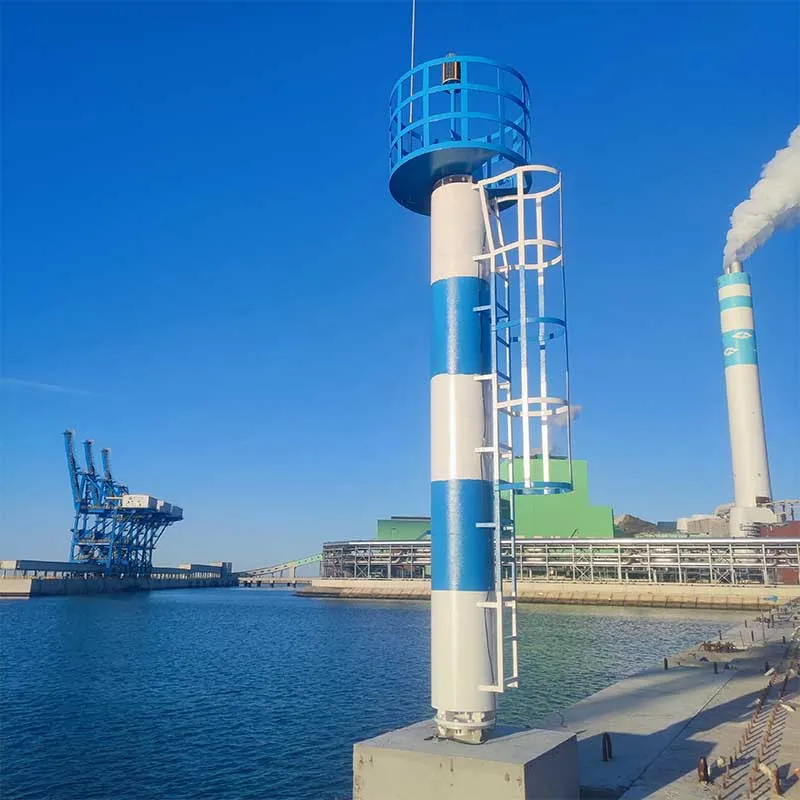
A marine beacon tower is a fixed navigation aid tower used to mark routes, hazards, channels, or reference points in coastal and harbor waters. In practical terms, it is part of a broader marine lighting system that helps vessels identify position and direction in low visibility, nighttime conditions, or complex shorelines. For many ports and small harbors, it serves as a stable signal point when floating aids are less suitable. In the context of How to Choose the Right Marine Beacon Tower for Coastal Navigation, the tower is not just a light source; it is a structural and operational asset.
Marine aids to navigation are usually grouped into buoys, marks, lights, and beacons. Buoys float and can shift with currents, marks are fixed references, lights provide visual signaling, and beacons combine location certainty with optical guidance. Understanding those categories matters because a tower is not always the correct answer if the channel is narrow, the seabed is unstable, or the hazard moves seasonally. A fixed tower is typically preferred where alignment, permanence, and repeat visibility matter more than mobility.
How does a marine beacon tower work? The tower places a light, optic, or signal beacon at a known elevation so the visible horizon increases with height. In practice, the higher the light is mounted, the farther it can be detected under suitable atmospheric conditions. The tower may also use a rotating light pattern, flash sequence, or sector arrangement to distinguish it from nearby aids. That operational logic is why tower height, light characteristics, and mounting angle all affect performance.
The selection process should begin with a measurable visibility target. For example, if a harbor entrance needs recognition before vessels reach the turning basin, the beacon must be visible at a distance that exceeds the stopping or maneuvering margin of the approach route. In many procurement cases, the key variables are not style or appearance but luminous performance, elevation, and reliability under salt spray, wind, and vibration. That is why marine beacon tower selection guide decisions should prioritize operating data first and aesthetics last.
A tower used for a harbor entrance, a shoal warning point, and a channel alignment marker do not have the same requirements. A small harbor may need a short-range fixed beacon, while exposed coastal routes may require a stronger optical signal and higher mounting position. If you cannot define the task, you cannot set the correct beam pattern, height, or service interval. This is the first filter in any marine beacon tower guide.
You should document the vessel types using the area, the maximum approach speed, nighttime traffic frequency, and seasonal visibility conditions. A fishing harbor with low-speed local traffic can tolerate different specifications than a commercial route with larger vessels and longer approach distances. The result should be a written performance target, not a general preference. That target will shape the rest of the specification.
This is where marine beacon tower comparison becomes practical. A fixed beacon tower uses fewer moving parts than a rotating beacon, which may reduce mechanical maintenance and simplify routine checks. A rotating beacon can be useful when the route requires a clear directional cue, but it also introduces bearing alignment, motor wear, and periodic calibration needs. For many coastal sites, the right answer is the simplest system that still provides enough visibility and positional clarity.
If the site already has other aids to navigation nearby, the tower should not create signal confusion. Light color, flash pattern, and interval must distinguish it from neighboring buoys, marks, or shore lights. In dense coastal corridors, a rotating beacon may be useful for identification, but in simpler layouts a fixed-sector solution often lowers operational complexity. The best option depends on whether the tower must identify a route, warn of danger, or mark a boundary.
Visibility range is one of the most important selection criteria because it defines when the vessel can detect the aid. A higher mounting point generally increases the horizon distance, while higher luminous intensity improves recognition under haze or background clutter. However, more output does not automatically mean better performance if the beam is misaligned or the site is affected by frequent fog. The tower must be chosen as a system, not as a lamp attached to a pole.
When reviewing specifications, ask for the nominal range, beam angle, flash cycle, and photometric data. If the supplier provides candela values, compare them against the expected ambient conditions and approach speed of the site. For short-range harbor use, the requirement may be much lower than for open coast marking, but the light still needs enough contrast against shoreline and vessel lighting. This is why marine beacon tower for coastal navigation must be selected by use case, not by catalog headline.
Power choice affects uptime, installation cost, and maintenance frequency. Grid power can support stable operation where cable routing is practical, while solar systems can reduce dependence on shoreline infrastructure in remote or lightly serviced areas. Battery autonomy matters because weather, dust, and seasonal sunlight variation can change real operating hours. In procurement terms, the power system is not a side detail; it is a major part of reliability.
Ask whether the tower uses AC, DC, solar, or hybrid power. Then confirm battery capacity, charging logic, and expected autonomy under low-sun conditions. If the location is exposed and difficult to access, the maintenance cost of battery replacement may matter more than the initial price. A better power decision can reduce service visits over a multi-year period.
Maintenance planning is often the difference between a safe aid and a recurring field problem. Towers installed on breakwaters, remote reefs, or narrow jetties may require vessel access, ladder access, or specialized lifting equipment. If every inspection requires a dedicated service boat, the total cost of ownership rises even when the purchase price looks favorable. That is why procurement teams should evaluate maintenance access during site survey, not after installation.
A practical maintenance review should include cleaning frequency, corrosion inspection, lens replacement, electrical testing, and anchor or base inspection. The more exposed the site, the shorter the likely inspection interval should be. Salt fog, UV exposure, and wind loading all increase wear on gaskets, fasteners, coatings, and brackets. The right tower is the one your team can actually maintain on schedule.
Coastal environments impose continuous stress on metal, coatings, seals, and electronics. The best material choice depends on corrosion exposure, wave splash, and wind load rather than on generic product claims. Stainless steel, marine-grade coatings, and sealed housings are common considerations, but the decisive point is whether the structure can maintain performance after repeated saltwater exposure. Environmental suitability is one of the main differences between a tower that lasts through a service cycle and one that requires frequent repair.
If your site faces severe spray or storm conditions, request information on corrosion protection, ingress protection, and structural load assumptions. Buyers should also ask whether the assembly has been tested for vibration and thermal cycling, because coastal equipment can fail at connection points before the light itself fails. A tower that looks adequate on paper may still be unsuitable if its hardware is not specified for the site’s wind and salt profile. That is a core part of marine beacon tower best practices.
A marine aid to navigation is only useful if users can interpret it consistently. That means the tower should fit local marking conventions, chart references, and operational rules set by port authorities or maritime agencies. The exact requirements vary by country and port zone, but the principle is constant: the beacon must communicate a clear and unambiguous message. If it does not match the local aid system, it can create confusion rather than safety.
Before purchase, confirm whether the tower needs coordination with buoyage, channel markers, or coastal signal standards. Some sites require color, rhythm, or sector definitions that align with the broader system of buoys, marks, lights, and beacons. This is particularly important for sites near harbor entrances where multiple aids are visible at once. The right tower should integrate into the full marking plan, not sit apart from it.
A marine beacon tower works by placing a light or signal at a known fixed location and at an elevation that increases its visible range. The tower may include a lantern, lens, power unit, control cabinet, battery, and support structure. In some installations, the system is paired with a rotating beacon head or sectoring optics so mariners can identify direction or route position. The operating result is simple: the vessel sees a controlled signal, associates it with a charted location, and adjusts course accordingly.
The system’s effectiveness depends on three variables: elevation, luminous output, and signal distinctiveness. A low tower with a strong lamp may still underperform if shoreline clutter reduces contrast, while a taller tower can extend recognition distance even with moderate output. In rough weather, the practical range may fall because fog, spray, or glare changes the light path. That is why how does a marine beacon tower work cannot be answered with lamp power alone; the complete system matters.
A rotating beacon is best understood as one option in a wider signaling toolbox. Compared with a fixed-light tower, it can provide a stronger directional cue, especially where routes need visual confirmation from a distance. Compared with buoys, it offers a fixed reference point that does not drift with current or wave action. But the added motion also adds parts that need inspection, alignment, and periodic service.
Below is a practical comparison for coastal buyers evaluating marine beacon tower comparison options.
| Option | Main Function | Best Use Case | Typical Tradeoff |
|---|---|---|---|
| Fixed marine beacon tower | Steady fixed reference light | Small harbors, channel edges, routine marking | Less directional emphasis |
| Rotating beacon tower | Directional visual cue | Route identification, approach alignment | More moving parts and service needs |
| Buoy | Floating hazard or channel marker | Temporary or flexible marking zones | Can shift with sea state |
| Lighted mark | Fixed visual marker | Simple shoreline or boundary marking | Limited height and visibility range |
| Signal beacon on structure | Area-specific warning or route signal | Ports and coastal control points | Requires structure and power support |
A rotating beacon is not automatically better because it spins. In places with low traffic complexity, a fixed tower may be easier to inspect and cheaper to maintain over time. In places with long approach distances and multiple visual references, rotation or flash pattern differentiation may add value. The right selection comes from use case, not from assuming one signaling style is universally superior.
For small harbor navigation, the best solution is usually the one that can be installed, understood, and serviced with the least operational complexity. In many cases, a compact fixed marine beacon tower with a clear flash pattern is enough to mark entrance points, turning areas, or shallow sections. Small harbors often have limited maintenance budgets, limited access equipment, and local crews who must handle routine care. That makes simplicity and repeatability more important than elaborate signaling.
If the harbor handles mostly local craft at moderate speed, the tower should emphasize clarity, not range beyond need. Overspecifying the light source can increase cost without improving safety if the visual environment is already narrow and controlled. On the other hand, an underspecified tower can create late recognition and poor approach timing. The best fit is the one that aligns with the actual vessel mix, not with theoretical maximum traffic.
Marine beacon tower pricing should be evaluated as a lifecycle number, not only as a purchase figure. The initial quote usually covers structure, light, control equipment, and sometimes installation, but the real budget also includes transport, foundation work, electrical connection, battery replacement, cleaning, and periodic inspection. A lower initial price can become more expensive if the tower requires frequent service trips or has short battery life. Total cost of ownership is the more useful metric.
When comparing quotes, separate capital cost from operating cost. Ask for the expected service interval, spare parts list, corrosion protection method, and required maintenance labor. Also confirm whether commissioning, testing, and site adjustment are included in the offer. A transparent quote should let you estimate at least 3 cost layers: acquisition, installation, and multi-year upkeep.
HUAZHONG is relevant when buyers need marine equipment context, product structure understanding, and procurement support for coastal applications. In a selection process, the important question is not only what the tower does, but whether the supplier can explain specification differences, environmental constraints, and service implications in a way that supports procurement decisions. That is especially important for projects where installation timing, access conditions, and compliance checks affect delivery risk. For buyers comparing vendors, supplier communication quality can be as important as the hardware specification.
A structured supplier review should examine product scope, application fit, technical documentation, and after-sales support. For marine navigation equipment, the ability to match a tower configuration to the site is part of the value proposition. This matters most where the buyer is balancing quality compliance, delivery risk management, and lifetime operating cost. In that sense, the supplier is part of the selection outcome, not separate from it.
Use the following checklist when comparing models, suppliers, and installation plans. It is designed to reduce the risk of selecting a tower that looks suitable but fails under field conditions. Each step should be checked against your site survey and operating plan. The sequence below works well for both public-sector and private harbor projects.
Define the navigation function: entrance marking, hazard warning, alignment, or boundary reference.
Set the minimum visibility range based on vessel speed and approach distance.
Choose the signal type: fixed light, rotating beacon, or flash pattern.
Confirm power source availability and backup duration.
Check corrosion resistance, sealing, and structural load capacity.
Estimate maintenance access frequency and service labor.
Verify compliance with local marking rules and chart integration.
Compare total cost of ownership, not only purchase price.
This checklist is useful because it forces a ranking order. If a tower fails on visibility or compliance, a lower price does not fix that problem. If a tower is impossible to service, the operating budget can exceed the original purchase savings. The checklist keeps the discussion grounded in measurable requirements.
The financial case for a suitable beacon tower is based on avoided incidents, fewer service trips, and longer equipment life. If a tower reduces misidentification near an entrance or shoal, the economic value can exceed the hardware cost many times over, but only if the tower actually fits the site. Buyers should estimate savings from lower maintenance frequency, reduced vessel delay, and fewer emergency repairs. The most defensible approach is to compare annual operating cost rather than only capital expenditure.
A useful procurement model is to compare two options over a 5-year period. Option A may have a lower purchase price but higher inspection frequency, while Option B may cost more initially but require fewer visits and less battery replacement. If each maintenance trip requires vessel access, crew time, and downtime, that recurring cost can dominate the budget. This is why marine beacon tower pricing should always be reviewed with installation and maintenance assumptions attached.
A marine beacon tower is worth it when the site needs a fixed, reliable, and chartable reference that remains visible under the expected operating conditions. It is especially useful where buoy drift, wave movement, or seasonal repositioning would create uncertainty. The tower is also a strong option where the operator can support periodic inspections and wants predictable signal placement. In short, the investment makes sense when the site demands permanence and the maintenance plan can sustain it.
It may be less suitable when the area is highly temporary, access is extremely difficult, or the marking task changes often. In those cases, a different aid-to-navigation solution may reduce complexity and cost. The key is to match the device to the operational pattern, not to choose the most visible option by default. That is the practical answer to is a marine beacon tower worth it.
How to Choose the Right Marine Beacon Tower for Coastal Navigation comes down to a disciplined comparison of use case, visibility range, power source, maintenance access, and compliance fit. The best marine beacon tower is the one that matches your coastal operating conditions, visibility needs, and maintenance budget. If you are evaluating a marine beacon tower selection guide, begin with the navigation problem, then compare fixed or rotating signal options, and only then compare price. A lower quote is useful only if the tower can be installed, maintained, and understood by mariners in the field.
For buyers, the next step is to build a site-specific checklist and request supplier data that includes range, power autonomy, corrosion protection, and service intervals. That approach reduces selection risk and makes procurement easier to defend. If your project involves small harbor navigation, exposed coastal marking, or mixed aid-to-navigation layouts, the tower should be chosen as part of the full marking plan. In practical terms, the right answer is the system that performs consistently with the least operational burden.
Previous: None.
Next: Marine Beacon Tower vs Lighthouse: What Is the Difference?
Copyright:@2020-2021

Comments Please sign in or sign up to post.
0
0 of 500 characters used