
Marine Beacon Tower vs Lighthouse: What Is the Difference? is a practical question for port operators, coastal engineers, and maritime planners who need to identify the right marine navigation aid for a specific site. A lighthouse is a fixed shore-based structure built to mark hazards or guide vessel traffic, while a beacon is a broader aid-to-navigation term that can include towers, posts, or lighted marks used for directional reference. In this guide, you will see how a marine beacon tower differs from a lighthouse, how each is classified, and how to choose between them for harbor, coastal, and offshore use.
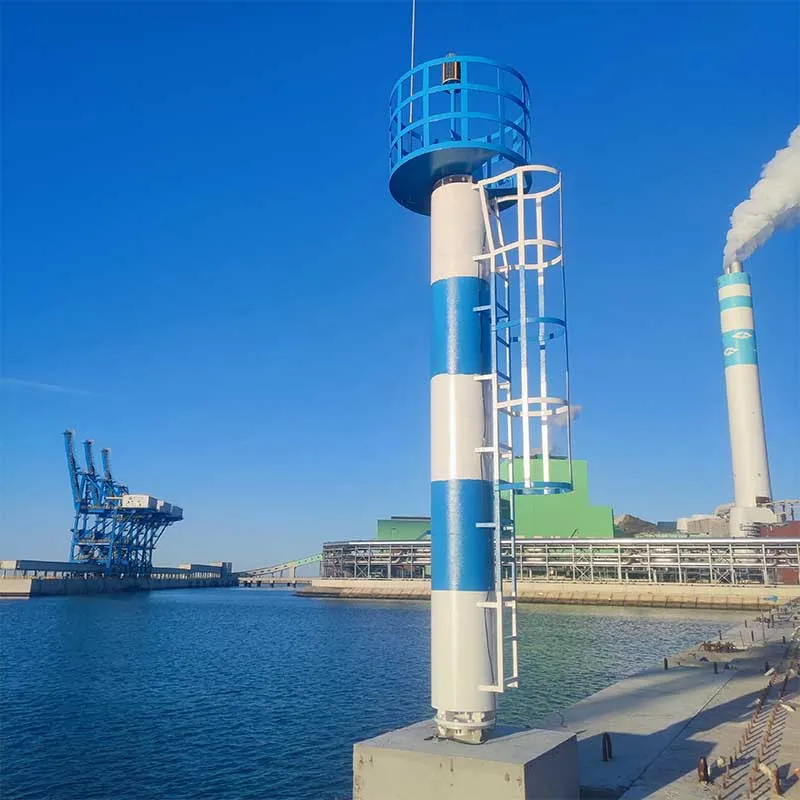
A marine beacon tower is usually a compact navigational structure built to carry a light, daymark, or other signaling device at a specific location. A lighthouse is typically a more prominent fixed structure, historically associated with long-range coastal warning and shoreline identification. The distinction is not only visual; it also affects range, installation cost, maintenance planning, and how the aid fits into a harbor navigation system.
| Item | Core Function | Typical Structure | Best For | Common Placement |
|---|---|---|---|---|
| Marine beacon tower | Marks channels, hazards, turns, or port approach points | Slim tower, pole, or framed support | Harbors, fairways, channel edges, short-range guidance | Breakwaters, piers, shoals, harbor entrances |
| Lighthouse | Provides prominent coastal guidance and hazard warning | Large fixed tower, often on shore or rocky coast | Long-range coastal identification | Headlands, capes, exposed shorelines |
| Light station | Operating site that may include a lighthouse, buildings, and support systems | Compound or facility, not just the tower | Operations, staffing, and maintenance | Historic or active navigation sites |
| Lightship | Floating aid to navigation used where fixed structures are impractical | Moored vessel with lantern and signaling gear | Deep water, shifting channels, temporary marking | Offshore or unstable seabeds |
This table shows why the question is not just “which one is bigger.” In aid to navigation terminology, the same site may be described by structure, function, and operating context. A marine beacon tower is often selected when a smaller physical footprint and lower structural mass are enough for the required route marking.
A marine beacon tower is a fixed coastal structure that supports a navigational light or daymark to guide vessels through defined waters. It is commonly used as a coastal navigation aid for ports where a precise visual reference is needed at short to medium range. In many installations, the tower is part of a broader port marking plan that includes multiple lights, leading lines, and channel indicators.
A marine beacon tower is not always the main visual symbol for a coastline. Instead, it often functions as a position marker that helps mariners confirm alignment, avoid a shoal, or identify a harbor entrance. The tower may be painted for visibility, fitted with reflectors, and paired with a characteristic light pattern so it can be recognized at night.
In practical use, the term marine beacon tower points to the structure, while beacon points to the aid function. That distinction matters because a beacon can be lighted or unlighted, fixed or floating, and temporary or permanent. A tower is one common physical form of that broader category.
A marine beacon tower works by presenting a recognizable signal from a known location. That signal may be a steady light, flashing pattern, colored sector, or daymark visible during daylight. The placement is usually based on charted routes, approach geometry, and the needed viewing distance for safe vessel movement.
The operating logic is simple: if a vessel sees the correct light or shape at the correct relative bearing, it can confirm position or direction. For example, a tower placed near a channel bend may help a pilot maintain course before the turning radius becomes difficult. In a port setting, this can reduce the chance of entering shallow water or crossing into restricted zones.
Marine beacon towers are common in harbors, river mouths, jetties, and man-made channels. They are especially useful where the goal is to mark a narrow passage rather than dominate a long stretch of coastline. For small ports, they may be more practical than a large lighthouse because the required range is shorter and the structure can be integrated into breakwater works.
These towers also support layered navigation systems. A single tower can function alongside buoys, leading lights, and charted bearings to create a complete route reference. In that sense, the tower is one component in a marine navigation aid network rather than a standalone landmark.
A lighthouse is a fixed tower-like structure that traditionally houses a light intended to warn ships of hazards and identify coasts or entrances. It is one of the most recognizable forms of navigational lighting systems, often built on exposed shorelines, points, or islands. In many countries, lighthouses became the most visible symbol of maritime safety structures because they could be seen from long distances.
A lighthouse is a specific fixed structure, not a generic term for every navigational light. It usually has a tall tower, a lantern or light housing, and a location chosen for wide visibility. Historical lighthouses often served as major reference points for offshore traffic, especially before electronic navigation became widespread.
The key point is scope. A lighthouse is a particular type of aid to navigation, while beacon is a wider classification term. So when people ask whether a beacon is the same as a lighthouse, the most accurate answer is no: a lighthouse is one form of beacon-like aid, but not every beacon is a lighthouse.
A lighthouse works by emitting a visible light pattern from an elevated position. The height helps extend line of sight over the earth’s curvature and over local obstructions such as surf, rock outcrops, or coastal infrastructure. In some cases, the tower also carries radar reflectors, fog signals, or range markers.
The practical effect is range and prominence. A lighthouse is often chosen where vessels need early warning well before reaching land or where the coastline itself is hard to distinguish. Because it is usually larger than a marine beacon tower, it can support a more recognizable daylight silhouette and a more prominent light source.
Lighthouses are commonly placed on exposed capes, high-risk reefs, and major harbor entrances. They are best suited to situations where a long visual line is important, especially in open coastal waters. In comparison with a marine beacon tower, a lighthouse often serves a broader regional reference role.
Many modern lighthouses are automated and no longer require full-time staffing. Even so, they remain a critical part of the visual navigation system in many ports and coastal routes. Their role is different from a local channel marker because they often indicate larger-scale position and hazard awareness.
The most useful way to compare marine beacon tower vs lighthouse is to separate the physical form from the navigational role. A tower is the structure; a beacon is the aid type; a lighthouse is a specialized fixed tower used for maritime guidance. This structure-versus-function distinction helps avoid confusion in engineering, procurement, and chart interpretation.
| Comparison Point | Marine Beacon Tower | Lighthouse |
|---|---|---|
| Primary purpose | Local route marking | Coastal or harbor warning and identification |
| Structure size | Usually smaller | Usually larger and more prominent |
| Viewing range | Short to medium range | Medium to long range |
| Typical use case | Port approaches, channel edges, breakwaters | Headlands, reefs, exposed shorelines |
| Terminology | Often a type of beacon support structure | A specific fixed navigational tower |
| Operational scope | Site-specific guidance | Broader coastline reference |
From a taxonomy perspective, the terms sit in different layers. Marine navigation aid is the broad category. Under that category, you may find beacons, buoys, lights, light stations, and lightships. A lighthouse is one fixed land-based light structure, while a marine beacon tower is often a narrower implementation for local marking.
A light station is the site or operational compound associated with a light, while a lighthouse is the tower itself. In older systems, a light station could include the tower, keeper’s quarters, storage buildings, power equipment, and access paths. That means a light station is a facility concept, not only a visual structure.
This distinction matters in procurement and maintenance planning. If a buyer asks for a lighthouse, they may mean the tower. If the conversation is about a light station, the scope may include electrical systems, housing, access control, and support infrastructure. In contract language, the difference can affect pricing, installation time, and long-term service obligations.
No, a beacon is not the same as a lighthouse. A beacon is a broader aid-to-navigation term that can include a lighted mark, tower, post, buoy, or other reference point, while a lighthouse is a specific fixed structure. In other words, every lighthouse functions as a beacon-type aid, but not every beacon is a lighthouse.
This distinction is important in chart reading and asset planning. If a port authority needs a short-range marker on a breakwater, a marine beacon tower may be enough. If a coastline requires a highly visible landmark with long-range warning value, a lighthouse is more appropriate. The right choice depends on distance, exposure, and the navigation problem being solved.
Marine navigation aids are usually classified by form, function, and placement. That means a tower, buoy, post, lightship, or lighthouse can all belong to the same general system while serving different tasks. The goal is to help mariners determine position, avoid danger, and follow a safe route through changing water conditions.
A practical classification can be summarized as follows:
Fixed land-based aids: lighthouses, beacon towers, range lights.
Floating aids: buoys and lighted buoys.
Temporary or specialized aids: lightships, removable marks, construction markers.
Support facilities: light stations and maintenance compounds.
This taxonomy is useful because it explains why terminology can be confusing. A user may call any visible light on the coast a lighthouse, even when it is technically a beacon tower. Engineering teams, however, need the precise term because the structural load, foundation, corrosion protection, and maintenance plan differ by type.
For marine beacon tower vs lighthouse for coastal navigation, the deciding factor is often route complexity rather than prestige or appearance. A marine beacon tower is usually enough when the target is a port entry, bend in a channel, or breakwater tip. A lighthouse becomes more suitable when the objective is to warn offshore vessels about a major hazard or to identify a coastline from far away.
You can often identify the structure by observing three things: size, placement, and signal role. A lighthouse is usually taller, more isolated, and intended as a more dominant coastal reference. A marine beacon tower is usually smaller, more closely tied to a local route feature, and easier to integrate into port infrastructure.
If you see a fixed light on a pier head, jetty, or small breakwater, the structure is more likely a beacon tower. If you see a tall masonry or steel tower on a prominent coastal point, that is more likely a lighthouse. The function often confirms the appearance: local route marking points to a beacon tower, while broad coastal warning points to a lighthouse.
From a total cost perspective, a marine beacon tower often requires less material, less foundation work, and less visual prominence than a lighthouse. That can reduce initial build complexity and make it easier to install in constrained harbor areas. However, the exact cost still depends on height, corrosion environment, access conditions, power supply, and whether the system includes solar, grid, or hybrid lighting.
A lighthouse may involve higher structural and maintenance demands because of its scale and exposure. It may also require more inspection planning due to public access, heritage constraints, or stronger wind and wave loading. For buyers, the relevant question is not which structure looks more iconic, but which one fits the site-specific navigation requirement with acceptable lifecycle cost.
A marine beacon tower is often used in environments where vessel movements are repetitive and the safe path is narrow. Typical examples include entrance markers for fishing harbors, channel alignment points for inland ports, and hazard markers on the edge of dredged fairways. In each case, the structure exists to support a decision point for the mariner.
A common example is a beacon on a breakwater head. That structure helps vessels identify the end of a protective wall and avoid collision during entry or departure. Another example is a tower marking the side of a channel where sediment buildup has reduced safe depth. In both cases, the aid is tied directly to geometry and charted route behavior.
For buyers evaluating Marine Beacon Tower supply, manufacturer capability matters because the product is exposed to salt spray, wind, wave impact, and long service intervals. HUAZHONG is relevant here as a supplier reference point when the discussion is about marine structures and aid-to-navigation hardware. The key evaluation factors are not marketing claims; they are structural specification, corrosion strategy, fabrication consistency, and installation support.
In procurement terms, the buyer should request information on material grade, coating system, weld inspection, dimensional tolerance, and expected service environment. A marine beacon tower used in a sheltered harbor does not face the same design load as one installed on an offshore breakwater. That difference should be visible in the supplier’s drawings, bill of materials, and maintenance plan.
For professional buyers, the biggest issues are usually quality compliance, delivery risk management, and total cost of ownership. In marine projects, quality compliance should be tied to documented material certificates, welding procedures, coating thickness records, and final inspection reports. Delivery risk should be assessed through fabrication lead time, transport packaging, and site-install readiness rather than by general promises.
A practical buyer checklist for a marine beacon tower may include:
Material traceability: steel or alloy grade confirmed by certificate.
Coating system: specified by microns, salt-spray environment, and recoat schedule.
Structural checks: design wind load, foundation assumption, and fastening method.
Electrical package: light unit, power supply, controller, and wiring protection.
Inspection records: weld, dimensional, and finish verification before shipment.
These points matter because a visible navigation aid that fails early creates operational costs far beyond the purchase price. A missed light, corroded bracket, or unstable foundation can force emergency repairs and temporary navigation restrictions. In that sense, the technical package is part of the economic analysis, not just the engineering file.
If your site needs a short-range marker at a port entrance, channel edge, or breakwater tip, choose a marine beacon tower. If your site needs a more visible coastal reference for open-water traffic or a major shoreline hazard, choose a lighthouse. If you are managing an existing asset portfolio, use the term light station when referring to the operating site and beacon when referring to the broader navigational function.
The selection logic can be reduced to four questions: How far must the signal be seen, what physical space is available, what load environment will the structure face, and what maintenance budget is realistic over the service life? If the answer emphasizes compact footprint and local route marking, a tower is usually the better fit. If the answer emphasizes prominence and long-range coastal identification, a lighthouse is the more suitable structure.
Marine Beacon Tower vs Lighthouse: What Is the Difference? The short answer is that both help guide vessels safely, but they are not interchangeable. A lighthouse is a specific fixed structure for broader coastal warning and identification, while a marine beacon tower is usually a smaller, more localized aid used for channel marking, harbor approaches, and hazard reference.
For buyers and maritime planners, the right choice depends on range, site exposure, structural scale, and maintenance scope. If you need a compact marine navigation aid for a port or breakwater, a beacon tower is often enough. If you need a long-range coastal landmark, a lighthouse is the more appropriate option. When evaluating suppliers such as HUAZHONG, ask for structure drawings, material traceability, coating specifications, and installation details so the selection matches the site requirements rather than just the visual impression.
Previous: None.
Next: Marine Beacon Towers for Bridges and Marine Structures
Copyright:@2020-2021

Comments Please sign in or sign up to post.
0
0 of 500 characters used