
Hospitals should require more than a general quality certificate before purchasing anesthesia consumables. Quality Certifications and Sterility Standards to Require from Anesthesia Consumables Suppliers should be evaluated across the supplier’s quality management system, product-specific regulatory status, sterilization validation, packaging integrity, traceability, and post-market controls. A supplier such as Tuoren Medical may offer Disposable Anesthesia Products across airway management, breathing circuits, anesthesia masks, tubes, filters, and procedural kits, but each product family still requires separate technical and documentary verification.
For U.S. procurement, FDA establishment registration and device listing confirm that a facility has reported its operations and products to the agency; they do not independently prove FDA approval, clearance, or authorization. Products requiring premarket review must also be matched to the appropriate 510(k), De Novo, PMA, or other applicable pathway. (fda.gov)
Require ISO 13485, applicable regulatory registration, product authorization, and current certificates from identifiable certification bodies.
Match sterilization evidence to product risk, using ISO 11135, ISO 11137, packaging, and shelf-life records.
Verify every sterile product through lot traceability, release documentation, packaging inspection, and certificate reconciliation.
Separate manufacturer-level credentials from product-specific sterility, biocompatibility, labeling, and intended-use evidence.
Use supplier audits, quality agreements, complaint trends, change notices, and recall tests to control ongoing risk.
The correct supplier qualification process begins by separating five evidence categories: quality-system certification, regulatory authorization, product safety testing, sterilization validation, and lot-level release documentation. These categories answer different questions and should not be treated as interchangeable. For example, ISO 13485 addresses the supplier’s medical-device quality management system, while a sterilization certificate applies to a defined product, load, cycle, and batch.
Procurement teams should also connect documentation requirements to the clinical risk of each item. A non-sterile anesthesia mask used on intact facial skin does not require the same evidence as a sterile epidural kit, endotracheal tube, vascular-access accessory, or airway device entering a normally sterile body site. The evaluation should therefore include the following criteria:
Regulatory status: Confirm manufacturer identity, facility registration, device listing, classification, and applicable premarket authorization.
Quality management system: Require ISO 13485 certification covering the actual manufacturing site and relevant device scope.
Sterility assurance: Review the validated sterilization method, target sterility assurance level, routine monitoring, and release procedure.
Packaging and shelf life: Confirm sterile barrier validation, seal integrity, aging studies, transport simulation, and use-by dating.
Clinical safety: Review material compatibility, biocompatibility, labeling, connector requirements, and intended-use controls.
Traceability and response: Require lot control, certificates of analysis or conformance, complaint handling, adverse-event reporting, and recall procedures.
A supplier certificate should never be evaluated in isolation from the product’s intended use. The matrix below gives procurement teams a practical starting point; national regulations, device classification, and the product’s technical file may require additional evidence.
| Product category | Typical use risk | Core credentials to require | Product-specific evidence |
|---|---|---|---|
| Disposable anesthesia masks | Low to moderate, external patient contact | ISO 13485; applicable market registration | Material specification, biocompatibility rationale, leakage or fit testing, labeling |
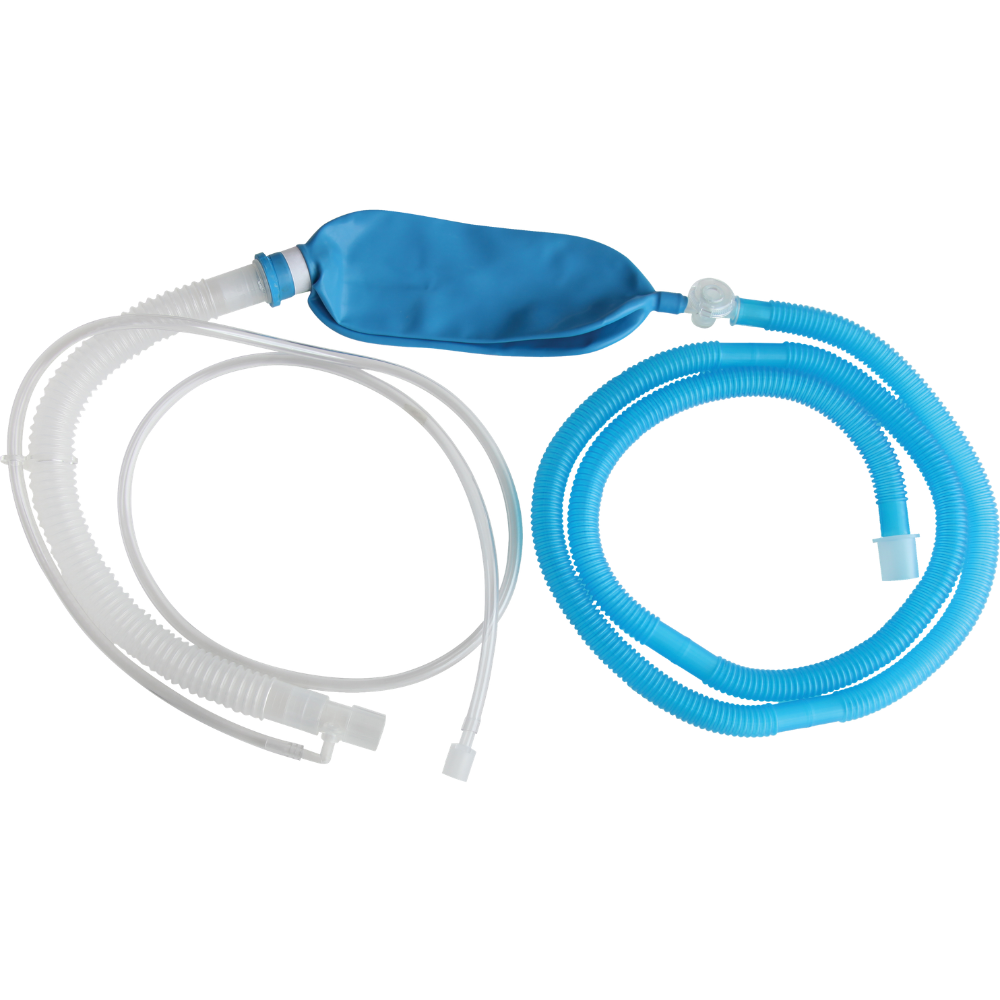
| Breathing circuits and tubing | Moderate, respiratory gas pathway | ISO 13485; applicable regulatory listing | Flow, connector, kink, leak, material, and microbial-control evidence |
| Heat and moisture exchangers or filters | Moderate to high, respiratory pathway | ISO 13485; regulatory authorization where required | Filtration performance, pressure drop, moisture exchange, bacterial or viral test data |
| Endotracheal and endobronchial tubes | High, invasive airway use | ISO 13485; applicable premarket authorization | Cuff integrity, tensile strength, radiopacity, biocompatibility, dimensional controls |
| Laryngeal mask airways | High, invasive airway use | ISO 13485; applicable premarket authorization | Seal performance, connector security, cuff testing, material and biocompatibility records |
| Sterile anesthesia or epidural kits | High, invasive or neuraxial use | ISO 13485; applicable regulatory pathway; sterilization certification | Sterility validation, packaging validation, lot release, endotoxin or microbial testing where applicable |
| Needles, syringes, and filters | High when used for injection or neuraxial procedures | ISO 13485; applicable regulatory authorization | Dimensional inspection, leakage, particulate, connector, sterility, and endotoxin evidence |
| Reusable or reprocessable anesthesia equipment | Moderate to high, repeated exposure | ISO 13485; reprocessing instructions and validation | Cleaning, disinfection or sterilization instructions, cycle limits, material compatibility, inspection criteria |
This matrix should be adapted to the buyer’s jurisdiction and clinical protocol. A product may be listed in one market as sterile and in another market as non-sterile, or may require different labeling and post-market controls. The purchase specification should therefore identify the exact catalog number, configuration, intended use, sterilization state, and target market.
ISO 13485 certification for anesthesia consumables suppliers indicates that an organization operates a medical-device quality management system designed to address regulatory and customer requirements. The standard is specific to medical devices and includes controls related to risk management, design and development where applicable, purchasing, production, validation, traceability, corrective action, and records. ISO 13485:2016 is the current published edition identified by the International Organization for Standardization. (iso.org)
ISO 13485 does not automatically prove that every anesthesia product is sterile, clinically suitable, or authorized for sale in a particular country. The certificate must be checked for the legal manufacturer, manufacturing site, scope of activities, certificate number, issue date, expiry date, and certification body. A certificate covering only distribution or general trading activities is not equivalent to certification covering manufacturing of sterile medical devices.
ISO 9001 is a general quality management standard that can apply to many industries, while ISO 13485 is structured specifically for medical-device organizations and regulatory purposes. ISO 13485 places greater emphasis on documented medical-device controls, risk-based processes, regulatory compliance, product realization, and post-market feedback. A supplier holding ISO 9001 but not ISO 13485 may still be capable of producing certain low-risk goods, but the buyer should request additional evidence before approving medical consumables.
For anesthesia products, the certificate scope should match the product category. If the supplier sells sterile airway products, the scope should not merely state “trading of medical devices”; it should identify manufacturing, sterilization, packaging, or distribution activities relevant to the purchased items. Procurement should also confirm whether sterilization is performed internally or by a qualified subcontractor.
FDA registration and listing should be treated as a verification step, not as a product approval claim. Establishments involved in producing or distributing medical devices for commercial distribution in the United States generally register annually, and most applicable establishments also list the devices and activities performed. The FDA database can be searched by company name, device name, registration number, or premarket submission number, with listing data commonly updated weekly. (fda.gov)
A supplier should provide the following information for each U.S.-bound product:
Legal manufacturer name and physical manufacturing address.
FDA establishment registration status.
Device listing information and product code where applicable.
U.S. importer, initial importer, or authorized representative details when relevant.
510(k), De Novo, PMA, HDE, or exemption rationale when a premarket pathway applies.
Product labeling, intended use, indications, contraindications, and instructions for use.
Unique device identification information where required.
Complaint, adverse-event, and recall contact procedures.
The buyer should independently compare the supplier’s submitted documents with regulatory databases and product labeling. A registration entry that lists a company but not the exact product family, manufacturing activity, or legal manufacturer relationship requires clarification. A supplier that presents an “FDA registration certificate” as proof of FDA approval should be escalated because FDA states that it does not issue device registration certificates and that registration does not indicate approval, clearance, or authorization. (fda.gov)
For European procurement, buyers should verify the applicable EU Medical Device Regulation pathway, conformity assessment route, declaration of conformity, technical documentation, and notified-body information where third-party assessment is required. A CE mark on a package is not enough by itself; the declaration, product classification, certificate scope, and manufacturer identity should correspond to the exact device. The same principle applies to other markets, where a certificate must be current, traceable, and applicable to the purchased configuration.
The supplier should identify the sterilization method used for each sterile anesthesia product. Common methods include ethylene oxide, radiation, steam, and other validated processes, but the method must be compatible with the device materials, packaging, residues, and intended use. For ethylene oxide sterilization, ISO 11135 establishes requirements for process development, validation, and routine control; for radiation sterilization, ISO 11137-1:2025 addresses development, validation, and routine control of radiation processes. (iso.org)
A valid sterilization package should include the sterilization cycle or dose range, load configuration, validation report reference, routine monitoring records, biological or physical indicator controls where applicable, and batch-release authorization. For ethylene oxide products, buyers should also request residual analysis and aeration information because residual limits and aeration conditions can affect patient exposure. The evidence should identify the product family and packaging configuration rather than relying on a generic facility certificate.
The sterility assurance level for anesthesia consumables should be defined in the supplier’s technical documentation and connected to the sterilization validation approach. For many terminally sterilized medical devices, buyers commonly expect a target SAL of 10⁻⁶, meaning the validation framework is designed around a theoretical probability of no more than one non-sterile unit in one million after the validated process. This figure is a process assurance target, not a guarantee that every individual package has been microbiologically tested.
The supplier should also control pre-sterilization bioburden through defined sampling plans, microbial enumeration, environmental controls, and trend analysis. Bioburden data should be linked to the validated load and product configuration because a change in resin, tubing length, packaging density, or manufacturing location can alter sterilization behavior. For products used in neuraxial, vascular, or invasive airway procedures, the buyer may also specify endotoxin limits or require evidence that applicable microbial and pyrogen controls have been addressed.
Sterility can be lost after sterilization if the sterile barrier system is poorly sealed, punctured, crushed, or exposed to unsuitable storage conditions. ISO 11607-1:2019 addresses materials, sterile barrier systems, and packaging systems intended to maintain sterility until the point of use, while ISO 11607-2:2019 addresses validation of forming, sealing, and assembly processes. (iso.org)
Request packaging validation evidence that covers seal strength, seal integrity, visual inspection, burst or creep testing where applicable, distribution simulation, and accelerated or real-time aging. The supplier should define storage temperature, humidity limits, light exposure restrictions, carton configuration, and handling requirements. A five-year shelf-life claim, for example, should be supported by an aging protocol and post-aging package performance data rather than only a printed expiration date.
A sterile claim should be supported by several documents working together. The most useful evidence includes a product specification stating “sterile,” the sterilization method, sterilization validation summary, batch or lot number, certificate of sterilization or batch release, packaging validation, shelf-life evidence, and a certificate of analysis or conformance. The outer carton and individual sterile barrier should also show the lot number, manufacturing date or date code, use-by date, sterilization method or symbol where required, manufacturer, catalog number, and instructions for use.
A certificate of sterilization without lot identification is insufficient for release decisions. The lot number on the certificate should match the unit package, shipping carton, invoice, and certificate of analysis. If the supplier uses contract sterilization, the certificate should identify the sterilization facility and establish the relationship between the manufacturer’s production lot and the sterilizer’s cycle or load number.
Sterility is only one part of product safety. Anesthesia consumables must also be evaluated for material compatibility, biocompatibility, dimensional accuracy, connector security, flow performance, leakage, tensile strength, cuff integrity, particulate control, and resistance to kinking or collapse. The required tests depend on intended use, duration of contact, patient population, and whether the device contacts skin, mucosa, blood, cerebrospinal fluid, or the respiratory tract.
Biocompatibility evidence should be risk-based and aligned with the materials and contact category. FDA guidance discusses the use of ISO 10993-1 within a biological evaluation and risk-management process for applicable devices. (fda.gov) The supplier should provide a material declaration, colorants and additives information, chemical characterization where relevant, and a biological evaluation or test report appropriate to the product.
Labeling should clearly distinguish single-use, reusable, and reprocessable products. It should state the intended patient population, use limitations, contraindications, connection requirements, storage conditions, sterilization status, and warnings about damaged packaging. For devices with connectors, procurement teams should verify that the connector standard matches the intended application; for example, technical documentation for one Tuoren anesthesia kit identifies compliance with ISO 80369-6:2016 for the relevant conical connector. (en.tuoren.com)
Reusable anesthesia equipment creates a different qualification requirement from disposable products. The supplier should provide validated cleaning, disinfection, sterilization, drying, inspection, and storage instructions, including compatible chemicals, water quality, temperature, exposure time, and maximum reprocessing cycles. Instructions should also identify components that must be discarded after use, such as filters, seals, cuffs, or tubing assemblies that are not designed for repeated processing.
Hospitals should not create reprocessing instructions from general product descriptions. The manufacturer’s instructions must correspond to the exact model and material composition, because heat, steam, chemicals, or mechanical brushing can change dimensions and performance. Reprocessing validation should include the worst-case soil load, most difficult-to-clean geometry, maximum cycle count, and post-processing functional tests.
Disposable products should be clearly marked as single use and should not be reprocessed unless the applicable regulatory framework and validated instructions specifically permit it. A product described as “reusable” should not be approved without cycle limits and inspection criteria. Reuse outside the manufacturer’s instructions can shift infection-control, performance, and liability risks to the healthcare facility.
Supplier verification should combine document review, database checks, product sampling, and an audit proportional to risk. Begin by confirming that the legal manufacturer, trading company, importer, and certification holder are correctly identified. Then compare the certificate scope, product labeling, regulatory listing, sterilization facility, and manufacturing address for consistency.
| Evaluation area | Suggested points | Pass evidence | Automatic escalation |
|---|---|---|---|
| ISO 13485 scope and validity | 20 | Current certificate covering manufacturing and relevant products | Expired, unverifiable, or distribution-only scope |
| Regulatory registration and listing | 20 | Matching facility and product records | “FDA certified” claim without verifiable listing |
| Product technical file | 15 | Intended use, risk controls, testing, labeling | Generic brochure used instead of technical evidence |
| Sterilization validation | 15 | Method, validated cycle, SAL target, routine controls | No lot-specific release records |
| Packaging and shelf life | 10 | ISO 11607-related validation and aging evidence | No seal or transport testing |
| Traceability and batch release | 10 | Lot, certificate, release authorization, retention records | Lot numbers cannot be reconciled |
| Complaint and recall systems | 5 | Written procedures and response contacts | No recall or adverse-event process |
| Supply continuity | 5 | Lead-time data, backup capacity, change notification | Uncontrolled subcontracting or unexplained substitutions |
A scorecard should not replace professional judgment, but it creates a consistent approval record. For sterile invasive products, a buyer may set a minimum score of 85 out of 100 and require zero automatic-escalation findings. For non-sterile, low-risk items, the weighting may be adjusted, but regulatory identity, labeling, material safety, and traceability should remain mandatory.
During an audit or supplier review, ask how incoming raw materials are approved, how production lots are identified, how nonconforming product is segregated, and how changes are reviewed before implementation. Ask for the last three internal or external audit findings related to sterilization, packaging, complaint handling, or traceability. The supplier should be able to explain corrective-action completion, effectiveness checks, and the person responsible for regulatory communication.
The audit should also examine environmental and process controls relevant to the product. Examples include cleanroom classification where applicable, gowning procedures, particulate monitoring, microbial monitoring, seal-temperature control, calibration records, equipment maintenance, and final inspection sampling. The buyer does not need to demand identical equipment from every supplier, but the supplier must show that its controls are defined, validated, recorded, and linked to product risk.
A purchase order should be supported by a quality agreement for recurring or high-risk products. The agreement should define specifications, change-control notice periods, deviation approval, document retention, audit rights, complaint response time, adverse-event reporting, recall responsibilities, counterfeit prevention, subcontractor disclosure, and product-release requirements. For sterile products, it should also define the minimum certificate package accompanying each shipment.
Change notifications are essential because a new resin, adhesive, sterilization site, packaging film, mold, supplier, or manufacturing location can affect safety and shelf life. The agreement should require advance notice for changes that could alter form, fit, function, sterility, biocompatibility, labeling, or regulatory status. Hospitals should define an escalation period, such as 30, 60, or 90 days, based on the change risk and local regulatory obligations.
Previous: PVC vs Silicone Endotracheal Tubes: Material Differences and Clinical Implications
Next: Why amputation level changes prosthetic knee recommendations
Copyright:@2020-2021

Comments Please sign in or sign up to post.
0
0 of 500 characters used