
PVC is firmer, lower-cost, and widely available, while silicone is softer, more flexible, and generally more adaptable to airway movement. Silicone may cost more and can be harder to place because it has greater material memory. The better option depends on airway anatomy, intubation technique, cuff design, ventilation duration, secretion management, and required product compliance.
Selecting an endotracheal tube involves more than comparing purchase prices. The tube material affects stiffness, flexibility, surface friction, resistance to kinking, cuff sealing, tube migration, suctioning, and the potential for airway irritation. This PVC vs Silicone Endotracheal Tubes: Material Differences and Clinical Implications guide compares the two materials by physical properties and clinical consequences.
The comparison is relevant to anesthesiologists, respiratory therapists, intensive-care teams, hospital procurement departments, and medical-device distributors evaluating a Disposable Endotracheal Tube. It also provides a practical framework for assessing products from manufacturers and suppliers such as Tuoren Medical, including documentation, quality controls, delivery planning, and total cost of ownership.
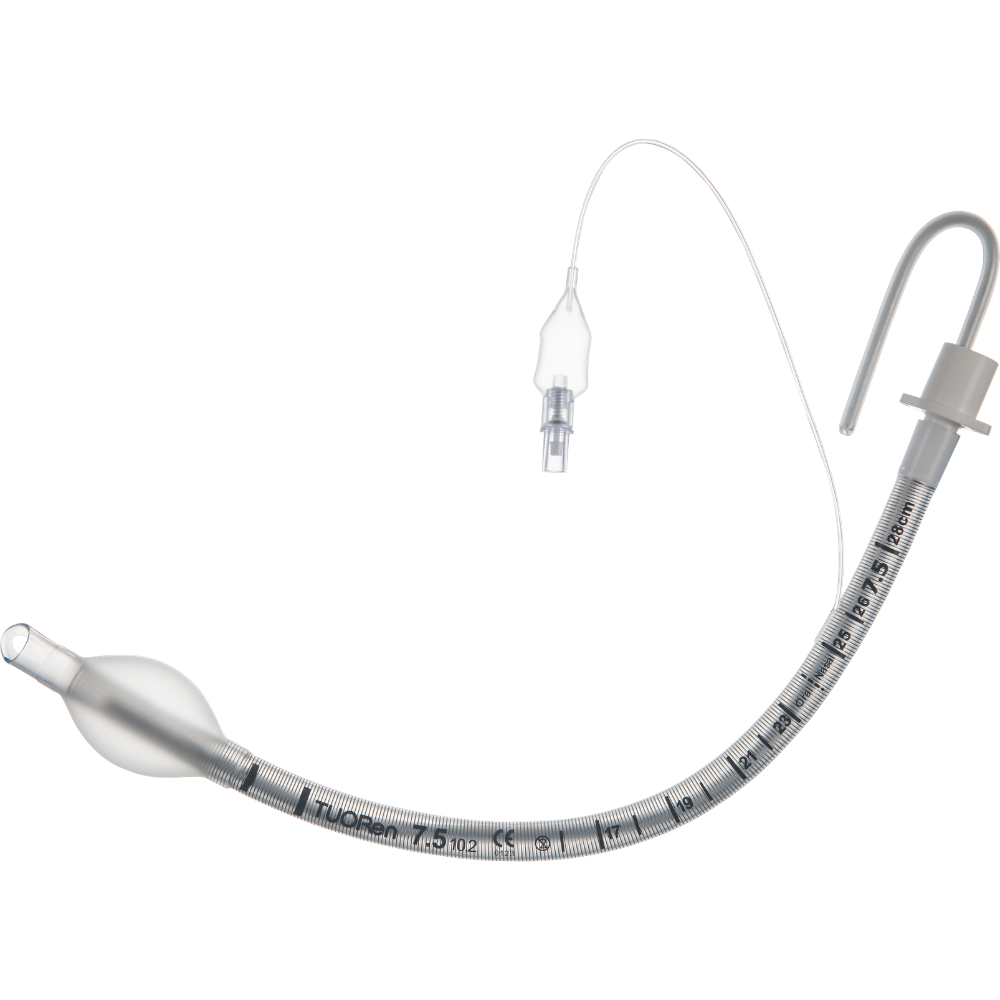
PVC endotracheal tubes provide greater stiffness, lower unit cost, and predictable handling for routine short procedures.
Silicone tubes offer greater flexibility and softness, but their memory can complicate placement and positioning.
Cuff performance depends on cuff geometry, material thickness, inflation pressure, and testing—not tube material alone.
Wire-reinforced silicone tubes suit selected difficult-airway and positional procedures where kinking resistance is required.
Buyers should evaluate ISO 5361 compliance, leak testing, packaging integrity, batch records, lead time, and replacement cost.
No single material is universally better; patient anatomy, procedure duration, and ventilation requirements determine selection.
A reliable endotracheal tube material comparison should begin with measurable design and clinical criteria rather than broad claims about softness or quality. Buyers should compare tube wall thickness, internal diameter, outer diameter, bending behavior, radiopacity, connector security, cuff dimensions, pilot-balloon performance, and resistance to kinking. The intended use should also be specified, such as routine anesthesia, emergency airway management, prolonged mechanical ventilation, pediatric anesthesia, or fiberoptic intubation.
Material behavior matters because stiffness influences insertion control, while flexibility affects tube conformity to airway curvature and response to head or neck movement. Cuff performance should be reviewed through pressure retention, visible leak testing, inflation-line integrity, and compatibility with the selected tube size. Compliance and supply reliability require documented testing, lot traceability, sterile-barrier inspection, shelf-life controls, and delivery planning.
The relevant international reference is ISO 5361:2023, which addresses safety and essential performance requirements for oro-tracheal and naso-tracheal tubes, connectors, reinforced tubes, and tubes designed for suctioning or other specialized functions. A procurement review should confirm which standard edition, regulatory pathway, sterilization method, and product specifications apply to the intended market.
A polyvinyl chloride endotracheal tube is commonly selected for routine airway management because it combines form stability with comparatively low manufacturing cost. PVC can be produced with transparent walls, radiopaque markings, standard 15 mm connectors, cuffs, Murphy eyes, and multiple internal diameters. When warmed by body temperature, many PVC tubes become more pliable than they are at room temperature, which can assist adaptation to airway anatomy after placement.
The main practical advantage is controlled handling during insertion. A PVC tube generally resists sudden collapse during laryngoscopy and offers a more predictable relationship between the operator’s hand movement and the distal tip. This can be useful during direct laryngoscopy, emergency intubation, operating-room anesthesia, and short-duration ventilation.
PVC also supports efficient large-scale production. A hospital buying 10,000 standard cuffed tubes may obtain lower unit pricing, simpler stock management, and more consistent compatibility with existing tube holders and airway carts. The financial advantage is strongest when the procedure is short, the tube is used once, and no specialized reinforcement or complex suction feature is required.
PVC has limitations in situations involving repeated bending, severe airway curvature, or substantial patient repositioning. A standard PVC tube may be more vulnerable to kinking than a wire-reinforced silicone tube when routed around the mouth, neck, or surgical field. PVC can also exert greater localized contact force if its curvature and fixation are not well matched to the patient’s airway.
A silicone endotracheal tube is made from an elastomer with greater softness and flexibility than standard PVC. It can conform more closely to curved airway pathways and may be useful when the tube must remain flexible during head movement, surgical positioning, or fiberoptic placement. Silicone surfaces are often smooth, but actual friction depends on formulation, surface finish, lubricant use, tube diameter, and the interaction between the tube and airway secretions.
The softness of silicone can reduce the amount of force transmitted to airway tissues during certain movements, but it does not automatically prove lower trauma in every patient. Airway trauma is affected by tube size, insertion technique, cuff pressure, fixation, duration, mucosal perfusion, suctioning, and patient movement. A clinical decision should therefore treat silicone as one design factor rather than a guarantee of a specific outcome.
Silicone has greater material memory than many PVC designs. After bending, the tube may tend to return toward its original shape, which can help preserve a planned curve but may also make insertion less intuitive. This behavior can be advantageous in selected procedures and inconvenient during routine placement, especially when the operator needs a tube that follows a manually shaped path.
Bulk silicone tubes may have a higher unit cost and may require more specialized manufacturing controls. Wire-reinforced silicone tubes add another component that must be inspected for uniform reinforcement, distal-tip safety, connector security, and resistance to compression. Silicone-coated PVC tubes represent a separate category and should not be treated as identical to bulk silicone or wire-reinforced silicone.
Bulk silicone tubes use silicone as the primary tube-wall material. Their mechanical behavior is driven mainly by silicone hardness, wall thickness, internal diameter, and shape. These products may provide a soft external surface and flexible shaft, but buyers should confirm whether the product maintains its lumen under the expected bending forces.
Silicone-coated PVC tubes use a PVC structural layer with a silicone coating or surface treatment. They may retain some handling characteristics of PVC while adding a different surface feel. Their performance should be evaluated through manufacturer-specific data because a coating does not transform the tube into bulk silicone.
Wire-reinforced silicone tubes contain an embedded spiral or other reinforcement intended to resist kinking. They are commonly considered when the tube follows a sharply curved route or when the patient will undergo movement that could compress the airway device. Reinforcement can improve lumen preservation, but it may increase cost, stiffness in selected directions, manufacturing complexity, and the importance of inspecting the distal tip and connector assembly.
Stiffness is often helpful during the first stage of intubation because the clinician can direct the tube with less deformation. Standard PVC tubes are frequently easier to control with a stylet or preformed curve, particularly when the glottic view is adequate and the airway route is relatively direct. Excessive stiffness, however, may increase contact force if the tube is advanced against resistance.
Silicone tubes may be more suitable when the tube must follow a curved or changing pathway, especially during fiberoptic intubation or procedures involving unusual airway geometry. Their flexibility can reduce the tendency of the tube to push the bronchoscope away from the intended path, although the exact result depends on tube-to-scope size compatibility. The clinician must also account for silicone’s memory and possible resistance to maintaining a manually formed angle.
For difficult airway management, material selection should follow a complete plan rather than a simple preference. The decision should include tube internal diameter, external diameter, bronchoscope compatibility, stylet use, airway exchange strategy, cuff location, and the need for later repositioning. A wire-reinforced silicone tube may be appropriate when kinking is the primary concern, while a standard PVC tube may be more practical when insertion control and rapid availability are the priorities.
Which endotracheal tube material causes less airway trauma cannot be answered by material alone. A smaller external diameter, controlled cuff pressure, atraumatic distal design, correct depth, secure fixation, and limited tube movement may have greater clinical importance than whether the shaft is PVC or silicone. Prolonged contact between the cuff or tube tip and the tracheal wall can contribute to mucosal injury regardless of material.
Silicone’s softer surface may reduce localized mechanical irritation in selected cases, but evidence should be interpreted alongside tube geometry and cuff design. A soft tube that migrates, folds, or requires repeated manipulation may introduce different risks. Post-extubation symptoms are influenced by intubation attempts, duration, tube size, cuff pressure, laryngeal exposure, patient factors, and airway edema.
A practical protocol should record tube size, insertion route, number of attempts, cuff pressure checks, fixation method, patient position, ventilation duration, and post-extubation symptoms. This produces more useful clinical evidence than relying on generalized statements about one material being safer.
PVC tubes tend to provide a firmer shaft, which can make depth adjustment and fixation more straightforward. The trade-off is that a firm tube may transmit movement from the lips or teeth toward the distal airway more directly. If the patient’s head position changes, the tube may shift relative to the tracheal carina.
Silicone tubes can accommodate curvature and movement, but their flexibility may make external depth changes less obvious. A tube can bend around the oral cavity while its distal tip changes position, particularly if fixation is inadequate. This is important during prone positioning, maxillofacial surgery, cervical procedures, and long periods of mechanical ventilation.
Tube position should be confirmed using clinical assessment and appropriate monitoring, including capnography and radiographic assessment when indicated. Material selection cannot replace depth marking, securement, ventilation monitoring, and reassessment after repositioning.
Cuff behavior is one of the most important parts of a PVC and silicone ETT comparison. The cuff may be made from a different polymer than the main tube shaft, so a PVC shaft does not necessarily have a PVC cuff, and a silicone shaft does not always have a silicone cuff. Polyurethane, PVC, and silicone cuffs can each have different thickness, compliance, folding behavior, and sealing characteristics.
A high-volume, low-pressure cuff is intended to create a seal over a larger tracheal contact area at a lower pressure than a small, high-pressure design. However, the actual seal depends on tracheal diameter, cuff shape, tube position, inflation volume, wall thickness, and airway pressure. A product comparison should therefore request cuff pressure-retention data and leak testing rather than relying on the shaft material.
Cuff pressure should be measured with a calibrated manometer according to local clinical policy. Many institutions use a target range around 20–30 cmH₂O, but the appropriate range must follow the product instructions and institutional protocol. Pressure that is too low may permit leakage and aspiration risk, while pressure that is too high may impair mucosal perfusion.
| Cuff and tube factor | PVC tube considerations | Silicone tube considerations | Buyer evaluation point |
|---|---|---|---|
| Shaft flexibility | Moderate; often becomes more pliable with warming | High; remains flexible across many conditions | Review bending and lumen-retention data |
| Insertion control | Usually predictable with a stylet or shaped curve | May require technique adjustment because of memory | Test with the intended airway equipment |
| Cuff sealing | Depends on cuff material and geometry | Depends on cuff material and geometry | Request leak and pressure-retention results |
| Kink resistance | Standard designs may kink under sharp bending | Wire reinforcement can improve kink resistance | Distinguish bulk silicone from reinforced designs |
| Unit cost | Commonly lower for standard configurations | Commonly higher, especially when reinforced | Compare total procedure cost, not unit price alone |
| Routine availability | Often stocked in many standard sizes | May require specialized inventory | Assess emergency stock and replacement lead time |
| Prolonged use | Suitable when cuff and tube design meet clinical needs | May be selected for flexibility or specialized routing | Review duration-specific instructions and evidence |
Both materials perform the same basic airway function: they create a conduit between the patient’s airway and a breathing circuit or ventilation device. The tube’s 15 mm connector attaches to compatible respiratory equipment, while the distal cuff may create a seal that supports positive-pressure ventilation. A pilot balloon and inflation valve allow the operator to estimate and manage cuff inflation.
The material changes how the tube responds to insertion, bending, fixation, and patient movement. A PVC tube may maintain a shaped curve with less external support, while silicone may conform to a curved route with less resistance to bending. In both cases, ventilation performance depends on internal diameter, tube length, airway resistance, secretions, obstruction, connector design, and circuit configuration.
Suctioning and secretion management also require a product-specific assessment. A smooth internal lumen can support catheter passage, but the catheter’s outer diameter, suction pressure, secretion viscosity, and tube curvature determine actual performance. Tubes with subglottic suction channels add another design layer and should be evaluated separately from conventional cuffed tubes.
| Clinical or procurement priority | More suitable starting option | Reasoning | Conditions to verify |
|---|---|---|---|
| Routine adult anesthesia lasting less than 4 hours | Standard PVC | Predictable handling and lower acquisition cost | Cuff pressure, connector fit, size availability |
| Emergency airway cart standardization | Standard PVC | Broad size range and common stock position | Packaging, expiry control, backup quantities |
| Fiberoptic intubation through a curved route | Silicone or selected reinforced silicone | Greater flexibility may follow the airway path | Scope compatibility and tube memory |
| High risk of tube kinking | Wire-reinforced silicone | Embedded reinforcement can preserve lumen shape | Reinforcement integrity and added cost |
| Major head or neck repositioning | Reinforced silicone or specialized PVC | Selection depends on routing and compression risk | Securement and post-positioning confirmation |
| Prolonged ventilation | Either material, based on cuff and design data | Duration alone does not establish material superiority | Cuff pressure stability, migration, secretion protocol |
| Pediatric anesthesia | Size-specific PVC or silicone | External diameter and cuff design are critical | Pediatric dimensions and clinical instructions |
| Cost-controlled high-volume purchasing | Standard PVC | Often lower purchase price and wider availability | Total cost, failure replacement, inventory turnover |
First identify whether the case involves routine oral intubation, nasal intubation, fiberoptic placement, emergency airway management, or a procedure with substantial head and neck movement. Record the expected ventilation period, patient age, airway anatomy, and likelihood of repositioning. These factors determine whether stiffness, flexibility, or kink resistance has the greatest operational value.
Do not select a tube by internal diameter alone. Compare internal diameter with external diameter, cuff position, distal-tip design, radiopaque markings, connector type, and available insertion aids. In pediatric and anatomically narrow airways, the external diameter and cuff profile may be more important than the material label.
For direct laryngoscopy with a shaped stylet, standard PVC may provide a familiar handling response. For fiberoptic techniques, a softer tube may reduce the tendency to displace the scope, but the clinician must assess whether the tube’s memory will interfere with advancement. For cases requiring a curved route around the surgical field, reinforcement may be more important than softness alone.
A short pre-use inspection should include tube straightness, distal-tip integrity, Murphy eye patency, cuff symmetry, inflation-line connection, pilot-balloon valve function, connector security, and packaging condition. Any abnormality should be documented and the device removed from clinical use.
Review the cuff material, cuff diameter, inflation volume, pressure guidance, and leak-test method. If the tube will be used for positive-pressure ventilation, confirm that the selected cuff can maintain an adequate seal without exceeding the institution’s pressure limit. Use a calibrated cuff manometer rather than estimating pressure by pilot-balloon firmness.
For prolonged ventilation, establish a repeat measurement schedule. A reasonable local protocol may include checks after insertion, after significant repositioning, after circuit changes, and at defined intervals during ventilation. The exact frequency should follow clinical policy, patient condition, and product instructions.
For procurement, request a technical file summary, applicable regulatory documentation, ISO 5361 alignment, sterilization validation, shelf-life data, packaging specifications, and batch traceability. The supplier should also provide a dimensional drawing or product specification sheet showing internal diameter, external diameter, cuff location, tube length, connector type, and available sizes. These documents allow the hospital to compare products without depending on marketing descriptions.
Delivery risk should be measured through lead time, minimum order quantity, forecast accuracy, safety-stock requirements, and substitute-product compatibility. For example, if monthly usage is 1,000 units and supplier lead time is 60 days, the buyer may need more than 2,000 units of planned coverage before adding emergency reserve. Actual stock levels should be based on historical consumption and delivery variance.
Unit price is only one part of the economic evaluation. A total-cost model should include purchase price, freight, inspection, storage, expired-stock disposal, emergency replacements, training, and the operational cost of product failure or incompatibility. A tube priced at $1.20 but requiring frequent replacement may have a higher effective cost than a $2.00 tube with stable supply and fewer rejected units.
| Cost element | PVC example | Silicone example | Calculation method |
|---|---|---|---|
| Unit purchase price | $0.80–$2.50 | $2.00–$12.00 | Supplier quotation by size and configuration
Previous: None. Copyright:@2020-2021 |

Comments Please sign in or sign up to post.
0
0 of 500 characters used