
Choosing the right Snow-Melt Agent requires more than comparing bag prices. How to Choose the Best Snow-Melt Agent for Your Project depends on pavement type, surface age, traffic volume, expected temperatures, runoff exposure, pets, vegetation, corrosion risk, application rate, and labor availability. Sodium chloride may suit a low-cost residential driveway above approximately 15°F (-9°C), while calcium chloride or potassium acetate may be more suitable for colder commercial applications. The correct selection must balance melting performance with surface protection, environmental controls, storage requirements, and total operating cost.
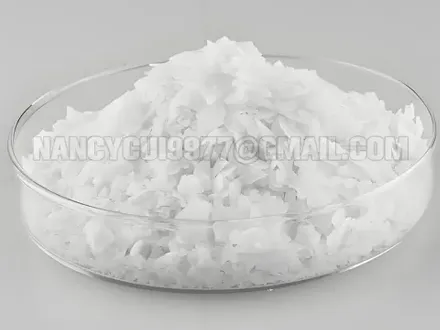
Select snow-melt chemistry according to practical operating temperature, not only the advertised theoretical melting point.
Concrete age, traffic load, runoff exposure, and surface drainage determine whether a product is suitable.
Calcium chloride works in colder conditions, while magnesium chloride generally reduces chloride loading and corrosion exposure.
Pet-safe and concrete-safe labels describe conditions, not unlimited use without dosage, cleanup, and storage controls.
Application rate, reapplication frequency, labor, corrosion mitigation, and environmental liability determine total cost.
Commercial buyers should verify batch consistency, laboratory testing, packaging, production capacity, and delivery planning before purchasing.
A Snow-Melt Agent is a chemical deicer that lowers the freezing point of water and helps separate ice from pavement. When the product dissolves in a thin layer of moisture, it forms a brine with a lower freezing temperature than pure water. This process is called freezing-point depression, and its field effectiveness depends on concentration, pavement temperature, moisture availability, contact time, and ice thickness.
Different products generate different brine concentrations and remain active across different temperature ranges. Rock salt is inexpensive and widely available, but its practical working range becomes limited as pavement temperatures approach approximately 15°F (-9°C). Calcium chloride can remain active at lower temperatures, while acetate-based products are often selected for locations where chloride discharge, metal corrosion, or environmental restrictions are more important than the lowest purchase price.
A snow-melt agent does not replace mechanical snow removal. Plowing, shoveling, brushing, or sweeping should remove most snow before chemical treatment, because deicer demand rises sharply with snow depth and compacted ice thickness. Chemical treatment is most efficient when used to prevent bonding, weaken a thin ice layer, or finish the surface after mechanical removal.
The best selection process starts with a project profile rather than a product name. Record the lowest expected pavement temperature, surface material and age, traffic volume, drainage pattern, nearby landscaping, animal exposure, metal infrastructure, cleanup requirements, and seasonal budget. A product that performs well on a lightly used driveway may be unsuitable for a parking structure, airport apron, loading dock, or commercial sidewalk.
| Project condition | More suitable chemistry | Main reason | Important control |
|---|---|---|---|
| Residential driveway above 15°F (-9°C) | Sodium chloride or blended salt | Low material cost and broad availability | Prevent overapplication and protect plants |
| Concrete exposed to repeated freeze-thaw | Magnesium chloride or controlled blend | Lower chloride load than sodium chloride in many formulations | Avoid use on immature or damaged concrete |
| Pavement below 0°F (-18°C) | Calcium chloride or selected acetate | Lower practical operating temperature | Control corrosion, runoff, and worker exposure |
| Pet-accessible sidewalks | Magnesium chloride or labeled pet-conscious formulation | Lower acute irritation potential than some alternatives | Remove residue and rinse paws |
| Sensitive landscaping or waterways | Potassium acetate or other acetate-based product | Reduced chloride discharge | Verify aquatic and site-specific requirements |
| Large parking lots | Blended formulation with calibrated spreader | Balance cost, melting speed, and coverage | Measure application rate by area |
| Pre-treatment before freezing rain | Brine or liquid deicer | Reduces ice-pavement bonding | Apply only when precipitation and dilution are understood |
Temperature is the first screening factor because every deicer has a practical limit. A product label may state a theoretical eutectic temperature, but field performance is usually weaker because pavement is dry, snow dilutes the brine, wind removes moisture, and thick ice requires more contact time. For purchasing decisions, use the expected pavement temperature range and a practical operating margin rather than selecting a product only from its lowest advertised number.
| Snow-melt agent | Approximate theoretical lower limit | Practical field range often used for planning | Main limitation |
|---|---|---|---|
| Sodium chloride | About -6°F (-21°C) | Approximately 15°F to 20°F and above (-9°C to -7°C) | Slow or ineffective on very cold, dry pavement |
| Calcium chloride | About -25°F (-32°C) | Approximately 0°F to 15°F (-18°C to -9°C), depending on conditions | Corrosion, heat generation, and higher cost |
| Magnesium chloride | About -13°F (-25°C) | Approximately 5°F to 20°F (-15°C to -7°C) | Hygroscopic residue and chloride loading |
| Potassium acetate | Below -20°F (-29°C), formulation-dependent | Low-temperature commercial use with proper dilution | Higher cost and application-control requirements |
| Urea | About 15°F (-9°C) | Usually above 20°F (-7°C) for limited deicing | Nitrogen discharge and lower melting capacity |
| Blended formulations | Depends on ingredients | Often designed for a specified service range | Performance varies by blend ratio |
When forecasts show pavement temperatures near 20°F (-7°C), sodium chloride may provide an economical option if applied early and followed by mechanical removal. At 5°F (-15°C), magnesium chloride may be more effective in some conditions, while calcium chloride generally provides a stronger low-temperature response. Below 0°F (-18°C), contractors should compare calcium chloride, acetate products, and specialized blends rather than assuming additional rock salt will solve the problem.
Surface compatibility depends on material condition, moisture movement, traffic, drainage, and the frequency of freeze-thaw cycles. New concrete is particularly vulnerable because deicer exposure before sufficient curing can increase scaling risk, while old concrete with cracks, low air entrainment, or deteriorated joints may also be vulnerable. Asphalt generally tolerates common deicers better than damaged concrete, but excessive concentration can affect soft surfaces, pavement markings, sealants, and adjacent metal components.
For buyers searching for the best ice melt for concrete, the correct answer is conditional rather than universal. A properly air-entrained, mature concrete surface with sealed joints may tolerate controlled magnesium chloride or a tested blend, but no deicer can compensate for poor drainage, existing scaling, or repeated overapplication. On concrete, prioritize mechanical removal, calibrated spreading, low application rates, and post-storm cleanup.
Asphalt-safe snow-melt products should be evaluated separately from concrete products. Fresh asphalt, aged oxidized asphalt, patched areas, and surfaces with exposed aggregate may respond differently to moisture, abrasion, and chemical residue. Avoid storing concentrated deicer directly on asphalt, and inspect areas near pavement edges where brine may collect and carry dissolved salts into soil.
Sodium chloride, commonly called rock salt, has the lowest typical purchase cost and is easy to spread with standard equipment. It is generally suitable for moderate winter conditions, especially when pavement temperatures remain above approximately 15°F (-9°C). Its disadvantages include slower action in cold weather, chloride-related corrosion, plant stress, and increased environmental loading when large quantities enter soil or waterways.
Calcium chloride releases heat as it dissolves and usually acts faster than sodium chloride when moisture is available. It is commonly selected for temperatures near 0°F (-18°C) and below, although the exact result depends on concentration, product form, pavement temperature, and ice thickness. The higher material price may be justified where delayed opening, repeated reapplication, or labor-intensive scraping would cost more than the chemical difference.
Magnesium chloride is often selected for sidewalks, residential properties, and concrete-sensitive sites because it can provide useful performance at moderately low temperatures with a lower chloride burden than sodium chloride in some formulations. It is not non-corrosive, non-irritating, or harmless to vegetation, and excessive use can still damage plants, affect soil salinity, and corrode metal. Buyers should evaluate purity, moisture content, particle size, and actual dosage rather than relying on the word “green” or “pet-friendly.”
Potassium acetate and other acetate-based deicers are used where corrosion control, aircraft operations, bridges, parking structures, or water-quality restrictions justify higher chemical costs. Acetates typically reduce chloride discharge and may be preferable around sensitive metal infrastructure or waterways. Their purchase price can be several times that of rock salt, so they should be reserved for locations where lifecycle savings, compliance, or asset protection offset the material premium.
Urea is sometimes used as a fertilizer-based deicer, but its melting performance is limited in colder conditions. Nitrogen runoff can contribute to water-quality problems, especially near drainage systems, ponds, wetlands, or landscaped areas. Urea should not be selected solely because it is familiar or appears less corrosive to metal.
Blended formulations combine two or more active ingredients to balance cost, working temperature, traction, and speed. A blend containing sodium chloride and magnesium chloride may perform better than straight salt in moderately cold weather, while a calcium chloride blend may improve low-temperature response. Always request the active ingredient percentages, moisture content, particle-size distribution, chloride concentration, and recommended application rate before comparing products.
The best ice melt for concrete is usually the product that achieves the required melting result at the lowest controlled application rate while avoiding immature, damaged, or poorly drained concrete. Magnesium chloride or a tested blended product may be considered for mature concrete, but surface inspection and dosage control matter more than the label alone. For asphalt, sodium chloride, magnesium chloride, calcium chloride, or blends may be used depending on temperature and pavement condition, but fresh asphalt and repaired areas require additional caution.
Safety is conditional on the surface and the application method. Concrete should be at least mature enough for the site’s construction specification, free from significant scaling, and protected from concentrated brine accumulation at joints and cracks. Asphalt should be inspected for soft spots, raveling, patch failures, and drainage problems before chemical treatment.
Do not interpret “concrete-safe” as a guarantee for every pavement. Product safety may depend on application rate, surface temperature, dilution, exposure duration, repeated freeze-thaw cycles, and cleanup. The same principle applies to “asphalt-safe,” “pet-safe,” and “environmentally friendly” claims.
Pet exposure requires more than selecting a product with a pet-related label. Chloride crystals and concentrated brines can irritate paw pads, skin, and digestive systems if animals walk through treated areas and then lick residue. For a pet-safe ice melt program, use the lowest effective rate, remove visible granules after the storm, provide a clean walking route, and wipe or rinse paws when practical.
Vegetation is also affected by dose and runoff. Salt-laden meltwater can accumulate along pavement edges, reduce soil water uptake, and cause leaf burn or branch dieback. Keep treated piles away from planting beds, direct runoff toward controlled drainage, and use physical barriers or collection measures near sensitive landscaping.
Metal corrosion is a major consideration for commercial facilities. Chlorides can accelerate corrosion on vehicles, railings, bridge components, loading equipment, fasteners, drainage grates, and garage systems. If a site contains significant metal assets, compare corrosion-inhibited chloride products with acetate-based alternatives, then include washing, inspection, coating repair, and replacement costs in the purchasing analysis.
Waterways require a separate environmental review. Chloride ions are not removed by ordinary stormwater treatment and can accumulate in soil, groundwater, lakes, and streams. Urea may introduce nitrogen, while acetate products can increase biological oxygen demand under certain conditions, so the lowest environmental risk depends on the receiving environment and the amount applied.
The ice melt application rate should be calculated by treated area, weather condition, product concentration, and required outcome. Do not apply material by handful, bucket, or visual coverage alone because uneven spreading creates untreated ice in some locations and excess residue in others. A contractor should calibrate each spreader by weighing the product discharged over a known distance and converting the result into pounds per 1,000 square feet or kilograms per square meter.
Typical planning ranges may fall between approximately 2 and 8 pounds per 1,000 square feet for light pre-treatment or thin frost, while compacted ice, low temperatures, and heavy accumulation may require more. These figures are starting points, not universal instructions; the product label, surface condition, and local regulations should control the final rate. Reapplication should occur only after checking whether the first treatment was diluted, removed by traffic, or blocked by insufficient moisture.
Pre-treatment is useful before freezing rain or light snow because it can reduce bonding between ice and pavement. It is less effective when heavy snow buries the product before activation or when strong wind removes granules. Post-treatment should follow mechanical removal, with the objective of clearing residual ice rather than covering a deep snowpack with chemicals.
Cleanup and residue management should be included in the work order. Sweep unused granules from pavement edges, collect contaminated snow where discharge is restricted, rinse equipment after use, and store opened bags in dry, covered areas. Moisture intrusion can cause caking, inaccurate dosing, packaging failure, and reduced spreader performance.
Purchase price is only one part of snow-melt agent cost. A practical total-cost model includes material, transport, storage, spreader calibration, labor, reapplication, mechanical removal, corrosion mitigation, cleanup, surface repair, and environmental controls. A product priced at $120 per ton may cost more overall than a $250-per-ton alternative if it requires three applications instead of one and adds two hours of labor per storm.
| Cost element | Questions to ask |
|---|---|
| Material price | What is the delivered cost per ton, pallet, or bag? |
| Coverage | How many square feet or square meters can one unit treat at the specified rate? |
| Labor | How long does loading, spreading, scraping, and cleanup take? |
| Reapplication | How often is treatment required during a typical storm? |
| Equipment | Can existing spreaders handle the particle size and flow rate? |
| Corrosion | What washing, coating, inspection, or replacement costs may result? |
| Surface protection | Could scaling, joint damage, asphalt deterioration, or landscaping loss occur? |
| Environmental liability | Are runoff monitoring, containment, or disposal controls required? |
| Delivery risk | Is stock available before the storm season, and can the supplier meet replenishment needs? |
For example, a 100,000-square-foot parking lot treated at 4 pounds per 1,000 square feet requires approximately 400 pounds of product per application. At $0.15 per pound, the chemical cost is about $60 per treatment; at $0.35 per pound, it is about $140. If the lower-cost product requires two additional applications and each application requires $180 in labor and equipment time, the lower unit price does not produce the lower seasonal cost.
Professional buyers should request a seasonal usage estimate based on historical storm frequency. Compare at least three scenarios: moderate winter, severe winter, and supply-constrained winter. Include a 10% to 20% reserve where delivery interruptions are plausible, but avoid excessive stock that may absorb moisture or remain unused for multiple seasons.
Supplier evaluation should begin with a written technical specification. Ask for chemical identity, active ingredient percentage, moisture content, insoluble matter, particle-size range, bulk density, packaging options, recommended application rate, storage conditions, safety data sheet, certificate of analysis, and batch traceability. A commercial supplier should also explain whether testing is performed for every batch or according to a sampling plan.
Quality-control equipment may include moisture analyzers, titration systems, particle-size screens, weighing systems, pH measurement, density testing, and packaging inspections. These tools do not replace field trials, but they help confirm whether the material delivered matches the approved specification. For large projects, retain a sample from each delivery and record lot number, delivery date, measured weight, and storage condition.
Dongying shuntong Chemical Group, commonly presented as shuntong, states that it was established in 1998 and operates from Dongying, Shandong, China. Its listed product range includes potassium formate, sodium formate, calcium formate, potassium diformate, snow-melting or deicing agents, and polyacrylamide. The company also describes production equipment, laboratory capability, warehouse organization, and an annual potassium formate production capacity of 70,000 tons, which may be relevant to buyers assessing chemical supply capacity and product-family experience.
Delivery risk should be evaluated separately from manufacturing capability. Confirm minimum order quantity, packaging configuration, lead time, export documentation, port handling, estimated transit duration, replacement policy, and winter-season allocation. For a property manager or contractor, the most useful commercial document is a supply plan showing forecast demand, planned shipment dates, safety stock, and the response process for damaged or off-specification material.
A field trial reduces the risk of selecting a product from laboratory claims alone. Divide a representative area into treatment sections with similar surface, shade, traffic, and drainage conditions, then record pavement temperature, air temperature, precipitation type, application rate, treatment time, melt time, residue, and re-freezing. The trial should include the current product as a control so that the comparison measures improvement rather than relying on memory.
Use consistent outcome metrics. For example, record the percentage of treated area cleared after 30, 60, and 120 minutes; the mass of product applied per 1,000 square feet; the number of reapplications; the labor minutes required; and visible residue after drying. For commercial sites, also record slip incidents, equipment downtime, customer complaints, and cleanup hours.
A reasonable trial may use three storm events or three temperature bands, such as 25°F (-4°C), 15°F (-9°C), and 5°F (-15°C). This helps distinguish products that perform well in moderate conditions from products that retain useful activity during severe cold. Do not approve a product based on one warm storm because that result may conceal low-temperature performance limitations.
| Priority | Recommended direction | Reason |
|---|---|---|
| Lowest purchase cost for moderate conditions | Sodium chloride | Widely available and economical above its practical temperature limit |
| Cold-weather response | Calcium chloride | Generally stronger performance near and below 0°F (-18°C) |
| Reduced chloride loading | Potassium acetate or another acetate | Suitable where corrosion and discharge restrictions justify higher cost |
| Residential sidewalks with pets | Magnesium chloride or controlled pet-conscious blend | Requires low dosage, residue removal, and paw-cleaning practices |
| Mature concrete with moderate traffic | Tested magnesium chloride or blended formulation | Must be matched to condition and drainage |
| Large parking lots | Calibrated blended product | Balances coverage, cost, and reapplication frequency |
| Sensitive landscaping | Lowest effective dosage and controlled runoff | Chemistry alone cannot eliminate plant exposure |
| Long-distance procurement | Supplier with documented capacity and stock plan | Reduces seasonal delivery disruption |
How to Choose the Best Snow-Melt Agent for Your Project begins with a measurable project profile: operating temperature, surface type and age, traffic, pets, vegetation, metal exposure, drainage, waterways, application rate, and budget. Sodium chloride is often economical for moderate temperatures, calcium chloride is better suited to colder conditions, magnesium chloride can support controlled sidewalk and residential use, and acetate products may justify higher costs where corrosion or environmental restrictions dominate.
Before purchasing, compare practical field performance instead of theoretical melting points, then calculate cost per treated area rather than cost per bag or ton. Confirm the supplier’s technical documentation, batch testing, packaging, production capacity, delivery schedule, and replenishment plan. A field trial using measured application rates and recorded labor time can reveal whether a premium product actually reduces reapplication, refreezing, cleanup, or asset-protection costs. For homeowners, a small calibrated spreader and low-dose application may be sufficient; for contractors and property managers, a written winter maintenance plan should connect product selection with equipment, staffing, storage, runoff control, and total cost of ownership.
A: Select the chemistry according to the expected pavement temperature and site conditions. Sodium chloride is generally economical for moderate temperatures, while calcium chloride or acetate-based deicers are more suitable for colder commercial applications. For corrosion-sensitive or environmentally restricted sites, compare chloride-reduced options such as acetate products and confirm the required application rate before ordering.
A: Dongying Shuntong Chemical is a chemical manufacturer and supplier engaged in R&D, production, and sales of snow-melting/deicing agents and related chemical products. Buyers should request current product availability, minimum order quantity, packaging configuration, lead time, export documents, and seasonal replenishment arrangements before placing a bulk order.
A: Request the active ingredient percentage, moisture content, insoluble matter, particle-size range, bulk density, chloride concentration, recommended application rate, storage conditions, safety data sheet, certificate of analysis, and batch traceability. These details help determine practical coverage, spreading performance, storage stability, and total cost per treated area.
A: For mature concrete, a tested magnesium chloride product or controlled blend may be considered when dosage and drainage are properly managed. Asphalt may use sodium chloride, magnesium chloride, calcium chloride, or blends depending on temperature and pavement condition. Pet-accessible sidewalks require the lowest effective application rate, residue removal, and paw-cleaning practices; no product should be treated as risk-free.
A: Compare delivered chemical cost by treated area rather than by bag or ton alone. Include application rate, reapplication frequency, labor, spreading equipment, mechanical snow removal, storage, cleanup, corrosion mitigation, surface repairs, environmental controls, and delivery risk. A field trial using measured rates and recorded labor time can show whether a higher-priced product reduces seasonal operating costs.
Previous: Common Causes of Coating Corrosion Failure
Next: Sustainable Chemical Solutions for Construction and Water Treatment
Copyright:@2020-2021

Comments Please sign in or sign up to post.
0
0 of 500 characters used