
You have a sweater design ready. The yarn is selected. The target price is set. Now you need a factory that can actually deliver 5,000 pieces on time, with consistent stitching, correct sizing, and colorfastness that meets your buyers' expectations. The problem? Many importers discover too late that their chosen OEM sweater manufacturer lacks the production capacity, quality control systems, or material sourcing expertise to handle bulk orders. Relevant specifications and application guidance are available through Women's Cardigan Sweater.
Traditional approaches—relying on a single factory visit, a few sample photos, or a low price quote—often fail to reveal critical gaps. A factory that produces excellent single samples may struggle with repeatability across 10,000 units. A manufacturer with outdated flat-knitting machines cannot match the gauge consistency of modern computerized equipment.
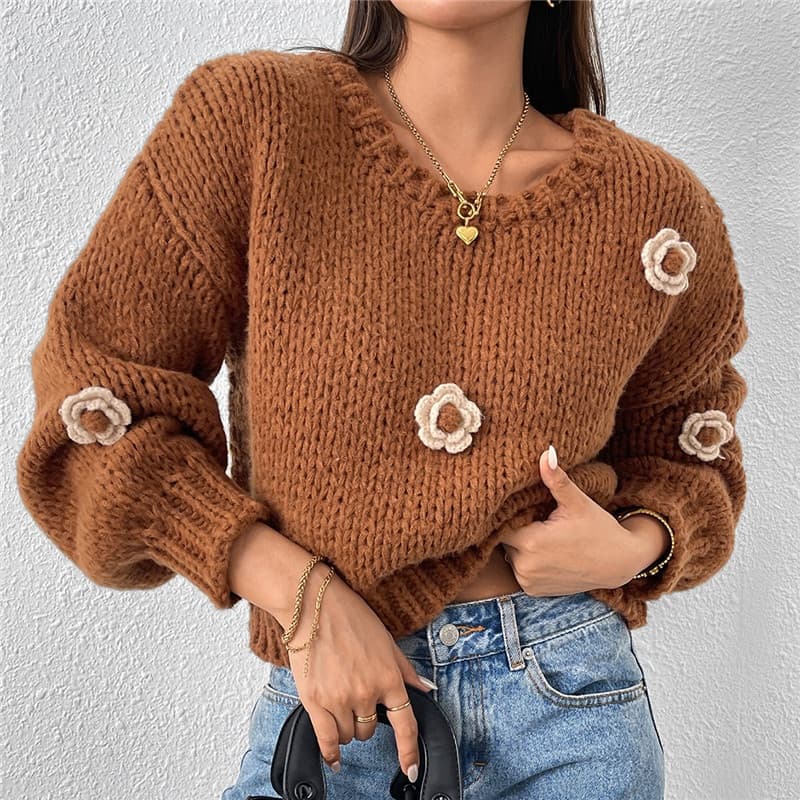
This tutorial provides a systematic, step-by-step framework for evaluating OEM sweater manufacturer capabilities before you commit to a bulk order. It is written for apparel brand owners, private-label retailers, and sourcing managers who need practical verification methods—not marketing fluff. You will learn exactly what documentation to request, which production metrics to audit, and how to interpret factory data to make informed decisions. Relevant specifications and application guidance are available through Women's Pullover Sweater.
Request specific production certifications and quality standards documentation before sending any design files
Audit machine inventory by type, gauge range, and age to match your sweater construction requirements
Verify material sourcing capabilities including yarn suppliers, dyeing partners, and testing lab access
Evaluate sample-to-production consistency through a structured three-sample approval process
Confirm lead time reliability by analyzing past order fulfillment data and capacity utilization rates
Before you begin evaluating any factory, gather these prerequisites:
Your product specification sheet: Include yarn composition (e.g., 100% merino wool, 2/28 NM), gauge requirements (e.g., 7-gauge, 12-gauge), stitch patterns, and size grading details
A target order quantity range: Minimum 500 pieces for small runs, 5,000+ for bulk production
A list of required certifications: Common ones include OEKO-TEX Standard 100, GOTS for organic fibers, WRAP for social compliance, and ISO 9001 for quality management
A budget range per piece: Including FOB pricing, sample costs, and shipping estimates
Having these details ready allows you to ask precise questions rather than generic ones. For example, instead of asking "Can you make sweaters?" you can ask "Can you produce 3,000 pieces of a 12-gauge cashmere-blend pullover with a Fair Isle pattern, using OEKO-TEX certified yarn?"
Request copies of current certifications: Ask for OEKO-TEX Standard 100 certificates (valid for 12 months), ISO 9001:2015 certification, and any social compliance audits like WRAP or BSCI. A legitimate factory will provide these without hesitation.
Check certification scope: Ensure the certificate covers the specific product categories you need. For example, an OEKO-TEX certificate for "knitted garments" should explicitly include sweaters, not just t-shirts.
Verify certification validity: Cross-reference the certificate number on the issuing body's website. OEKO-TEX certificates are publicly searchable at oeko-tex.com.
Ask about in-house testing capabilities: Some factories have their own colorfastness, shrinkage, and pilling testing equipment. Others outsource to third-party labs like SGS or Intertek. Both are acceptable, but in-house testing speeds up the sampling process.
Certifications are not just marketing badges. They represent documented processes that a factory follows daily. ISO 9001 requires documented quality procedures, internal audits, and corrective action systems. OEKO-TEX Standard 100 means every component—yarn, buttons, zippers, threads—has been tested for harmful substances. A factory that maintains these certifications has invested in systems that reduce your risk of receiving non-compliant goods.
Industry data shows that factories with ISO 9001 certification have defect rates averaging 2-3%, compared to 8-12% for uncertified facilities (ISO Survey, 2023). That difference directly impacts your bottom line on a 10,000-piece order.
Accepting expired certificates: A certificate dated 2022 is no longer valid. Always check the issue and expiry dates.
Relying on a single certification: One certification does not cover everything. Quality, environmental, and social compliance are separate areas.
Assuming all certifications are equal: GOTS (organic) and OEKO-TEX (chemical safety) serve different purposes. Know which ones your target market requires.
Request a detailed machine list: Ask for the number of flat-knitting machines by type (manual, semi-automatic, computerized), gauge range (3-gauge to 18-gauge), and brand (e.g., Shima Seiki, Stoll, or domestic Chinese brands).
Calculate theoretical daily output: A computerized 12-gauge flat-knitting machine can produce approximately 40-60 sweater bodies per 8-hour shift, depending on pattern complexity. Multiply by the number of machines to estimate daily capacity.
Ask about finishing equipment: Verify the factory has steam tables, washing machines for pre-shrinking, drying tumblers, and pressing equipment. These are often bottlenecks.
Check machine age and maintenance records: Machines older than 10 years may have inconsistent tension control. Ask for maintenance logs or recent replacement records.
Machine inventory directly determines whether a factory can handle your order volume and specifications. A factory with 20 computerized 12-gauge machines can produce roughly 1,000 sweater bodies per day. For a 5,000-piece order, that means 5 production days—assuming no other orders are running. If the factory has only 5 machines, the same order takes 20 days, which may exceed your lead time.
Gauge range is equally critical. A 3-gauge machine produces chunky, loose-knit sweaters. A 12-gauge machine produces fine-gauge, tighter knits. If your design requires 7-gauge and the factory only has 12-gauge machines, they cannot produce your product correctly.
Confusing total machines with available machines: Some machines may be dedicated to other clients. Ask about current capacity utilization (typically 70-85% for busy factories).
Ignoring finishing capacity: A factory can knit 1,000 bodies per day but only finish 500. This creates a bottleneck that delays your entire order.
Not verifying spare parts availability: Broken needles or yarn feeders can halt production. Ask if the factory stocks common spare parts.
Ask about yarn supplier relationships: Request a list of approved yarn suppliers and their countries of origin. A factory that works with multiple suppliers has more flexibility for price negotiation and backup sourcing.
Verify dyeing capabilities: Ask whether the factory has in-house dyeing or partners with external dye houses. For custom colors, request lab dip turnaround times (typically 3-5 business days).
Request material test reports: For each yarn type you plan to use, ask for fiber composition certificates, shrinkage test results (ISO 6330), and colorfastness to washing (ISO 105-C06) and light (ISO 105-B02).
Check inventory of common yarns: Some factories stock basic yarns (cotton, acrylic, wool blends) for quick sampling. This reduces sample lead time from 3 weeks to 1 week.
Material quality is the foundation of sweater performance. A factory that sources yarn from reputable mills with consistent lot-to-lot color matching reduces your risk of shade variation across production batches. According to ASTM D5431-21, acceptable color difference for commercial textiles is ΔE ≤ 1.0 under D65 lighting. Factories with spectrophotometers can verify this objectively.
Dyeing capability is especially important for private-label brands. If your brand requires a specific Pantone color, the factory must be able to match it within ΔE 1.0. Without in-house or partnered dyeing, you may face 2-3 week delays for lab dips.
Assuming all yarn is the same: Acrylic from different suppliers varies in hand feel, pilling resistance, and dye uptake. Always specify the exact yarn count and fiber blend.
Skipping shrinkage testing: A sweater that shrinks 8% after one wash will be returned by customers. Industry standard for machine-washable wool is ≤5% shrinkage (ISO 6330).
Not verifying lead times for specialty yarns: Cashmere, alpaca, or organic cotton may have 4-6 week lead times from the spinner. Factor this into your production schedule.
Request a three-sample approval process: First sample (fit and design approval), second sample (production standard with correct yarn and finishing), and a pre-production sample (randomly selected from the first production run).
Measure sample-to-production variance: Ask the factory for historical data on how closely production lots match approved samples. Acceptable variance is typically ±2% in garment dimensions and ΔE ≤ 1.0 in color.
Inspect sample construction details: Check stitch density (courses per inch and wales per inch), seam strength, button attachment, and zipper functionality. Use a standard inspection checklist.
Request a production trial run: For large orders (10,000+ pieces), ask the factory to run 100-200 pieces first. Inspect these before authorizing full production.
Sample-to-production inconsistency is the most common complaint among importers. A factory that produces a perfect sample but delivers production with loose stitching, incorrect sizing, or color variation has failed the most basic quality requirement. The root cause is often poor communication between the sampling department and the production floor.
A structured three-sample process forces the factory to document every specification and verify it at each stage. The pre-production sample, in particular, reveals whether the production team can replicate the sample department's work. If the pre-production sample fails, you have caught the problem before 5,000 pieces are produced.
Approving samples without measuring: Visual approval is not enough. Measure every dimension against your spec sheet and record the data.
Accepting samples made from different yarn: Some factories use premium yarn for samples and substitute cheaper yarn for production. Verify yarn composition on the sample label.
Skipping the pre-production sample: This is your last chance to catch errors. Do not authorize full production without it.
Request past order fulfillment data: Ask for a list of recent orders with planned vs. actual delivery dates. A factory with ≥95% on-time delivery is reliable.
Ask about communication protocols: Who is your primary contact? What is the response time for emails (typically within 24 hours)? Do they provide weekly production updates with photos?
Verify shipping and logistics capabilities: Ask about FOB port options, container loading procedures, and whether they handle export documentation (bill of lading, certificate of origin, packing list).
Check for a dedicated quality control team: A factory with a separate QC department (not the production manager) is more likely to catch defects before shipment.
Lead time reliability is as important as product quality. A sweater that arrives one month late may miss your retail season entirely. Factories with documented production planning systems—such as ERP software or Gantt charts—can provide realistic lead times and flag potential delays early.
Communication quality is a leading indicator of professionalism. A factory that responds to your questions within 24 hours, provides clear answers, and sends regular updates is likely to handle production issues proactively. A factory that takes 3 days to reply or gives vague answers will likely be difficult to work with when problems arise.
Accepting unrealistic lead times: If a factory promises 30-day delivery for a complex 12-gauge cashmere sweater, ask for their production schedule. Realistic lead times for custom sweaters are 45-60 days from sample approval.
Not clarifying payment terms: Standard terms are 30% deposit with order, 70% before shipment. Avoid factories that demand 100% payment upfront.
Skipping a factory visit: If possible, visit the factory or hire a third-party inspection company. Photos and videos can be staged.
Use a factory evaluation scorecard: Create a weighted checklist covering certifications (20 points), machine capacity (25 points), material sourcing (20 points), sample consistency (20 points), and communication (15 points). Score each factory and compare objectively.
Request a video walkthrough: Ask the factory to record a 5-minute video showing the knitting floor, finishing area, QC station, and warehouse. This reveals more than static photos.
Start with a trial order: Place an initial order of 200-500 pieces before committing to 5,000+. This tests the factory's processes with minimal financial risk.
Build relationships with multiple factories: Having 2-3 qualified suppliers gives you negotiating leverage and backup options if one factory is at capacity.
Request at least three samples: a fit sample for design approval, a production standard sample with correct yarn and finishing, and a pre-production sample from the first production run. This three-step process catches errors at each stage and ensures production matches your approved sample.
At minimum, request OEKO-TEX Standard 100 for chemical safety and ISO 9001 for quality management. For organic products, require GOTS certification. For social compliance, ask for WRAP or BSCI audits. The specific certifications depend on your target market—European buyers often require OEKO-TEX, while US buyers may prioritize WRAP.
Request a machine list with quantities, gauges, and brands. Ask for their current capacity utilization percentage and recent order fulfillment data. A factory operating at 70-80% capacity with 95%+ on-time delivery is reliable. You can also request a video walkthrough of the production floor to verify machine counts.
Verifying OEM sweater manufacturer capabilities before placing bulk orders is not about finding the cheapest factory. It is about finding a factory that can consistently deliver your specifications on time, within budget, and with acceptable quality. By following this five-step framework—certifications, machine capacity, material sourcing, sample consistency, and lead time reliability—you reduce the risk of costly production failures.
This systematic approach works because it replaces guesswork with verifiable data. You are not relying on a factory's marketing claims or a single sample. You are auditing their documented processes, machine inventory, material sourcing, and past performance. The factories that pass this evaluation are the ones that will treat your order with the same rigor they apply to their own quality systems.
To start your evaluation, review the product range of a qualified manufacturer. For example, Welcome to ZeFeng! As a professional sweater manufacturer, w offers a variety of knitwear categories including Women's Cardigan Sweater and Women's Pullover Sweater. Use the checklist from this tutorial to verify their capabilities before placing your next bulk order. Your next step is to request their certification documents and machine list—then compare the data against your requirements.
Previous: Xanthan Gum Price Trend Q2 2026 | Price Trends, Forecast, Chart, Prices and Index
Next: How to test fabric weight consistency in large-order knitwear production?
Copyright:@2020-2021

Comments Please sign in or sign up to post.
0
0 of 500 characters used