
Metal forming plays a critical role in the automotive industry, serving as the backbone of modern vehicle manufacturing. From body panels and structural frames to engine components and interior brackets, metal forming enables automakers to produce high-strength, lightweight, and cost-efficient parts at scale. As the industry continues to evolve toward electric vehicles (EVs), lightweight design, and sustainable manufacturing, metal forming technologies have become more important than ever.
This in-depth guide explores how metal forming is used in automotive applications, including key processes, materials, advantages, real-world use cases, quality considerations, and future trends.
The automotive sector demands manufacturing methods that combine precision, scalability, and cost efficiency. Metal forming meets these requirements by reshaping metal into complex components without material removal, ensuring high production efficiency and minimal waste.
Key reasons why metal forming is widely adopted in automotive manufacturing include:
Ability to produce high-volume parts consistently
Excellent mechanical strength and structural integrity
Compatibility with automation and robotic systems
Lower unit cost compared to machining or casting
Flexibility to support both mass production and custom components
With millions of vehicles produced every year, automakers rely on metal forming to maintain quality while meeting strict cost and performance targets.
Metal forming is used across nearly every area of a vehicle. Typical automotive components include:
Body panels (doors, hoods, roofs, fenders)
Chassis and frame structures
Engine brackets and mounts
Suspension components
Battery enclosures for EVs
Heat shields and exhaust parts
Interior frames and seat structures
Crash management systems
These parts require precise tolerances, consistent quality, and high mechanical performance, all of which are well-supported by metal forming processes.
Sheet metal forming is the most widely used method in automotive production. Flat metal sheets are shaped into three-dimensional parts through bending, drawing, stamping, and deep forming.
Applications:
Body panels
Door frames
Roof structures
Dashboard frames
Sheet metal forming allows for smooth surfaces, complex geometries, and high-speed production.
Stamping uses high-tonnage presses and precision dies to form metal parts in a single operation. This process is ideal for high-volume automotive components.
Advantages:
Extremely fast cycle times
High dimensional accuracy
Low cost per unit at scale
Typical stamped parts include:
Brackets
Reinforcements
Structural panels
Deep drawing pulls metal into a die cavity to create deep, hollow shapes.
Common uses:
Fuel tanks
Oil pans
Battery casings
Structural housings
This process ensures uniform wall thickness and high strength.
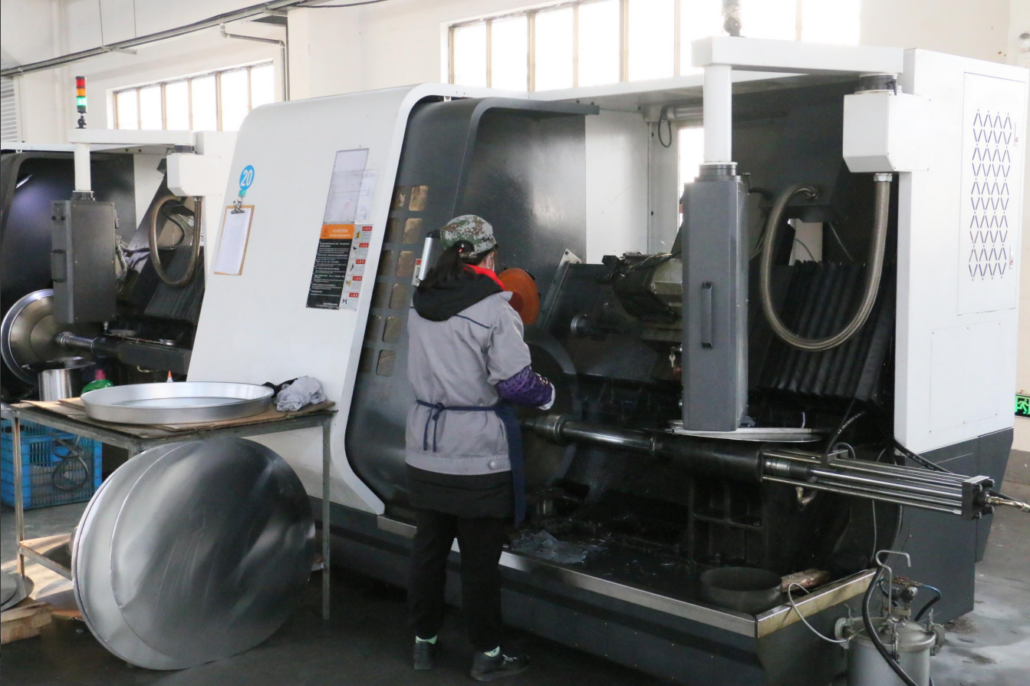
Hydroforming uses pressurized fluid to shape metal tubes or sheets against a die.
Automotive applications:
Exhaust systems
Frame rails
Subframes
Roll cages
Hydroforming produces lightweight yet strong components with fewer welds.
Forging is used for high-load automotive parts requiring superior strength.
Forged components include:
Crankshafts
Connecting rods
Gears
Steering knuckles
Forging improves grain structure and fatigue resistance.
Rolling and extrusion are used for producing structural profiles and long components.
Applications:
Aluminum battery frames
Side impact beams
Heat sinks
Structural rails
Steel remains the dominant material in automotive manufacturing due to its cost-effectiveness and strength.
Common steel types:
Mild steel for body panels
High-strength steel for structural parts
Advanced high-strength steel (AHSS) for safety components
Steel offers excellent crash performance and formability.
Aluminum is increasingly used to reduce vehicle weight and improve fuel efficiency.
Applications:
Hoods and doors
Battery enclosures
Suspension parts
Benefits:
Lightweight
Corrosion resistance
Good thermal properties
Stainless steel is used in components exposed to heat and corrosion.
Typical uses:
Exhaust systems
Heat shields
Structural reinforcements
Titanium, magnesium, and hybrid alloys are used in performance and electric vehicles.
These materials offer:
High strength-to-weight ratio
Improved thermal management
Enhanced durability
Metal forming enables thinner yet stronger parts, helping reduce vehicle weight and improve fuel efficiency or EV range.
Formed parts maintain superior grain flow, enhancing impact resistance and durability.
Metal forming supports automated production lines with minimal downtime.
Compared to machining or casting, metal forming delivers lower material waste and faster cycle times.
Complex shapes and integrated features can be achieved without excessive welding or assembly.
Automotive standards require strict quality control throughout the forming process.
Key quality factors include:
Dimensional accuracy
Surface finish
Material consistency
Fatigue resistance
Compliance with ISO and automotive standards
Inspection methods:
CNC measurement systems
Laser scanning
Real-time process monitoring
Statistical process control (SPC)
The rise of EVs has significantly expanded the role of metal forming.
EV-specific components include:
Battery trays and enclosures
Motor housings
Cooling plates
Structural frames
Metal forming supports:
Lightweight structures for extended range
Improved thermal management
Enhanced crash safety for battery systems
Metal forming aligns well with sustainability goals:
High material utilization
Recyclable metals
Reduced energy consumption compared to casting
Minimal scrap waste
Automakers increasingly adopt metal forming to support carbon reduction and green manufacturing initiatives.
Despite its advantages, metal forming faces certain challenges:
High initial tooling cost
Complex die design
Material springback issues
Tight tolerance requirements
Increasing complexity of multi-material structures
Advanced simulation and digital modeling help overcome these challenges.
Modern automotive manufacturers use simulation software to predict forming behavior before production.
Benefits:
Reduced trial-and-error
Faster development cycles
Lower tooling cost
Improved first-pass quality
Simulation enables better decision-making in material selection and process design.
The future of automotive design focuses on combining steel, aluminum, and composites for optimal performance.
Robotics and AI-driven forming systems improve consistency and productivity.
Hybrid processes combine metal forming and 3D printing for complex components.
Energy-efficient forming processes and recyclable materials will dominate future automotive production.
Metal forming is a foundational technology in the automotive industry, enabling the production of strong, lightweight, and cost-effective components at scale. From traditional combustion vehicles to next-generation electric cars, metal forming supports every stage of automotive innovation.
With continuous advancements in automation, materials, and digital simulation, metal forming will remain a core manufacturing process that drives efficiency, sustainability, and performance across the global automotive sector.
Previous: Metal Screen
Copyright:@2020-2021

Comments Please sign in or sign up to post.
0
0 of 500 characters used