
Selecting the correct Electrical Wire Cable size is essential for ensuring electrical safety, system efficiency, and long-term reliability. Choosing a cable that is too small can lead to overheating, excessive voltage drop, and equipment failure, while an oversized cable may unnecessarily increase project costs.
Understanding how voltage rating and current capacity influence cable selection helps engineers, electricians, contractors, and procurement professionals make informed decisions. As a trusted manufacturer, Biaobang provides high-quality electrical wire and cable solutions engineered to meet international standards across residential, commercial, and industrial applications.
An Electrical Wire Cable is designed to safely carry electrical current under specified operating conditions. Its size determines how much current it can handle without exceeding its temperature limits.
Choosing the correct cable size offers several benefits:
· Improved electrical safety
· Higher energy efficiency
· Reduced power losses
· Longer equipment lifespan
· Compliance with electrical codes
· Lower maintenance costs
Incorrect cable sizing can result in insulation damage, fire hazards, and costly downtime.
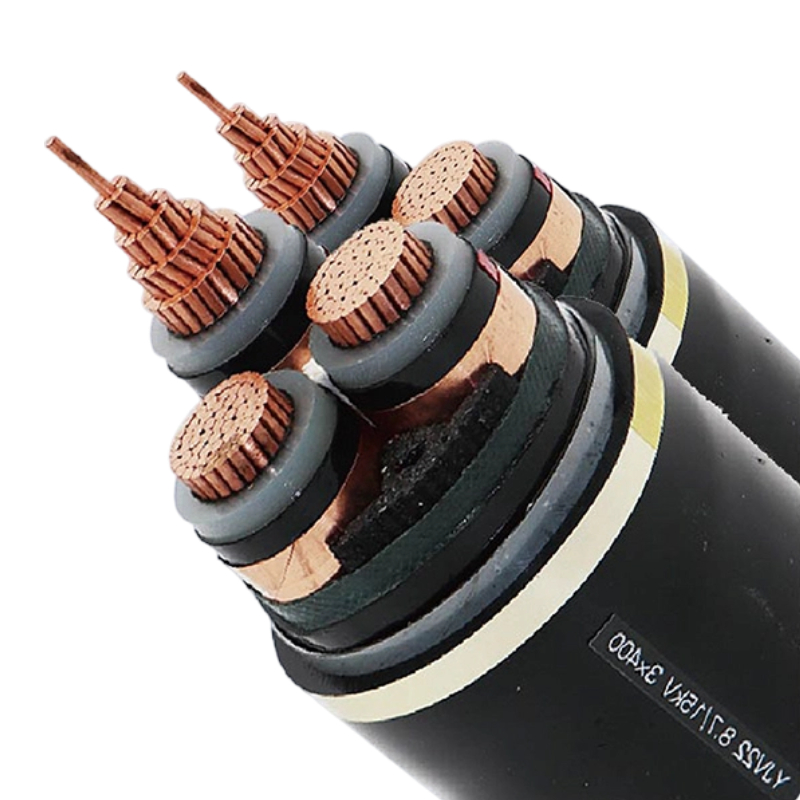
The voltage rating indicates the maximum voltage that an Electrical Wire Cable can safely withstand without insulation failure.
Voltage rating refers to the electrical pressure that the cable insulation is designed to handle safely.
Common voltage ratings include:
· 300V
· 600V
· 1kV
· 3.3kV
· 6.6kV
· 11kV
· 33kV
Higher-voltage applications require thicker insulation and more advanced cable construction.
Selecting the proper voltage rating ensures:
· Reliable insulation performance
· Reduced risk of electrical breakdown
· Enhanced personnel safety
· Compliance with international electrical standards
Using a cable with an insufficient voltage rating may cause insulation degradation and electrical faults.
Current capacity, also called ampacity, is the maximum electrical current that a cable can continuously carry without exceeding its allowable operating temperature.
Several factors influence the current-carrying capability of an Electrical Wire Cable.
Copper conductors provide higher conductivity than aluminum, allowing them to carry more current with a smaller cross-sectional area.
Larger conductors have lower electrical resistance and can safely carry higher currents.
For example:
· Small cables suit lighting circuits.
· Medium cables power commercial equipment.
· Large cables support industrial machinery and power distribution systems.
Different insulation materials have varying temperature ratings.
Common insulation materials include:
· PVC
· XLPE
· Rubber
· LSZH (Low Smoke Zero Halogen)
Higher temperature-rated insulation generally allows greater current capacity.
High surrounding temperatures reduce the cable's ability to dissipate heat.
As ambient temperature increases, current capacity decreases, requiring appropriate derating.
Cable installation significantly affects heat dissipation.
Examples include:
· Open-air installation
· Cable trays
· Underground ducts
· Conduits
· Cable bundles
Closely grouped cables often require derating because heat accumulates more rapidly.
Voltage and current work together to determine the amount of electrical power delivered to equipment.
For a given power demand:
· Higher voltage usually means lower current.
· Lower current reduces conductor heating.
· Lower current allows for smaller voltage drops over long distances.
For example, transmitting power at medium voltage rather than low voltage significantly reduces current requirements, making electrical systems more efficient.
Voltage drop is another critical factor when selecting an Electrical Wire Cable.
Voltage drop is the reduction in voltage that occurs as electricity travels through a conductor due to its resistance.
Excessive voltage drop can cause:
· Equipment malfunction
· Reduced motor efficiency
· Dim lighting
· Increased energy consumption
· Overheating
Increasing conductor size reduces electrical resistance.
Benefits include:
· More stable voltage supply
· Improved equipment performance
· Lower energy losses
· Enhanced system reliability
For long cable runs, engineers often choose larger conductors specifically to minimize voltage drop.
Cable sizing should never rely solely on voltage and current values.
Additional factors include:
Different environments require different cable designs.
Examples include:
· Indoor installations
· Outdoor exposure
· Underground burial
· Chemical plants
· Marine environments
Environmental conditions influence insulation selection and cable protection.
The cable must withstand potential fault currents until protective devices disconnect the circuit.
Larger conductors generally tolerate higher short-circuit energy.
Many industrial projects allow extra capacity for future equipment additions.
Selecting a slightly larger Electrical Wire Cable today can avoid expensive upgrades later.
Typical applications include:
· Lighting circuits
· Household appliances
· Air conditioning systems
· Distribution boards
Copper cables with appropriate voltage ratings are commonly selected for their safety and durability.
Commercial facilities require cables for:
· HVAC systems
· Elevators
· Office equipment
· Emergency power systems
Proper current capacity ensures continuous operation during peak demand.
Industrial environments often involve:
· Heavy machinery
· Motors
· Automation systems
· Manufacturing equipment
These applications require carefully calculated cable sizes to handle continuous high-current loads.
Solar and wind installations rely on correctly sized Electrical Wire Cable products to maximize energy transfer while minimizing power losses.
Choosing a reliable cable manufacturer is just as important as selecting the correct cable size.
Biaobang manufactures premium Electrical Wire Cable solutions for residential, commercial, industrial, and infrastructure projects. Every product is produced using high-quality materials, advanced manufacturing technology, and rigorous quality control procedures to ensure consistent electrical performance, excellent durability, and compliance with international standards.
Whether your project requires low-voltage building wire, industrial power cables, or customized cable solutions, Biaobang provides dependable products designed to meet diverse application requirements.
Selecting the right Electrical Wire Cable size involves much more than matching a conductor to a current value. Engineers must consider voltage rating, current capacity, voltage drop, conductor material, insulation type, installation conditions, ambient temperature, and future expansion needs.
By understanding how these factors work together, businesses can improve safety, reduce energy losses, extend equipment life, and lower operating costs. Partnering with an experienced manufacturer like Biaobang ensures access to high-quality cable solutions that deliver reliable performance in every electrical application.
Previous: How Long Do Ni-Cd Battery Packs Last?
Next: Understanding AC Powered Tracker Controllers: Cost Analysis and Performance Insights
Copyright:@2020-2021

Comments Please sign in or sign up to post.
0
0 of 500 characters used