
Selecting the right drilling equipment has a direct impact on productivity, fuel consumption, and overall project costs. Whether working in mining, quarrying, road construction, or foundation engineering, contractors often compare Top-Hammer Drilling Rigs with Down-the-Hole (DTH) drilling rigs to determine which solution delivers the best performance for their applications.
While both technologies are designed to drill through rock efficiently, they differ significantly in drilling speed, energy transfer, operating costs, and ideal working conditions. Understanding these differences helps contractors maximize return on investment while maintaining consistent drilling quality.
Haichuang Unite provides advanced Top-Hammer Drilling Rigs engineered for high productivity, excellent energy utilization, and reliable operation across demanding construction and mining environments.
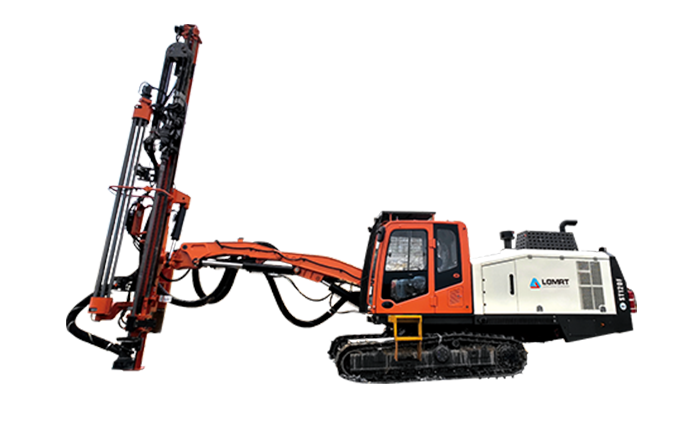
A Top-Hammer Drilling Rig uses a hydraulic or pneumatic rock drill mounted at the top of the drill string. The percussion energy is transmitted through drill rods to the drill bit while the rods simultaneously rotate.
This drilling method offers:
· High drilling speed
· Excellent mobility
· Fast rod handling
· Lower drilling costs in medium-depth holes
· Superior versatility across different rock formations
Top-hammer rigs are widely used for:
· Quarry blasting
· Surface mining
· Road construction
· Railway projects
· Tunnel development
· Urban infrastructure
A Down-the-Hole drilling rig places the hammer directly behind the drill bit. Instead of transmitting impact energy through multiple drill rods, the hammer strikes the bit at the bottom of the hole.
This design minimizes energy loss over long drilling depths and is commonly used for:
· Deep blast holes
· Water well drilling
· Large mining operations
· Hard rock drilling
· High-diameter boreholes
One of the biggest advantages of Top-Hammer Drilling Rigs is their exceptional penetration rate for shallow and medium-depth drilling.
Because hydraulic rock drills generate high-frequency impacts, they can produce:
· Faster drilling cycles
· Higher hole production per shift
· Reduced setup time
· Greater operational efficiency
For blast holes under approximately 30 meters, top-hammer systems frequently outperform DTH rigs in terms of total productivity.
The lightweight drill string also allows operators to complete more holes in less time.
As drilling depth increases, impact energy traveling through drill rods gradually decreases in top-hammer systems.
Since DTH hammers strike directly behind the drill bit, they maintain nearly constant impact energy regardless of hole depth.
For holes exceeding 30–40 meters, DTH rigs generally achieve:
· More consistent penetration
· Better straightness
· Less energy loss
· Improved deep-hole performance
Therefore, drilling depth is a major factor when selecting equipment.
Top-hammer drilling transfers impact energy through multiple drill rods.
Some energy is inevitably lost because of:
· Rod joints
· Elastic deformation
· Friction
· Vibration
However, modern hydraulic technology has significantly improved energy transmission efficiency.
Advanced hydraulic rock drills from Haichuang Unite are engineered to minimize energy loss while maintaining powerful percussion performance.
In DTH drilling, the hammer remains directly behind the drill bit.
This provides:
· Maximum impact efficiency
· Stable drilling force
· Consistent energy delivery
· Reduced transmission losses
Although DTH systems transfer energy more efficiently over long distances, they typically require larger air compressors, which consume considerable fuel and operating power.
Energy efficiency should not be evaluated solely by impact transmission.
Overall operating efficiency includes:
· Fuel consumption
· Hydraulic efficiency
· Compressor requirements
· Maintenance costs
· Operator productivity
Modern hydraulic Top-Hammer Drilling Rigs often require less auxiliary equipment than DTH systems, reducing total energy consumption on many construction projects.
Additional cost advantages include:
· Faster movement between drilling locations
· Reduced idle time
· Lower maintenance frequency
· Simpler transportation
These factors contribute to lower cost per drilled meter in many applications.
DTH rigs rely heavily on compressed air.
Large compressors consume significant diesel fuel, particularly when drilling deep holes continuously.
Although DTH drilling remains highly effective in certain applications, the additional compressor demand increases total energy consumption compared with hydraulic top-hammer systems used for similar shallow drilling tasks.
Today's Top-Hammer Drilling Rigs utilize advanced drilling controls, automatic feed systems, and precise hydraulic mechanisms.
These technologies help achieve:
· Accurate collar positioning
· Consistent hole spacing
· High drilling precision
· Reduced overbreak
· Improved blasting results
For quarry production and infrastructure construction, these benefits can significantly improve downstream efficiency.
When drilling very deep blast holes, DTH systems generally maintain superior straightness because impact energy is generated directly at the bit.
This makes DTH the preferred solution for deep mining operations requiring precise hole alignment.
Choose Top-Hammer Drilling Rigs when projects involve:
· Quarry production
· Road construction
· Railway development
· Urban excavation
· Bench drilling
· Medium-depth blast holes
· High daily production targets
· Frequent equipment relocation
Their combination of speed, mobility, and lower operating costs makes them an ideal solution for contractors seeking maximum productivity.
DTH drilling becomes advantageous when projects require:
· Deep boreholes
· Large-diameter holes
· Extremely hard rock formations
· Water well drilling
· Long blast holes
· Minimal hole deviation over extended depths
Selecting the appropriate drilling method ensures optimal performance and cost efficiency.
The decision between top-hammer and DTH drilling should consider several operational factors, including rock hardness, drilling depth, hole diameter, production targets, equipment costs, and fuel efficiency.
For many surface mining, quarrying, and civil engineering projects, Top-Hammer Drilling Rigs offer an excellent balance of high penetration rates, lower energy consumption, operational flexibility, and reduced lifecycle costs. Their ability to drill rapidly while minimizing fuel use and maintenance makes them a preferred choice for contractors focused on productivity and profitability.
With years of expertise in drilling equipment innovation, Haichuang Unite delivers reliable Top-Hammer Drilling Rigs designed to maximize drilling efficiency, improve energy utilization, and support demanding operations in mining, quarrying, and infrastructure construction. By combining advanced hydraulic technology, durable components, and intelligent control systems, Haichuang Unite helps customers achieve higher output while reducing total operating costs.
Previous: Noise and Vibration Levels Compared: Top-Hammer Rigs vs DTH Systems in Open Pit Mining
Next: Which Compaction Test Suits Highway Subgrade: Proctor or CBR?
Copyright:@2020-2021

Comments Please sign in or sign up to post.
0
0 of 500 characters used