
Highway construction depends on a stable and durable subgrade that can support heavy traffic loads for decades. Before paving begins, engineers must understand the characteristics of the soil and verify that it meets design requirements. This is where Soil Test Equipment plays a critical role.
Among the most commonly used methods for evaluating highway subgrade are the Proctor Compaction Test and the California Bearing Ratio (CBR) Test. While both are essential, they serve different purposes and complement each other rather than compete. Understanding when to use each test helps contractors, laboratories, and engineers make informed decisions that improve pavement performance.
In this guide, we'll compare Proctor and CBR testing, explain their applications, and show how high-quality Soil Test Equipment from HBJF supports accurate and reliable results.
Before discussing individual tests, it's important to understand why compaction matters.
Poorly compacted soil can lead to:
· Uneven pavement settlement
· Cracking and rutting
· Reduced load-bearing capacity
· Increased maintenance costs
· Premature pavement failure
Proper soil testing ensures that field compaction achieves the required density and strength before road construction progresses.
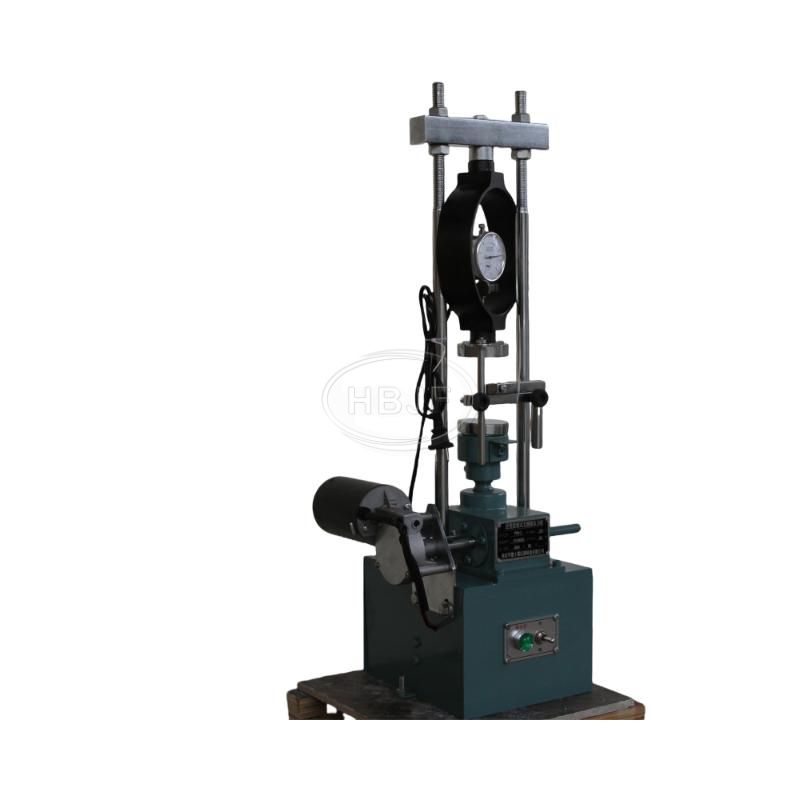
The Proctor Compaction Test determines the relationship between soil moisture content and dry density.
Its primary objective is to identify:
The highest density a soil can achieve under standardized compaction energy.
The moisture level at which maximum dry density is obtained.
These two values become the benchmark for field compaction during highway construction.
Using specialized Soil Test Equipment, technicians:
1. Prepare soil samples.
2. Adjust moisture content.
3. Compact the soil in layers inside a mold.
4. Measure the resulting dry density.
5. Repeat the process with different moisture levels.
6. Plot a compaction curve.
The peak of the curve indicates the Maximum Dry Density and Optimum Moisture Content.
Construction crews use Proctor test results to determine field compaction targets, often requiring 95% to 98% of Maximum Dry Density.
It provides measurable acceptance criteria for inspectors throughout construction.
The test is relatively simple, quick, and widely recognized in international standards.
It works well with many granular and cohesive soils commonly used in highway subgrades.
Unlike the Proctor Test, the CBR Test measures soil strength rather than compaction characteristics.
It evaluates how well compacted soil can resist penetration under load, helping engineers determine pavement thickness requirements.
After preparing and compacting the soil specimen—usually according to Proctor test results—a piston penetrates the sample at a controlled rate.
The measured resistance is compared to a standard crushed rock value to calculate the CBR percentage.
Higher CBR values indicate stronger subgrade soils.
CBR directly reflects how much traffic loading the subgrade can withstand.
Road engineers use CBR values when calculating pavement layer thickness.
Low CBR results may indicate the need for stabilization or replacement before construction.
Many highway specifications worldwide still rely on CBR data for pavement engineering.
Proctor Test
· Determines optimum moisture content
· Determines maximum dry density
· Establishes compaction specifications
CBR Test
· Measures bearing capacity
· Evaluates soil strength
· Supports pavement thickness design
Proctor testing provides:
· Maximum Dry Density (MDD)
· Optimum Moisture Content (OMC)
CBR testing provides:
· California Bearing Ratio (%)
The Proctor Test is generally performed before field compaction begins to establish density targets.
The CBR Test is typically conducted during the pavement design phase to evaluate subgrade performance under traffic loads.
The answer is both.
Neither test replaces the other.
The Proctor Test ensures soil is compacted correctly.
The CBR Test ensures the compacted soil is strong enough to support the designed pavement structure.
Highway projects usually require both tests for complete quality assurance.
A typical highway project follows this sequence:
Engineers first identify soil properties.
Determine:
· Maximum Dry Density
· Optimum Moisture Content
CBR specimens are compacted according to Proctor test results.
Evaluate bearing capacity.
Use CBR values to determine pavement thickness.
Verify construction compaction meets Proctor requirements.
This integrated approach minimizes construction risks and improves long-term pavement performance.
Accurate testing depends not only on proper procedures but also on precision instruments.
Professional laboratories typically require:
· Compaction molds
· Manual or automatic compactors
· Soil mixers
· Moisture testing equipment
· Balances
· Drying ovens
· CBR testing machines
· Penetration pistons
· Load frames
· Soaking tanks
· Dial gauges or digital displacement indicators
High-quality Soil Test Equipment ensures repeatable, standards-compliant results while reducing operator errors.
HBJF provides a comprehensive range of Soil Test Equipment designed for highway engineering laboratories, universities, research institutions, and construction quality control departments.
Key advantages include:
Precision-engineered instruments deliver reliable and repeatable testing results.
Equipment is manufactured to meet widely accepted ASTM, AASHTO, ISO, and other industry testing requirements.
Heavy-duty materials ensure long service life even under intensive laboratory use.
Modern designs improve testing efficiency and reduce training requirements.
HBJF supplies comprehensive testing systems covering soil mechanics, asphalt, concrete, cement, and aggregate testing, enabling laboratories to source all essential equipment from one trusted provider.
When evaluating highway subgrades, the question is not whether the Proctor Test or the CBR Test is better—it is how they work together. The Proctor Test establishes the ideal compaction conditions, while the CBR Test measures the soil's ability to support traffic loads. Together, they provide the foundation for safe, durable, and cost-effective road construction.
Investing in reliable Soil Test Equipment is essential for obtaining accurate data and maintaining quality throughout every stage of a project. With advanced testing solutions from HBJF, engineers and laboratories can perform both Proctor and CBR tests with confidence, ensuring highway subgrades meet the highest standards of performance and long-term durability.
Previous: Which Ice Machine Type Is More Suitable for Hotels, Bars, and Restaurant Beverage Service?
Next: Powder Sachet Packaging Machine for High-Speed Industrial Powder Packaging Lines
Copyright:@2020-2021

Comments Please sign in or sign up to post.
0
0 of 500 characters used