
In cold climate regions, insulation systems must do more than reduce heat loss—they must also control moisture. Without proper vapor management, condensation can form inside walls, roofs, and ducts, leading to mold growth, material degradation, and reduced insulation performance. Glass Wool Board With Aluminum Foil is widely used as an effective solution because it combines thermal insulation with a built-in vapor barrier.
With the added aluminum foil facing, products like Huana Glass Wool Board With Aluminum Foil help prevent vapor condensation while maintaining stable indoor temperatures in harsh winter environments.
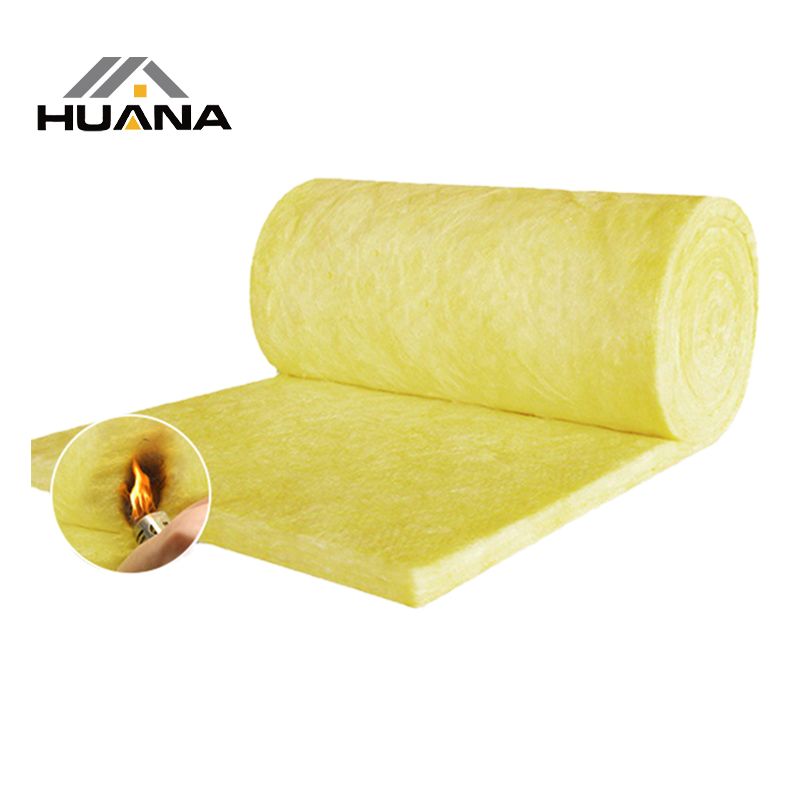
Glass Wool Board With Aluminum Foil is an insulation material made from fine glass fibers compressed into rigid boards, with one side laminated with aluminum foil. The glass wool core traps air to reduce conductive heat transfer, while the foil layer acts as a reflective and moisture-resistant barrier.
This dual-layer structure makes it suitable for buildings exposed to temperature extremes, especially where warm indoor air meets cold external surfaces.
To understand how aluminum foil helps, it is important to first understand condensation.
In cold climates, indoor air is usually warm and contains moisture from daily activities such as cooking, breathing, and washing. When this warm, moist air comes into contact with cold surfaces inside walls or roofs, it cools rapidly.
Once the air temperature drops below the dew point, water vapor turns into liquid droplets—this is condensation.
Condensation does not always appear on visible surfaces. It often forms inside insulation layers, roof assemblies, or wall cavities, where it is difficult to detect until damage occurs.
Over time, trapped moisture can cause:
· Mold and mildew growth
· Corrosion of metal components
· Reduced insulation efficiency
· Structural deterioration
The aluminum foil facing plays a critical role in controlling moisture movement and preventing condensation inside insulation systems.
The aluminum foil layer significantly reduces the passage of water vapor through the insulation.
By limiting moisture migration, it prevents warm indoor air from reaching cold surfaces where condensation would normally form.
This is especially important in:
· Cold storage facilities
· Refrigerated warehouses
· Northern residential buildings
· Industrial facilities in winter climates
In addition to moisture control, aluminum foil reflects radiant heat back toward the interior space.
This helps maintain a more stable temperature gradient across building assemblies, reducing the risk of sudden temperature drops that trigger condensation.
When moisture enters standard insulation, it can compress fibers and reduce trapped air pockets, lowering thermal performance.
With foil facing protection, Glass Wool Board With Aluminum Foil stays dry and maintains its original insulation efficiency over time.
The effectiveness of Glass Wool Board With Aluminum Foil comes from the combined action of thermal insulation and vapor control.
Glass wool fibers trap air and slow down heat conduction, keeping indoor environments warm even in extremely cold conditions.
This reduces heating demand and improves energy efficiency.
The aluminum foil layer blocks or slows vapor diffusion, ensuring moisture does not accumulate inside the insulation system.
Together, these properties create a balanced building envelope that performs well in both thermal and moisture management.
In cold regions, homes require insulation that prevents heat loss and condensation inside wall cavities.
Foil-faced glass wool is commonly installed in:
· Roof trusses
· Exterior walls
· Attics and ceilings
This helps maintain comfort while protecting building materials from moisture damage.
Heating systems in cold climates must deliver warm air efficiently without heat loss or condensation.
The aluminum foil facing helps maintain duct temperature and prevents moisture from forming on duct surfaces.
Facilities such as cold rooms, refrigerated warehouses, and food processing plants require strict moisture control.
Huana Glass Wool Board With Aluminum Foil is used to maintain thermal stability and prevent condensation-related equipment damage.
Correct installation is essential for maximizing vapor control performance.
The aluminum foil should always face the warm side of the structure, typically the interior side in cold climates. This placement helps block vapor before it enters the insulation layer.
Even small gaps can allow moisture to pass through. Using aluminum foil tape ensures a continuous vapor barrier across the surface.
Air leakage carries significantly more moisture than vapor diffusion. Proper sealing around joints, edges, and penetrations is critical for condensation prevention.
Glass wool is naturally non-combustible, making it suitable for buildings with strict fire safety requirements.
The fibrous structure absorbs sound waves, reducing noise transmission in residential and commercial spaces.
When properly installed, Huana Glass Wool Board With Aluminum Foil maintains stable performance for many years without significant degradation.
Huana provides high-performance insulation solutions designed for demanding environmental conditions.
Key advantages include:
· Excellent thermal insulation in cold climates
· Reliable vapor barrier protection
· Strong resistance to condensation formation
· High fire safety performance
· Effective acoustic insulation
· Lightweight and easy installation
· Long service life and stable performance
These characteristics make Huana insulation suitable for residential, commercial, and industrial applications in both temperate and extreme cold regions.
Condensation is one of the most serious challenges in cold climate building design, but it can be effectively controlled with the right insulation system. Glass Wool Board With Aluminum Foil provides a dual-function solution by combining thermal insulation with a strong vapor barrier.
By preventing moisture penetration and stabilizing temperature differences, it reduces the risk of condensation damage while improving energy efficiency. With reliable performance and long-term durability, Huana Glass Wool Board With Aluminum Foil is an effective choice for modern construction projects in cold environments.
Previous: Water Resistance: Glass Mosaic Tiles vs Ceramic Tiles Compared
Next: Glass Wool Board with Aluminum Foil: How the Foil Layer Improves Radiant Heat Blocking
Copyright:@2020-2021

Comments Please sign in or sign up to post.
0
0 of 500 characters used