
Selecting the right Optical Glass Filter is essential for maximizing the performance of cameras and imaging systems. Whether used in machine vision, medical diagnostics, scientific research, surveillance, or industrial inspection, optical filters directly influence image quality, signal accuracy, and system reliability.
However, choosing an optical filter is not simply a matter of selecting a wavelength range. Engineers must carefully match filter specifications to the camera sensor, illumination source, environmental conditions, and application objectives. Understanding these requirements can help ensure optimal system performance and long-term operational success. As a trusted optical component manufacturer, Yanggu provides high-quality Optical Glass Filters designed to meet the diverse needs of modern imaging systems.
Optical Glass Filters control the wavelengths of light that reach a camera sensor. By selectively transmitting or blocking specific portions of the spectrum, filters improve image contrast, reduce unwanted noise, and enhance feature detection.
Without the proper filter, imaging systems may experience:
· Poor image contrast
· Excessive glare
· Background light interference
· Reduced measurement accuracy
· Lower detection reliability
The correct filter allows the imaging system to capture only the information that is most relevant to the application.
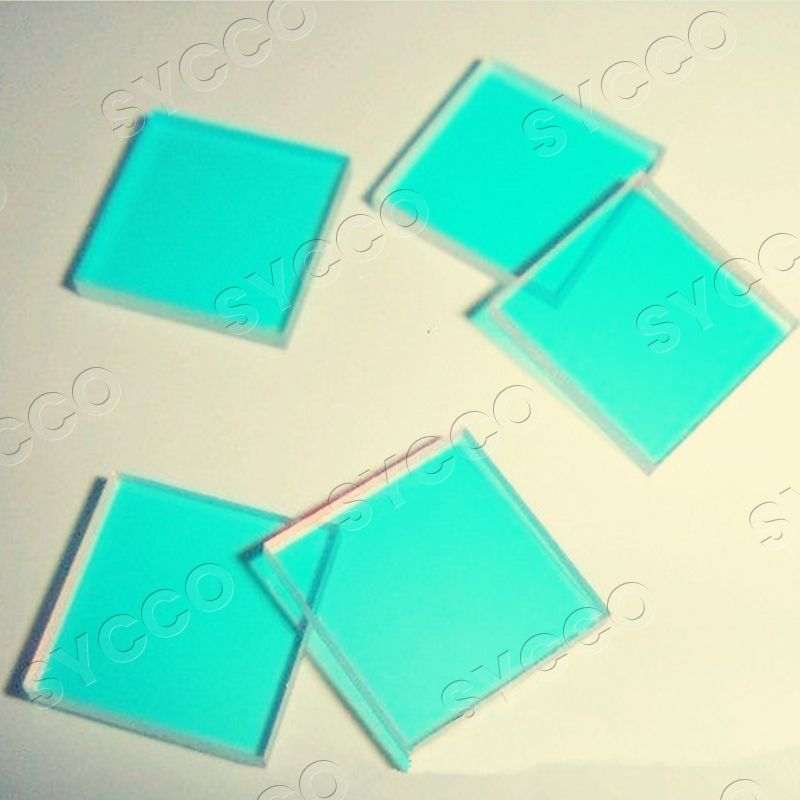
The first specification to consider is the filter's operating wavelength range.
Different imaging applications use different portions of the electromagnetic spectrum:
Spectrum Region | Wavelength Range |
Ultraviolet (UV) | 100–400 nm |
Visible Light | 400–700 nm |
Near Infrared (NIR) | 700–2500 nm |
Short-Wave Infrared (SWIR) | 900–2500 nm |
The filter must be compatible with the spectral sensitivity of the camera sensor and the illumination source.
Transmission rate indicates how much light passes through the filter within the desired wavelength range.
High transmission provides:
· Brighter images
· Improved signal strength
· Better image clarity
· Enhanced sensor efficiency
For precision imaging systems, filters with high transmission efficiency are often preferred.
Optical density measures the filter's ability to block unwanted wavelengths.
Higher optical density offers:
· Improved background suppression
· Better image contrast
· Reduced spectral contamination
This specification is especially important in scientific imaging and fluorescence applications.
CCD cameras are widely used in scientific and industrial imaging due to their high image quality.
When selecting Optical Glass Filters for CCD systems, consider:
· Sensor spectral sensitivity
· Required wavelength isolation
· Exposure conditions
Proper filter selection helps maximize image accuracy and contrast.
CMOS sensors are common in machine vision, surveillance, and consumer imaging systems.
Key filter considerations include:
· Infrared sensitivity
· Light source compatibility
· Frame rate requirements
Many CMOS cameras benefit from filters that reduce unwanted infrared interference.
Infrared imaging systems require filters specifically designed for NIR or SWIR wavelengths.
Common applications include:
· Thermal inspection
· Night vision
· Agricultural imaging
· Industrial monitoring
Filters must provide high transmission within the target infrared spectrum while effectively blocking visible light.
Bandpass Optical Glass Filters transmit only a specific wavelength range while blocking wavelengths outside the target band.
Advantages include:
· High wavelength selectivity
· Improved signal-to-noise ratio
· Enhanced measurement precision
Typical applications:
· Fluorescence imaging
· Laser systems
· Spectroscopy
· Scientific research
Longpass filters transmit wavelengths above a selected cutoff wavelength.
Benefits include:
· Infrared enhancement
· Visible light suppression
· Improved image contrast
These filters are commonly used in infrared imaging systems.
Shortpass filters allow shorter wavelengths to pass while blocking longer wavelengths.
Applications include:
· Color imaging
· Infrared rejection
· Optical testing systems
They are particularly useful when infrared contamination must be minimized.
Many machine vision systems use LEDs as illumination sources.
When selecting filters, engineers should consider:
· LED emission spectrum
· Peak wavelength
· Bandwidth characteristics
Matching filter transmission to LED output improves imaging efficiency.
Laser-based imaging systems require highly precise filtering.
Bandpass filters are often selected to:
· Isolate laser wavelengths
· Eliminate ambient light
· Improve measurement accuracy
Broad-spectrum sources such as halogen and xenon lamps may require specialized filtering to isolate desired wavelength regions.
Proper filter selection helps improve image consistency and signal quality.
Imaging systems may operate in environments with:
· High temperatures
· Humidity
· Dust exposure
· Mechanical vibration
Optical Glass Filters should be chosen based on expected environmental conditions to ensure long-term reliability.
High-quality coatings provide:
· Reflection control
· Moisture resistance
· Scratch protection
· Enhanced transmission
Durable coatings help maintain optical performance throughout the filter's service life.
Machine vision applications often prioritize:
· High contrast
· Fast image processing
· Precise feature recognition
Bandpass filters are frequently used to optimize detection performance.
Medical imaging systems require:
· Accurate wavelength control
· High optical clarity
· Consistent transmission characteristics
Specialized Optical Glass Filters support precise diagnostic imaging.
Research instruments often demand:
· Narrow spectral bandwidths
· High optical density
· Exceptional transmission efficiency
Selecting the correct filter is critical for obtaining reliable experimental data.
Yanggu offers a comprehensive range of Optical Glass Filters designed for advanced imaging applications.
Key advantages include:
· Precise wavelength control
· High transmission performance
· Superior optical quality
· Durable coating technologies
· Custom filter solutions
These capabilities help engineers optimize camera performance and achieve greater imaging accuracy across diverse industries.
Successfully matching Optical Glass Filters to camera and imaging system requirements requires careful evaluation of wavelength range, transmission efficiency, optical density, sensor compatibility, illumination sources, and environmental conditions.
By selecting filters that align with the specific needs of the imaging system, engineers can improve image quality, reduce noise, and enhance measurement accuracy. With advanced manufacturing expertise and reliable optical solutions, Yanggu provides Optical Glass Filters that help imaging systems achieve exceptional performance and long-term reliability.
Previous: Mechanical and Thermal Properties Driving Quartz Glass Substrate Adoption
Next: How Cut Angle Impacts Performance of Single Crystal Quartz Wafers
Copyright:@2020-2021

Comments Please sign in or sign up to post.
0
0 of 500 characters used