
As advanced industries continue to demand materials capable of performing under extreme operating conditions, Quartz Glass Substrates have become a preferred choice for semiconductor manufacturing, photonics, aerospace, laser systems, and scientific instrumentation. Their unique combination of mechanical strength, thermal stability, and optical performance enables reliable operation in environments where conventional glass materials often fail.
With the rapid development of 5G communications, semiconductor fabrication, high-power lasers, and precision optical equipment, manufacturers are increasingly selecting Quartz Glass Substrates to improve product reliability and long-term performance. CQT manufactures high-quality quartz glass substrates engineered to meet the demanding requirements of today's advanced industrial and research applications.
A Quartz Glass Substrate is a high-purity material primarily composed of silicon dioxide (SiO₂). Unlike conventional glass, quartz glass features an amorphous structure with exceptional thermal, mechanical, and optical properties.
Its key characteristics include:
· High thermal resistance
· Low thermal expansion
· Excellent optical transparency
· Superior chemical resistance
· High dimensional stability
· Outstanding purity
These advantages make quartz glass suitable for applications requiring precision, durability, and consistent performance under challenging conditions.
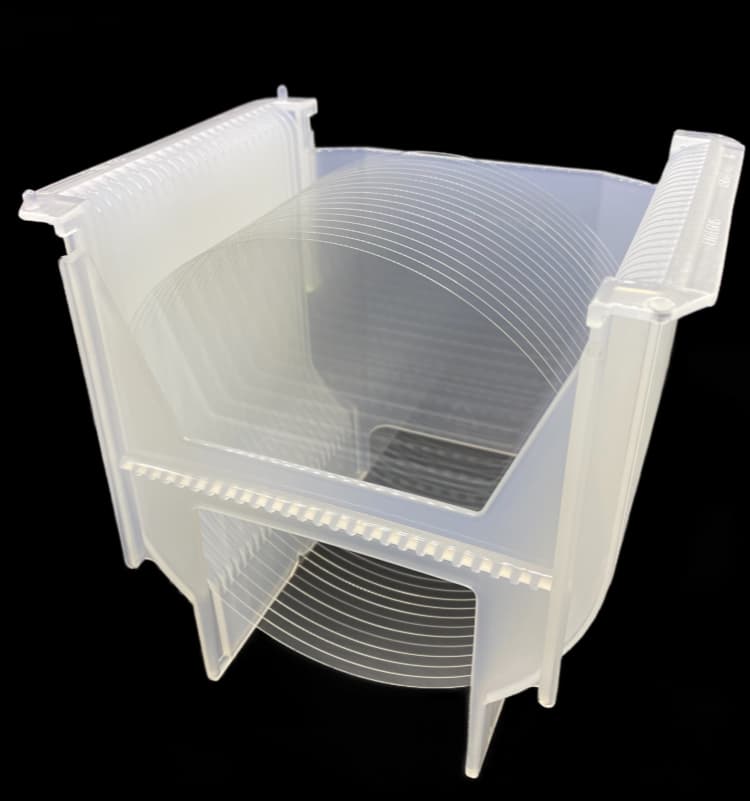
Many modern manufacturing processes expose materials to:
· Rapid temperature changes
· High operating temperatures
· Mechanical vibration
· Chemical corrosion
· Vacuum environments
· Precision optical alignment
Materials that cannot maintain their physical properties under these conditions may experience deformation, cracking, or performance degradation.
The outstanding mechanical and thermal characteristics of Quartz Glass Substrates help overcome these challenges.
One of the most valuable mechanical advantages of quartz glass is its ability to maintain precise dimensions throughout operation.
Unlike many conventional materials, quartz glass experiences very little deformation when exposed to mechanical stress or changing temperatures.
This dimensional stability is essential for:
· Semiconductor processing equipment
· Optical alignment systems
· Precision measurement devices
· Scientific instruments
Maintaining accurate dimensions helps improve manufacturing consistency and system reliability.
Although quartz glass is not as hard as sapphire, it offers excellent mechanical strength for most industrial applications.
Its robust structure provides reliable resistance to:
· Mechanical loading
· Operational vibration
· Moderate impact
· Long-term fatigue
These characteristics make quartz glass suitable for equipment operating continuously in demanding environments.
Precision manufacturing produces Quartz Glass Substrates with high-quality polished surfaces that resist surface defects.
Excellent surface quality contributes to:
· Improved optical transmission
· Better coating adhesion
· Reduced particle generation
· Enhanced product reliability
Surface integrity is particularly important in semiconductor cleanroom environments where contamination must be minimized.
One of the defining advantages of quartz glass is its remarkably low coefficient of thermal expansion.
This property allows the material to maintain its shape even when exposed to significant temperature fluctuations.
Benefits include:
· Stable dimensions
· Reduced thermal stress
· Improved optical alignment
· Greater manufacturing accuracy
Low thermal expansion is particularly valuable in semiconductor processing and precision optical equipment.
Many industrial processes operate at elevated temperatures.
Examples include:
· Semiconductor wafer processing
· Chemical vapor deposition
· Laser manufacturing
· Furnace applications
· Scientific research equipment
Quartz Glass Substrates maintain excellent structural stability under these conditions, making them suitable for long-term operation in high-temperature environments.
Thermal shock occurs when materials experience rapid heating or cooling.
Conventional glass may crack under these conditions due to uneven expansion.
Quartz glass performs exceptionally well because its low thermal expansion minimizes internal stress during sudden temperature changes.
This improves equipment durability while reducing maintenance costs.
The combination of mechanical durability and thermal stability provides significant advantages across multiple industries.
Quartz glass helps maintain consistent equipment performance by reducing:
· Material deformation
· Component failure
· Optical misalignment
· Unexpected downtime
Reliable components contribute to higher manufacturing productivity.
Because quartz glass resists heat, chemical attack, and mechanical fatigue, components typically achieve longer operational lifespans.
This reduces:
· Replacement frequency
· Maintenance requirements
· Operating costs
Lower lifecycle costs make quartz glass an attractive investment for industrial users.
Semiconductor fabrication is one of the largest consumers of Quartz Glass Substrates.
Applications include:
· Wafer processing chambers
· Process tubes
· Optical windows
· Photolithography equipment
· Inspection systems
The industry's demand for high-purity, thermally stable materials continues to grow as chip manufacturing advances.
High-power laser equipment requires materials capable of withstanding intense energy while maintaining optical clarity.
Quartz glass is commonly used in:
· Laser windows
· Beam delivery systems
· Protective optical components
· Precision laser instruments
Its thermal stability helps maintain consistent laser performance.
Aerospace systems operate under extreme environmental conditions.
Quartz glass substrates support applications involving:
· Satellite optics
· Navigation equipment
· Scientific payloads
· High-temperature sensors
Their dimensional stability and resistance to thermal cycling make them highly reliable.
Research laboratories and medical equipment manufacturers use quartz glass for:
· Spectroscopy systems
· UV optical instruments
· Laboratory analysis equipment
· Precision sensors
Its purity and optical performance improve measurement accuracy and long-term reliability.
Professional procurement teams consider several important specifications.
High-purity quartz minimizes contamination while improving optical and mechanical performance.
Buyers evaluate:
· Operating temperature range
· Thermal expansion coefficient
· Thermal shock resistance
These properties determine suitability for demanding environments.
Important factors include:
· Flatness
· Thickness tolerance
· Surface finish
· Dimensional consistency
Precision manufacturing ensures reliable system integration.
Consistent production processes improve:
· Product reliability
· Batch-to-batch consistency
· Long-term performance
Choosing an experienced manufacturer helps ensure dependable results.
CQT specializes in manufacturing premium Quartz Glass Substrates for semiconductor, optical, aerospace, and industrial applications. Through advanced production technology and strict quality control, CQT delivers substrates that combine outstanding mechanical strength with excellent thermal performance.
Key advantages include:
· High-purity quartz materials
· Exceptional thermal stability
· Low thermal expansion
· Precision polishing and machining
· Excellent dimensional accuracy
· Superior optical transmission
· Customized substrate solutions
· Consistent manufacturing quality
These strengths enable CQT to meet the demanding requirements of customers worldwide.
The growing adoption of Quartz Glass Substrates is driven by their exceptional mechanical and thermal properties. Their low thermal expansion, high-temperature resistance, thermal shock performance, dimensional stability, and mechanical durability make them indispensable in semiconductor processing, laser systems, aerospace technology, and scientific research.
As industries continue to pursue greater precision and reliability, the demand for advanced quartz materials will only increase. With its expertise in precision manufacturing and quality assurance, CQT provides high-performance Quartz Glass Substrates that help customers achieve superior performance in today's most demanding applications.
Previous: How to choose the best USB HD Camera Module for your device?
Next: How Coating Type and Surface Quality Affect Optical Glass Filter Performance
Copyright:@2020-2021

Comments Please sign in or sign up to post.
0
0 of 500 characters used