
In the field of pavement engineering, accurate material testing is essential for ensuring asphalt quality, durability, and compliance with industry standards. Among the many types of Asphalt Testing Equipment, the asphalt penetration tester plays a critical role in determining the hardness and consistency of bitumen. However, even a high-quality instrument can produce inaccurate results if calibration errors occur.
For laboratories, contractors, and research institutions, understanding the calibration issues that most affect asphalt penetration tester accuracy is vital for maintaining reliable testing performance. HBJF provides advanced testing solutions designed to reduce measurement errors and improve laboratory efficiency.
An asphalt penetration test measures how deeply a standard needle penetrates a bitumen sample under controlled conditions of load, time, and temperature. The result indicates the hardness or softness of the asphalt binder, which directly affects pavement performance.
Because penetration values are highly sensitive to environmental and mechanical conditions, calibration accuracy is essential. Even small deviations can lead to incorrect material classification and poor construction decisions.
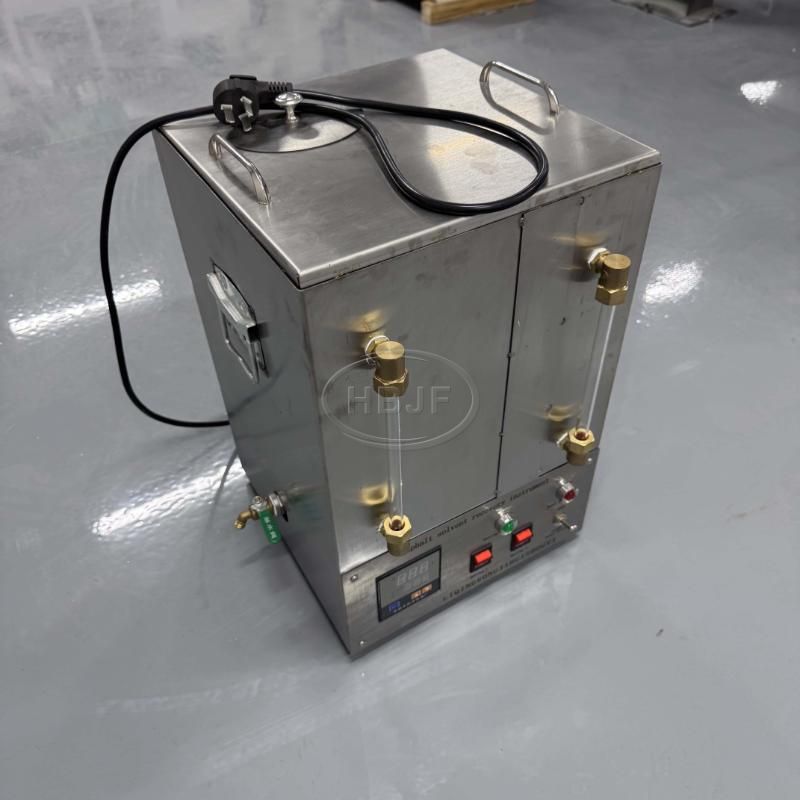
Proper calibration ensures that all testing parameters remain within standard tolerances. Inaccurate calibration can cause:
· Incorrect penetration readings
· Non-compliance with ASTM or EN standards
· Reduced repeatability between tests
· Inconsistent laboratory reports
· Poor pavement quality control
Regular calibration of Asphalt Testing Equipment helps laboratories maintain precision and reliability over time.
One of the most critical factors in penetration testing is the applied load. Standard penetration tests typically require a total load of 100 grams. If the tester applies too much or too little force, the penetration depth will be inaccurate.
· Excessive load increases penetration depth artificially
· Insufficient load produces lower penetration values
· Results become inconsistent across different laboratories
· Worn or damaged weights
· Improper balance adjustment
· Mechanical friction in the loading system
· Failure to verify weight accuracy regularly
Routine inspection and recalibration of weights are necessary to maintain compliance.
The standard penetration duration is usually 5 seconds. Even a slight timing deviation can significantly affect the final measurement.
· Delayed start mechanisms
· Electronic timer drift
· Inconsistent automatic release systems
If the needle remains in contact with the sample longer than specified, the penetration value increases. Shorter durations result in lower readings.
Modern automated Asphalt Testing Equipment from HBJF helps minimize timing inconsistencies through digital control systems.
Temperature is one of the biggest variables in bitumen testing. Asphalt materials soften rapidly as temperature rises, making precise temperature control essential.
Most penetration tests are performed at 25°C. Even a 1°C variation can noticeably alter penetration results.
· Faulty temperature sensors
· Improper water bath calibration
· Uneven temperature distribution
· Lack of regular thermometer verification
· Higher temperatures increase penetration depth
· Lower temperatures reduce penetration values
· Data becomes unreliable for material grading
Laboratories should frequently calibrate water baths and temperature sensors to maintain stable conditions.
The penetration needle must move vertically without resistance. Misalignment causes friction or angular movement, which affects penetration depth.
· Bent guide rods
· Loose mounting structures
· Improper installation
· Wear in moving components
· Reduced penetration consistency
· Increased repeatability errors
· Difficulty meeting testing standards
Regular mechanical inspection is an important part of maintaining accurate Asphalt Testing Equipment.
Over time, penetration needles may become dull, bent, or contaminated.
· Increased surface resistance
· Irregular penetration patterns
· False hardness readings
Operators should replace damaged needles immediately and use certified components only.
Even advanced equipment can produce inaccurate data if operators make calibration mistakes.
Before testing begins, the needle tip must be properly aligned with the sample surface. Incorrect zero positioning directly affects penetration measurements.
· Setting the needle above the surface
· Excessive needle contact pressure
· Poor visual alignment
Training technicians on correct setup procedures is essential for improving test reliability.
Some laboratories calibrate equipment only when visible problems occur. However, regular preventive calibration is necessary for maintaining long-term accuracy.
· Daily verification checks
· Monthly performance inspections
· Annual full calibration certification
Consistent maintenance reduces unexpected errors and extends equipment lifespan.
External vibrations from nearby machinery or foot traffic can interfere with precise penetration measurements.
· Use vibration-resistant tables
· Install equipment on stable surfaces
· Minimize nearby mechanical activity
Dust accumulation inside mechanical parts may increase friction and affect movement accuracy.
· Clean equipment regularly
· Cover instruments when not in use
· Maintain controlled laboratory environments
Advanced digital systems now help laboratories reduce human error and improve consistency.
Modern features include:
· Automatic timing systems
· Digital temperature monitoring
· Precision load control
· Self-calibration functions
· High-resolution measurement displays
HBJF develops intelligent Asphalt Testing Equipment designed to improve testing precision while simplifying laboratory operation.
To achieve reliable penetration test results, laboratories should follow these best practices:
Verify:
· Load weights
· Timer accuracy
· Temperature stability
· Needle alignment
Document:
· Calibration dates
· Equipment adjustments
· Technician information
· Test verification results
Reference samples help verify equipment performance and ensure consistent measurement standards.
Well-trained technicians are critical for minimizing setup and operational errors.
Calibration accuracy is one of the most important factors affecting asphalt penetration tester performance. Errors involving load, timing, temperature, mechanical alignment, and operator setup can significantly impact testing reliability and asphalt quality evaluation.
By implementing regular maintenance procedures, using certified calibration standards, and investing in advanced Asphalt Testing Equipment, laboratories can greatly improve accuracy and consistency.
As a professional manufacturer of testing instruments, HBJF continues to provide dependable solutions that help laboratories achieve precise, standards-compliant asphalt testing results worldwide.
Previous: What Maintenance Does an Asphalt Water Bath Require for Accuracy?
Next: Margarine Production Manufacturer: Key Technology Behind Stable Industrial Margarine Production
Copyright:@2020-2021

Comments Please sign in or sign up to post.
0
0 of 500 characters used