
Designing a successful sports facility involves much more than selecting the right flooring or equipment. One of the most important factors influencing a Custom Sports Venue is the size and shape of the available site. These physical characteristics directly impact court layout, spectator areas, accessibility, drainage systems, lighting placement, and future expansion possibilities.
Whether planning a padel court complex, tennis center, football field, or multi-sport facility, understanding site limitations and opportunities is essential for maximizing functionality and long-term value. Prosper Padel specializes in customized sports venue solutions that adapt to different land conditions while maintaining professional standards and player experience.
This article explains how site size and shape affect sports venue design options and why proper planning is critical for project success.
Every sports venue project starts with evaluating the construction site. A poorly planned layout can lead to:
· Inefficient use of space
· Reduced player safety
· Poor spectator flow
· Drainage problems
· Limited future expansion
· Higher maintenance costs
A professionally designed Custom Sports Venue balances aesthetics, performance, safety, and operational efficiency based on the site’s characteristics.
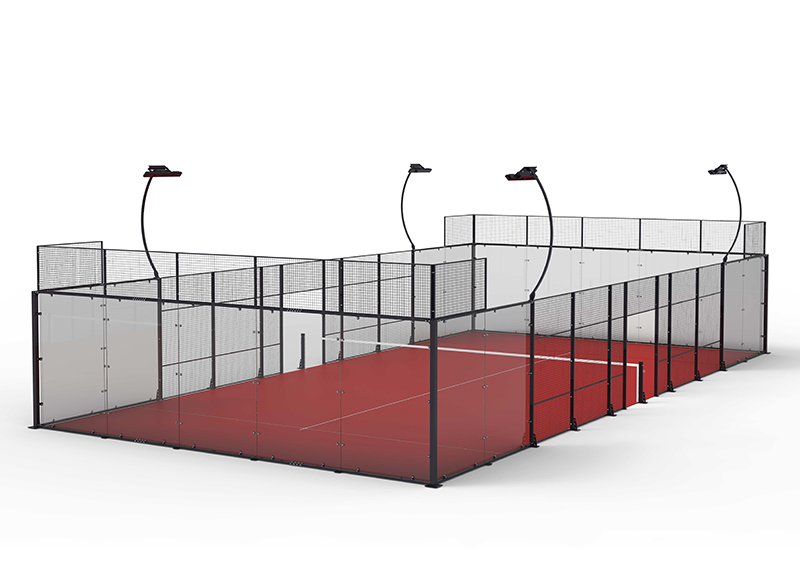
The total available land area significantly affects the design possibilities of a sports facility.
A large site offers greater flexibility for venue planning and future growth.
Larger spaces allow multiple courts or fields to be installed within the same facility.
Additional space supports seating areas, walkways, parking, and recreational zones.
Large layouts improve movement for players, visitors, and maintenance vehicles.
Facilities can add additional courts, training areas, or commercial spaces later.
Prosper Padel often recommends scalable layouts for clients planning long-term sports business development.
Limited site size requires more strategic planning and creative solutions.
Designers must maximize every available square meter without compromising safety or usability.
Multi-purpose courts or modular sports areas may be necessary in smaller locations.
Parking, seating, and landscaping may need to be minimized or integrated efficiently.
Precise engineering becomes critical when working with restricted dimensions.
An experienced Custom Sports Venue designer can still create a highly functional facility even in compact urban spaces.
The shape of the land is just as important as the total size.
Rectangular plots are often the easiest and most cost-effective for sports venue construction.
· Efficient court alignment
· Easier player circulation
· Simpler lighting installation
· Better use of standard court dimensions
· Padel court complexes
· Tennis centers
· Football training fields
Most sports facilities are ideally suited to rectangular layouts.
Irregular or angled plots create unique design challenges.
· Uneven spacing between courts
· Complex drainage planning
· Reduced construction efficiency
· More customized engineering requirements
Professional designers may use:
· Angled court placement
· Multi-level layouts
· Customized fencing systems
· Creative landscaping integration
Prosper Padel provides tailored design solutions for challenging site conditions.
Long and narrow sites require careful planning to maintain usability.
· Single-row court arrangements
· Reduced spectator areas
· Optimized access pathways
· Limited circulation space
· Restricted parking options
· More complicated maintenance access
However, narrow sites can still support highly effective Custom Sports Venue projects with proper design optimization.
Site orientation affects both player comfort and facility performance.
Improper court orientation may create glare issues during gameplay.
Open sites may require wind barriers or strategic fencing placement.
The shape and direction of the site influence artificial lighting installation and energy usage.
Professional site analysis helps optimize both outdoor and indoor sports environments.
Site size and shape directly impact water drainage systems.
Poor drainage can cause:
· Surface damage
· Water accumulation
· Player safety hazards
· Increased maintenance costs
· Ground slope
· Soil conditions
· Water runoff direction
· Surface permeability
A well-designed Custom Sports Venue includes efficient drainage systems adapted to the site layout.
Sports facilities must also consider the movement and comfort of visitors.
· Seating arrangements
· Emergency exits
· Walkways and entrances
· Accessibility compliance
· Parking availability
Larger and better-shaped sites naturally provide more flexibility for audience infrastructure.
One major advantage of proper site planning is the ability to expand later.
· Additional courts
· Clubhouses
· Retail spaces
· Training centers
· Cafes or lounges
Choosing a flexible design from the beginning helps maximize long-term business potential.
Prosper Padel works closely with clients to create scalable sports venue solutions suitable for future growth.
Every site presents unique opportunities and limitations. Professional sports venue designers understand how to maximize space efficiency while maintaining international performance and safety standards.
A professional Custom Sports Venue builder can help with:
· Site evaluation
· Layout optimization
· Structural engineering
· Drainage planning
· Lighting design
· Material selection
Proper planning reduces construction risks and improves long-term operational performance.
Site size and shape play a major role in determining the design options, efficiency, and future potential of a sports facility. Large rectangular sites provide maximum flexibility, while smaller or irregular plots require more customized engineering solutions.
A successful Custom Sports Venue must balance functionality, safety, aesthetics, and long-term scalability. With advanced design expertise and customized planning solutions, Prosper Padel helps clients create high-quality sports venues that maximize both performance and investment value.
Previous: What Is FRP Pipe and Why It Is Widely Used in Industrial Pipeline Systems
Next: How Lime Stones Tiles Are Redefining Natural Texture in Luxury Architecture
Copyright:@2020-2021

Comments Please sign in or sign up to post.
0
0 of 500 characters used