
Fire safety is one of the most important considerations in modern building construction. As building regulations become stricter worldwide, insulation materials are expected to provide not only thermal efficiency but also strong fire resistance. Among the most widely used insulation products, rock wool and glass wool are frequently compared for their ability to improve building safety during fire exposure.
For architects, contractors, and developers, understanding the fire resistance ratings of these materials is essential when selecting insulation for residential, commercial, and industrial projects. While both materials are commonly used as Glass Wool For Insulation and thermal protection solutions, their fire performance characteristics differ in several important ways.
Huana provides high-quality insulation materials designed to meet modern safety, energy efficiency, and construction performance requirements.
Insulation materials play a major role in how a building responds during a fire.
Fire-resistant insulation helps:
Slow flame spread
Reduce structural damage
Improve evacuation time
Protect occupants
Maintain building integrity
Reduce smoke generation
In high-rise buildings, industrial facilities, and public infrastructure, insulation fire ratings are especially important because fire can spread rapidly through poorly protected wall and ceiling systems.
Both rock wool and Glass Wool For Insulation are considered non-combustible materials, but their performance under extreme heat differs significantly.
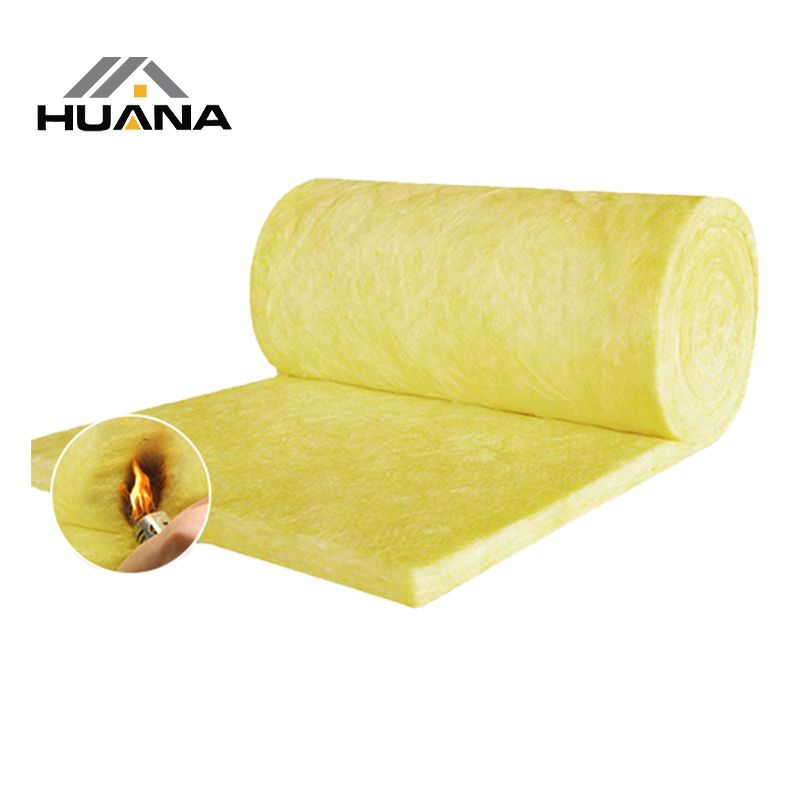
Rock wool, also called stone wool or mineral wool, is manufactured from volcanic rock such as basalt combined with recycled slag materials. The raw materials are melted at very high temperatures and spun into dense fibers.
Rock wool insulation is commonly used for:
Fireproof wall systems
Industrial insulation
High-rise buildings
HVAC systems
Acoustic insulation
Curtain wall assemblies
Because of its mineral composition, rock wool offers exceptional fire resistance.
Glass wool insulation is made from recycled glass and silica sand that are melted and processed into lightweight fibers.
Glass Wool For Insulation is widely used in:
Residential walls
Roof insulation
Ceiling systems
HVAC duct insulation
Interior partition walls
Glass wool provides excellent thermal and acoustic insulation while remaining lightweight and cost-effective.
One of the biggest advantages of rock wool is its extremely high melting point.
Rock wool insulation can typically withstand temperatures above 1000°C without melting or significantly losing structural stability.
This makes it highly suitable for:
Fire-rated wall systems
Industrial heat protection
High-temperature equipment insulation
Escape route fire barriers
Rock wool is classified as a non-combustible material in many international building standards.
Key fire safety advantages include:
Minimal flame spread
Low smoke production
No toxic gas release
Strong structural integrity during fire exposure
Huana manufactures insulation products designed to support modern fire safety standards in demanding construction environments.
Glass Wool For Insulation also provides strong fire resistance and is generally considered non-combustible.
It can effectively help slow fire spread in residential and commercial buildings.
Although glass wool performs well in many applications, its melting temperature is generally lower than rock wool.
Under prolonged extreme heat exposure, glass wool may begin to soften or lose structural stability earlier.
This difference becomes especially important in:
High-rise buildings
Industrial facilities
Areas with strict fire regulations
High-temperature installations
For these applications, rock wool often provides stronger long-term fire protection.
During a fire, smoke and toxic gas release can be as dangerous as flames themselves.
Rock wool produces very little smoke because it is made primarily from natural mineral materials.
It also does not significantly contribute to toxic gas generation during combustion exposure.
Glass Wool For Insulation also performs relatively well compared with combustible foam insulation products.
However, certain binder materials used in some glass wool products may generate limited smoke under extreme fire conditions.
Low-smoke insulation materials are increasingly important in modern building safety regulations.
Insulation must maintain its physical structure during fire events to help contain heat and flames.
Because of its dense mineral fiber structure, rock wool maintains excellent dimensional stability during high-temperature exposure.
This helps:
Protect steel structures
Reduce wall collapse risk
Maintain compartmentalization
Improve fire containment
Glass wool is lighter and softer, which can be beneficial for installation flexibility.
However, under prolonged extreme heat, structural compression or softening may occur earlier compared with rock wool.
Different building types have different fire safety priorities.
Rock wool is often preferred for:
Fire-rated wall systems
Industrial buildings
Petrochemical facilities
High-rise towers
Public infrastructure
Mechanical rooms
Glass Wool For Insulation remains highly effective for:
Residential wall insulation
Ceiling insulation
HVAC duct systems
Standard commercial buildings
Acoustic insulation applications
Both materials can improve safety, but project requirements determine the best choice.
Modern construction standards increasingly require high-performance fire-resistant insulation.
Procurement teams and contractors often evaluate:
ASTM fire ratings
EN fire classifications
Flame spread index
Smoke development ratings
Non-combustibility certification
Huana supports global construction projects with insulation products designed to meet international safety and performance standards.
Both rock wool and Glass Wool For Insulation provide valuable fire protection benefits, but their performance differs under extreme heat conditions. Rock wool generally offers superior fire resistance, higher melting temperatures, better structural stability, and lower smoke production, making it ideal for demanding fire-rated applications.
Glass wool remains an excellent insulation solution for many residential and commercial projects where lightweight installation and cost efficiency are priorities. By choosing high-quality insulation materials from Huana, builders and contractors can improve thermal efficiency while supporting safer and more reliable building performance.
Previous: Moisture Resistance Comparison: Which Insulation Performs Better in Humid Climates?
Next: Covering All Breeding Scenarios! 2026 Hot Poultry Farming Equipment Category Inventory
Copyright:@2020-2021

Comments Please sign in or sign up to post.
0
0 of 500 characters used