
Magnetic whiteboards have become a staple in modern workspaces and educational environments. Their ability to provide a flexible, reusable surface for writing, drawing, and brainstorming represents a significant advancement in collaborative tools. Unlike traditional chalkboards or paper, magnetic whiteboards allow users to easily attach notes, documents, and visuals, significantly enhancing productivity and organization. In fact, research shows that incorporating visual aids can increase information retention by up to 65%. As remote work rises, the demand for effective communication tools like magnetic whiteboards grows, solving pain points in collaboration and learning dynamics. But what exactly makes these boards so durable and long-lasting?
Magnetic whiteboards are widely used in offices, schools, factories, conference rooms, training centers, and home workspaces. For buyers and facility managers, durability is one of the most important factors when selecting a whiteboard. A high-quality magnetic whiteboard should resist stains, scratches, dents, ghosting, and corrosion while maintaining a smooth writing surface for years.
The lifespan and performance of a magnetic whiteboard largely depend on the materials used in its construction. Understanding these materials helps buyers choose the right product for commercial, educational, or industrial applications.
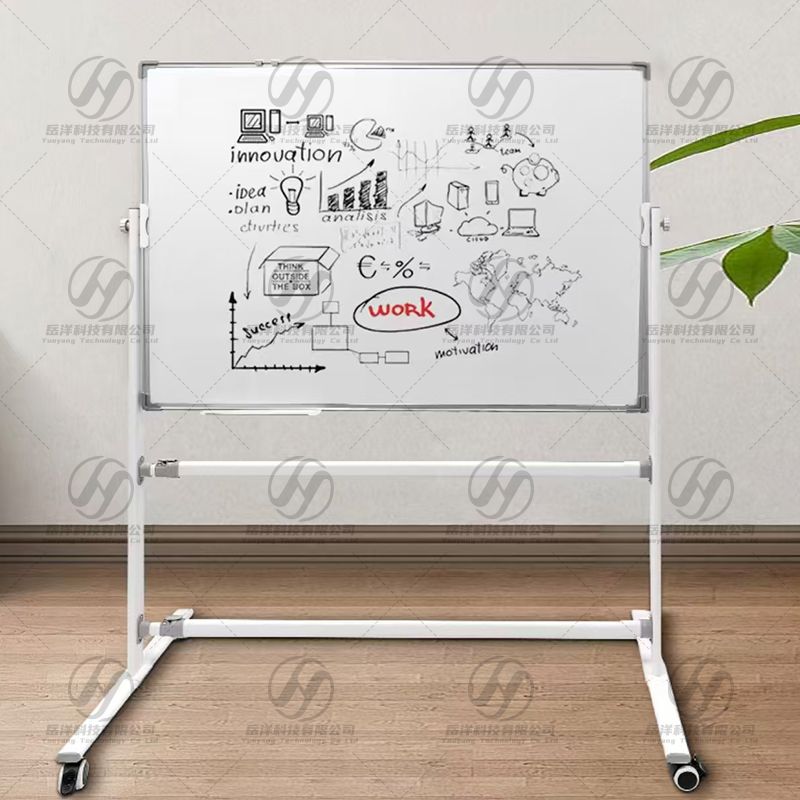
Magnetic whiteboards are writing surfaces that combine a smooth, erasable coating, typically made of melamine, porcelain, or glass, with a magnetic backing. This unique design allows users to attach magnets easily, making it possible to hang important documents and visuals directly on the board. Key industry terms related to magnetic whiteboards include:
Melamine: A resin used to create durable whiteboard surfaces that can resist stains and scratches.
Porcelain: A higher-end material for whiteboards that offers superior scratch resistance and a glossy finish.
Magnetic backing: A feature that allows magnets to cling to the board, enhancing its usability.
Combining these materials creates a product that is not only effective but also long-lasting, capable of withstanding daily use without losing functionality.
A whiteboard may look similar on the surface, but the internal structure and coating materials determine:
Writing smoothness
Erasing performance
Resistance to ghosting
Magnetic strength
Scratch resistance
Moisture resistance
Frame stability
Overall service life
Low-quality boards often develop permanent marker stains, warped surfaces, weak magnetic performance, or peeling coatings within a short time. Premium materials significantly improve long-term usability and reduce replacement costs.
A magnetic whiteboard typically consists of:
Writing surface
Magnetic steel layer
Core material
Backing sheet
Frame and corner materials
Each component contributes to overall durability.
Magnetic whiteboards are versatile tools used across various sectors, including:
Corporate Offices: For team meetings and project planning, allowing users to visualize ideas and maintain organization through magnetic notes.
Educational Institutions: In classrooms for lessons, brainstorming sessions, and collaborative group projects, helping students engage actively with the material.
Restaurants and Retail: For menus and promotions where quick updates are necessary.
Healthcare Facilities: For patient management boards to track information efficiently.
According to a report from Statista, educational institutions and corporate environments account for an estimated 70% of magnetic whiteboard usage, indicating their widespread need in versatile communication contexts.
The advantages of magnetic whiteboards are numerous:
Durability: High-quality materials like porcelain and tempered glass offer resistance to stains and scratches, ensuring a long lifespan. In fact, porcelain boards can last over 20 years based on regular usage assessments, significantly reducing replacement costs.
Versatility: The ability to use magnets allows for easy attachment of visuals and notes, making it simple to adapt to changing information needs.
Enhancing Collaboration: Studies have shown that teams using collaborative tools see a 38% increase in output. Magnetic whiteboards facilitate this by providing a shared space for ideas to be exchanged dynamically.
Space Saving: They serve dual functions—both as a traditional writing surface and as a display area, optimizing the use of physical space.
Overall, the emergence of magnetic whiteboards coincides with the growing need for efficient communication and collaboration in today's fast-paced environments.
To effectively integrate magnetic whiteboards into your workspace, start by looking for guides or user manuals specific to your brand, such as those from Yueyang. Understanding how to properly maintain and utilize your whiteboard can significantly extend its lifespan and functionality.
Previous: Medisurf® Cleanroom Panel for for Healthcare & Pharma - Easywall
Next: How to choose the right flat roof skylight for your building
Copyright:@2020-2021

Comments Please sign in or sign up to post.
0
0 of 500 characters used