
As industries demand more durable, corrosion-resistant, and cost-effective piping solutions, Fiberglass Pipes have become a preferred alternative to traditional steel, concrete, and ductile iron pipelines.
From municipal water systems and wastewater treatment facilities to chemical processing plants, desalination projects, power stations, and industrial infrastructure, fiberglass piping delivers long-term performance with reduced maintenance requirements.
For engineers, EPC contractors, distributors, and project owners, selecting the right piping system directly impacts operational efficiency, lifecycle costs, and project reliability.
Fiberglass Pipes, often referred to as FRP Pipes (Fiber Reinforced Plastic Pipes) or GRP Pipes (Glass Reinforced Plastic Pipes), are composite piping systems manufactured using fiberglass reinforcements combined with thermosetting resin matrices.
These pipes are engineered to provide:
High corrosion resistance
Excellent strength-to-weight ratio
Long service life
Smooth internal surfaces
Low maintenance requirements
Outstanding hydraulic performance
Compared with traditional metal pipelines, fiberglass systems offer significant advantages in aggressive environments where corrosion is a major concern.
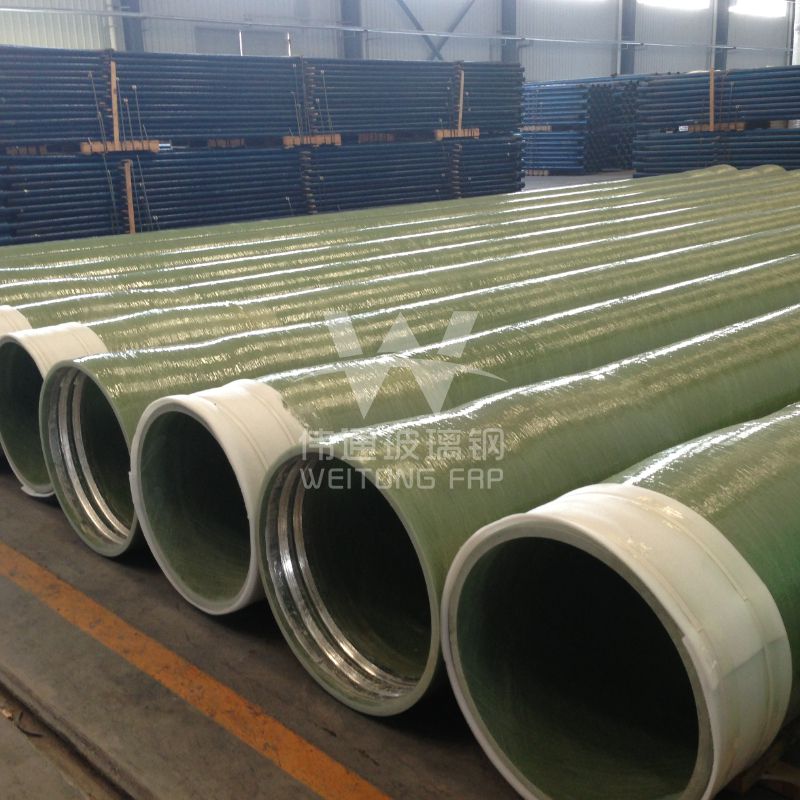
Unlike steel pipelines, fiberglass pipes are naturally resistant to:
Saltwater
Chemicals
Acids
Alkalis
Industrial wastewater
This makes them ideal for challenging industrial applications.
Many fiberglass piping systems are designed to operate for decades under demanding environmental conditions.
The combination of fiberglass reinforcement and advanced resin technology helps maintain structural integrity over extended periods.
Fiberglass pipes weigh significantly less than traditional metal pipes.
This provides benefits such as:
Lower transportation costs
Easier installation
Reduced lifting equipment requirements
Faster project completion
The smooth inner wall minimizes friction loss and improves flow efficiency.
As a result, pumping energy consumption can often be reduced throughout the operating life of the system.
As a professional FRP manufacturer, Weitong FRP supplies a comprehensive range of fiberglass piping products designed for industrial and municipal applications.
Popular solutions include:
Suitable for transporting chemicals, corrosive liquids, and industrial process media.
Widely used in municipal water transmission and infrastructure projects.
Designed for power plants, mining operations, petrochemical facilities, and manufacturing plants.
Ideal for long-distance water conveyance, drainage systems, and infrastructure developments.
Available according to project specifications, pressure ratings, diameter requirements, and installation environments.
These solutions are engineered to provide long-term reliability while minimizing maintenance and replacement costs.
Municipal water systems increasingly utilize fiberglass pipes due to their corrosion resistance and low lifecycle costs.
Fiberglass pipelines effectively transport sewage, industrial effluent, and treated water.
Chemical plants benefit from excellent resistance to aggressive chemicals and corrosive environments.
Seawater intake and discharge systems require materials capable of resisting saltwater corrosion.
Power stations use fiberglass piping for cooling water systems, circulating water systems, and industrial fluid transportation.
Mining companies deploy fiberglass pipes for slurry transport, dewatering systems, and industrial process applications.
Previous: How to Create an Effective Trade Show Budget: Key Tips for Success
Next: Walk-In Whirlpool Tubs vs Standard Bathtubs: Key Differences Buyers Should Know
Copyright:@2020-2021

Comments Please sign in or sign up to post.
0
0 of 500 characters used