
Organic Boronic Acids are widely used in cross-coupling reactions, medicinal chemistry, and advanced material synthesis. Their shelf life can change fast if moisture, heat, light, or air exposure is not controlled. For many labs, the real problem is not only making the compound, but keeping it stable before use. When storage conditions are poor, purity loss, boroxine formation, and assay drift can appear within weeks. At Maison Chemical, stability checks often include Karl Fischer water content, HPLC purity, and appearance monitoring to support reliable long-term storage decisions.
For researchers, the main questions are simple. How long can the material stay usable. What storage temperature is safe. Which packaging gives the best protection. This article explains the shelf life of organic boronic acids in clear terms. It also covers stability testing, packaging choices, and practical storage methods used in real chemical quality control.
The shelf life of organic boronic acids usually ranges from 6 months to 3 years, depending on the exact structure, moisture level, packaging, and storage temperature. Many solid boronic acids stored in airtight, dry containers at 2 to 8 degrees C can remain usable for 12 to 24 months or longer if purity is checked by HPLC, NMR, and water content testing. More sensitive compounds may degrade much faster, especially when exposed to humidity, oxygen, or repeated opening.
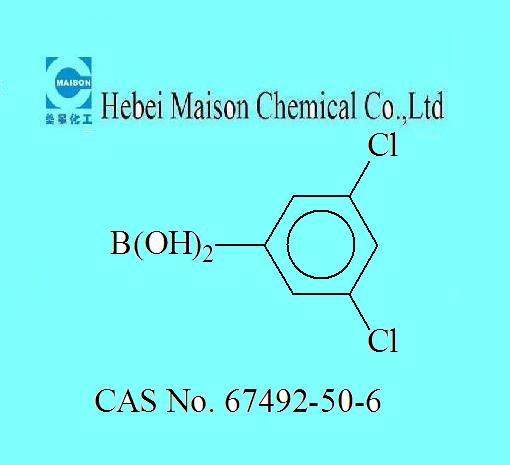
The shelf life of organic boronic acids is not one fixed number. It depends on chemistry and storage conditions. Some compounds are stable solids. Others absorb water quickly and lose quality.
Many boronic acids can form boroxines or hydrolysis products when water is present. In lab practice, a water content limit below 0.5 percent is often used for safer storage. For sensitive materials, Karl Fischer results below 0.2 percent give better control.
Most suppliers store solid organic boronic acids at 2 to 8 degrees C or in a dry room below 25 degrees C. A common stability rule is simple. Every 10 degrees C increase can speed up some degradation reactions. That is why warm storage shortens usable life.
Repeated opening lets in humidity and oxygen. In internal quality programs, sample vials opened more than 20 times often show higher moisture pickup than sealed vials. Good packaging can reduce this risk.
| Storage Factor | Typical Effect on Shelf Life | Common Control Target |
|---|---|---|
| Humidity | Can trigger hydrolysis and boroxine formation | Keep below 30 percent RH |
| Temperature | Higher temperature increases degradation rate | 2 to 8 degrees C preferred |
| Light | May accelerate decomposition for sensitive compounds | Use amber bottles or foil wrap |
| Air exposure | Raises moisture and oxidation risk | Use sealed, dry containers |
Different organic boronic acids do not age the same way. A simple stability comparison helps buyers and lab managers choose the right storage plan.
| Product Type | Typical Shelf Life | Storage Note |
|---|---|---|
| Aryl boronic acids | 12 to 36 months | Often stable if dry and sealed |
| Heteroaryl boronic acids | 6 to 24 months | Some are more moisture sensitive |
| Substituted boronic acids | 6 to 18 months | Electronic effects can change stability |
| Pinacol boronate esters | 12 to 36 months | Often more stable than free acids |
Long-tail keyword users often search for boronic acid storage stability, boronic acid degradation, and boronic acid handling best practices. In many cases, boronate esters have lower moisture sensitivity than free boronic acids. That means they may keep better during transport and warehouse storage.
In a 180-day internal R and D monitoring program for selected organic boronic acids, sealed containers stored at 5 degrees C kept more than 98 percent HPLC purity for most batches. Samples stored at 25 degrees C and 60 percent relative humidity lost 2 to 6 percent purity in the same period. This kind of data helps set realistic shelf life expectations.
Good shelf life data comes from real testing. It should not rely only on appearance. A complete stability study usually combines chemical, physical, and packaging checks.
Define the sample and batch number.
Measure initial purity, melting point, and water content.
Pack samples in the intended final container.
Store samples at set conditions such as 2 to 8 degrees C, 25 degrees C, and 40 degrees C.
Test at fixed time points like 0, 1, 3, 6, 12, and 24 months.
Compare HPLC purity, NMR profile, moisture level, and appearance.
Set the shelf life using the first point where quality drops below the acceptance limit.
| Test Item | Method or Equipment | Common Acceptance Metric |
|---|---|---|
| Purity | HPLC | Not less than 98.0 percent |
| Structure confirmation | 1H NMR and 13C NMR | Matches reference spectrum |
| Water content | Karl Fischer titrator | Usually below 0.5 percent |
| Thermal behavior | DSC | No unexpected transition shift |
| Impurities | LC-MS or HPLC | No new major impurity peaks |
Many quality systems use validated internal methods based on GMP style documentation, ISO aligned procedures, and instrument calibration records. For example, HPLC systems are often checked with system suitability values such as retention time RSD below 2.0 percent and peak area RSD below 1.0 percent. Karl Fischer methods may require repeatability within 5 percent relative difference.
Packaging is one of the easiest ways to extend shelf life. Even a stable compound can fail early if the container is poor.
Use airtight glass bottles with tight PTFE-lined caps.
Add desiccant if the product is moisture sensitive.
Use amber bottles for light-sensitive compounds.
Seal with foil or nitrogen blanket for high-value materials.
Reduce headspace when possible.
| Packaging Type | Protection Level | Best Use |
|---|---|---|
| Standard plastic bottle | Low | Short-term, low-risk storage |
| Amber glass bottle with PTFE cap | Medium to high | Routine lab and warehouse storage |
| Sealed glass vial with desiccant | High | Moisture-sensitive boronic acids |
| Nitrogen-packed foil bag | Very high | Long-distance shipping and long-term storage |
In one 12-month storage program, samples in sealed amber glass with desiccant kept moisture gain below 0.1 percent, while the same material in a loose-cap container gained more than 0.8 percent water. The sealed sample kept better assay values and better appearance.
Users often search for boronic acid expiration signs and how to tell if a boronic acid is still good. The answer starts with simple checks.
Look for clumping, discoloration, caking, or crystals on the bottle wall. These can suggest moisture uptake or partial conversion.
A falling HPLC assay, new impurity peaks, or a changed NMR pattern means the material may no longer meet spec. A common warning level is a 1 to 2 percent purity drop from the original batch value.
A changed melting range can also show degradation. If the initial melting point was 150 to 152 degrees C and later shifts to 145 to 150 degrees C, the sample may need retesting.
Maison Chemical focuses on product consistency and controlled storage. For organic boronic acids, the company often uses batch-based inspection with defined release and retention testing. This helps customers receive materials with clear quality records.
Incoming raw material inspection.
Reaction and purification control.
Drying to target water level.
HPLC and NMR release testing.
Packing under dry conditions.
Retention sample tracking for stability review.
| Metric | Target |
|---|---|
| HPLC purity | 98.0 percent or higher |
| Water content | 0.5 percent or lower |
| Appearance | Meets specification |
| Identity | Confirmed by NMR or MS |
With more than 100 batch-level quality checks across different organic boronic acids, controlled packaging and low-moisture handling have shown clear benefits. In practice, batches stored under dry and cool conditions kept their specification longer than batches held in open or high-humidity environments.
If you want longer shelf life, use a simple and disciplined storage plan. This works for both small labs and industrial users.
Confirm the material identity and initial purity.
Dry the product to the required water limit.
Divide the material into smaller sealed portions.
Store at 2 to 8 degrees C if the product is temperature sensitive.
Protect from light and humidity.
Record opening dates and use dates.
Retest older samples before critical reactions.
Keep the bottle tightly closed.
Use clean, dry tools when sampling.
Avoid leaving the container open on the bench.
Do not store near water baths or sinks.
Check the material before every large-scale synthesis.
The shelf life of organic boronic acids depends on moisture, temperature, light, packaging, and compound type. Many products remain stable for 6 months to 3 years when stored correctly and tested with HPLC, NMR, Karl Fischer, and other standard methods. To protect performance and reduce waste, keep the material dry, sealed, and cool. Good storage habits, plus careful quality control from suppliers such as Maison Chemical, can help organic boronic acids stay reliable for longer use.
Previous: 硫黄価格トレンド 2026年第2四半期 |価格トレンド、予測、チャート、価格および指数
Next: Why Weight Loss Peptides Are Considered High-Growth Opportunities for New Brands
Copyright:@2020-2021

Comments Please sign in or sign up to post.
0
0 of 500 characters used