
In many mining, dredging, and sand handling operations, slurry transportation becomes challenging when the pumped medium contains large and highly abrasive particles.
Unlike fine slurry applications, large particle slurry can cause severe impact wear, blockage risks, and rapid component damage if the pump is not designed specifically for these conditions.
This is why gravel pumps are widely used in applications where conventional slurry pumps may not provide reliable performance.
Large particle slurry creates several challenges for pumping equipment:
When slurry contains oversized solids, a conventional pump with a limited passage design may experience clogging or unstable operation.
A gravel pump uses a larger internal passage to allow larger particles to pass through more smoothly, improving operational reliability.
Large particles can create strong impact forces when entering the impeller and passing through the pump casing.
This combination of impact and abrasion can significantly reduce the service life of standard pump components.
Therefore, gravel pumps require robust construction and wear-resistant materials to handle continuous operation under severe conditions.
Many gravel and dredging applications involve high-concentration slurry with heavy solids loading.
The pump must maintain stable hydraulic performance while transporting abrasive mixtures over long operating periods.
A heavy-duty gravel pump is designed specifically for handling large particles and highly abrasive slurry.
Key design features typically include:
Large passage casing design to reduce blockage risk
Robust wet-end components for improved wear resistance
Strong hydraulic capability for high-flow applications
Reliable operation under demanding conditions
TIIEC WG(H) Gravel & Dredge Pumps are designed for continuous pumping of highly abrasive slurry containing large particles that may be difficult for standard slurry pumps to handle. Their large internal passage design makes them suitable for gravel, dredging, and other large-particle handling applications.
Gravel pumps are commonly used in:
In sand and aggregate operations, the slurry often contains coarse particles that require a pump with excellent passing capability.
Dredging requires reliable transportation of sand, sediment, and other solid materials over long operating periods.
In mining operations, gravel pumps can be used for coarse slurry transportation where large particles and high abrasion levels are present.
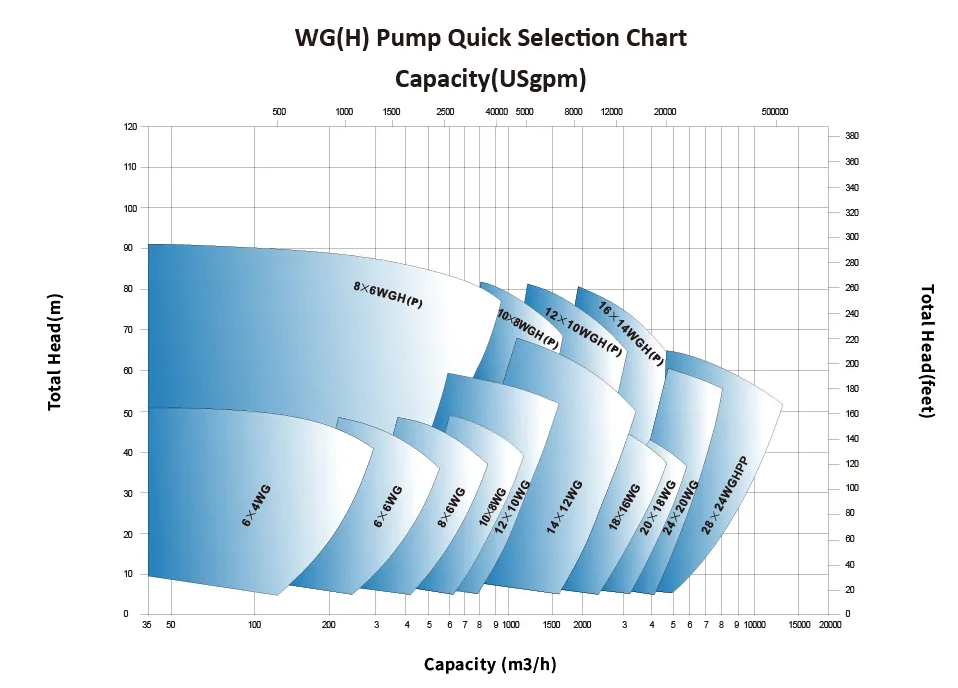
Selecting a slurry pump should not only depend on flow and head requirements.
Engineers should also consider:
Particle size and shape
Slurry concentration
Abrasion level
Required operating hours
Maintenance requirements
The right pump design can help reduce unexpected downtime, extend wear component life, and improve overall operating efficiency.
For applications involving large particles and highly abrasive slurry, choosing a dedicated gravel pump can provide a more reliable and cost-effective solution.
TIIEC provides WG(H) Gravel & Dredge Pumps for demanding slurry applications, helping customers handle challenging materials in mining, dredging, and industrial operations.
Previous: Environmental Factors That Affect Tile Saw Blade Performance
Next: What Is the Difference Between Ring Gasket and FF Gasket?
Copyright:@2020-2021

Comments Please sign in or sign up to post.
0
0 of 500 characters used