
Selecting the correct glass wool density for HVAC duct insulation is a technical decision that directly impacts energy efficiency, condensation control, and system longevity. Many engineers and contractors default to a single density for all applications, but this approach often leads to underperformance or unnecessary cost. This tutorial walks you through the density selection process based on duct type, operating conditions, and project requirements.
Glass wool density directly affects thermal conductivity, with higher densities generally providing better insulation at elevated temperatures
Duct type (rectangular vs. round) and operating temperature are the primary factors driving density selection
Mechanical strength requirements for external duct insulation differ from internal acoustic lining applications
Proper density selection prevents condensation on cold ducts and reduces energy losses by up to 15% compared to mismatched insulation
Factory-direct suppliers like Huana offer density ranges from 10 kg/m³ to 96 kg/m³ to match specific HVAC scenarios
Before evaluating density options, gather the following information about your HVAC system:
Duct dimensions and geometry: Rectangular ducts require higher-density insulation (typically 48–80 kg/m³) to resist sagging, while round ducts can use lower densities (24–48 kg/m³) due to better mechanical support
Operating temperature range: Supply air ducts carrying chilled air (4–12°C) need different density considerations than hot air ducts (40–80°C)
Ambient conditions: Relative humidity and temperature of the installation environment determine condensation risk
Fire safety requirements: Local building codes may mandate specific fire performance ratings that correlate with density and binder content
Budget and lifecycle cost targets: Higher-density glass wool costs more upfront but may reduce energy losses over the system's lifespan
For a complete overview of available materials, review the product catalog to see density options and corresponding technical specifications.
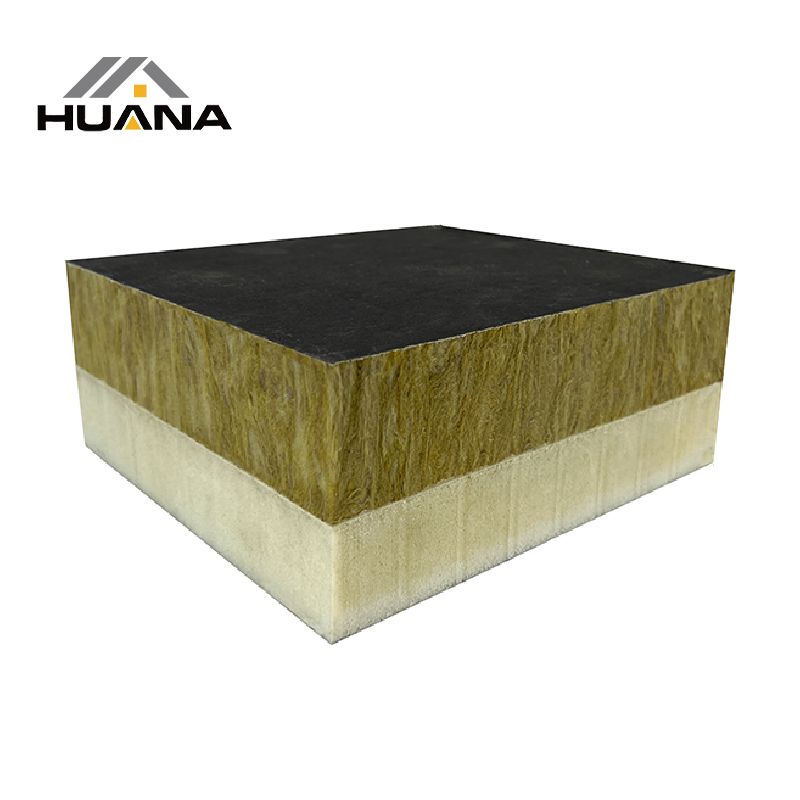
Identify duct geometry: Measure the longest unsupported span on rectangular ducts. For spans over 1.2 meters, choose insulation with a density of at least 64 kg/m³ to prevent sagging.
Check duct orientation: Horizontal ducts require stiffer insulation than vertical runs. For horizontal rectangular ducts, use 80–96 kg/m³ glass wool boards.
Select for round ducts: Spiral round ducts can use flexible glass wool blankets at 24–48 kg/m³ because the cylindrical shape provides natural support.
Glass wool's mechanical integrity depends on fiber orientation and density. Low-density blankets (10–24 kg/m³) compress under their own weight on horizontal surfaces, creating gaps that reduce thermal performance. A study published in ASHRAE Handbook—HVAC Systems and Equipment (2020) notes that insulation compression of just 10% can increase thermal conductivity by up to 8%. For rectangular ducts, rigid boards at 64–96 kg/m³ maintain their shape over decades of service.
Using flexible blankets on large rectangular ducts: The insulation sags within months, creating air gaps that defeat the purpose of insulation.
Assuming higher density always means better performance: For round ducts in moderate climates, 32 kg/m³ glass wool provides adequate thermal resistance without the cost premium of denser materials.
Ignoring duct support spacing: Even 80 kg/m³ boards will sag if mechanical fasteners are spaced more than 600 mm apart on horizontal surfaces.
Review the thermal conductivity curve: For glass wool, thermal conductivity (λ) decreases as density increases up to approximately 64 kg/m³, then plateaus. At 10°C mean temperature, 16 kg/m³ glass wool has λ ≈ 0.038 W/m·K, while 48 kg/m³ achieves λ ≈ 0.032 W/m·K.
Calculate required thickness: Use the formula R = thickness / λ. For a target R-value of 2.5 m²·K/W, 48 kg/m³ glass wool needs 80 mm thickness, while 16 kg/m³ requires 95 mm.
Consider space constraints: In tight mechanical rooms, higher density allows thinner insulation to achieve the same thermal resistance.
The relationship between density and thermal conductivity follows a U-shaped curve. Below 10 kg/m³, air convection within the fiber matrix increases heat transfer. Above 96 kg/m³, solid conduction through glass fibers begins to dominate. The optimal range for HVAC duct insulation is 24–80 kg/m³, where the fiber structure minimizes both convection and conduction. According to EN 13162, the European standard for factory-made mineral wool products, declared thermal conductivity values must be verified at the product's mean temperature, which for HVAC applications typically ranges from 10°C to 50°C.
Specifying density without considering mean temperature: At higher operating temperatures (above 60°C), the optimal density shifts upward because radiative heat transfer increases, requiring denser material to block infrared radiation.
Using R-value alone without density verification: Two products with the same R-value but different densities may have different mechanical properties, fire ratings, and long-term stability.
Overlooking thermal bridging at fasteners: Dense insulation boards reduce heat loss through mechanical fasteners because the material itself provides more resistance at the penetration point.
Calculate dew point: Determine the dew point temperature for the installation environment using psychrometric charts or online calculators. For a typical office with 50% RH at 24°C, the dew point is approximately 13°C.
Select density for vapor retarder compatibility: Higher-density glass wool (48 kg/m³ and above) provides a smoother surface for applying vapor retarder facings, reducing the risk of pinholes and tears.
Check surface temperature: Ensure the insulation thickness and density combination keeps the outer surface temperature above the dew point. For chilled water ducts at 6°C in a 26°C ambient environment, 50 mm of 48 kg/m³ glass wool with aluminum foil facing typically maintains surface temperature above 16°C.
Condensation on duct surfaces leads to mold growth, corrosion, and ceiling damage. Glass wool density influences condensation control in two ways: first, denser materials have lower air permeability, reducing moisture migration through the insulation; second, the vapor retarder facing adheres better to dense board surfaces. A 2019 field study in Building and Environment found that HVAC ducts insulated with 64 kg/m³ glass wool had 40% fewer condensation incidents compared to 24 kg/m³ installations in identical climate conditions.
Assuming all densities provide equal vapor resistance: The vapor retarder, not the glass wool itself, provides moisture control. However, low-density insulation compresses under the vapor retarder's weight, creating wrinkles that compromise the vapor barrier.
Neglecting edge sealing: Even with correct density, condensation occurs at joints if the vapor retarder is not properly sealed with pressure-sensitive tape rated for the application.
Using unfaced insulation in high-humidity environments: For ducts in unconditioned spaces like attics or crawlspaces, always specify factory-applied aluminum foil or kraft paper facing on glass wool boards.
Check local building codes: Most jurisdictions require HVAC duct insulation to meet Class A fire rating per ASTM E84 (flame spread index ≤ 25, smoke developed index ≤ 450).
Select density for fire resistance: Glass wool is inherently non-combustible, but the binder content varies with density. Higher-density boards (64–96 kg/m³) typically have lower organic binder percentages (3–5% by weight), improving fire performance.
Review certification documents: Ensure the product carries third-party certifications such as UL 723 or EN 13501-1. Huana's glass wool products are manufactured under strict quality management systems that meet these international standards.
Fire safety in HVAC systems is critical because ducts can spread smoke and flames throughout a building. Glass wool with a density above 48 kg/m³ typically achieves a flame spread index below 25 without additional fire-retardant treatments. The National Fire Protection Association (NFPA) 90A standard requires insulation in air-handling systems to be non-combustible or limited-combustible, which glass wool satisfies when properly manufactured.
Choosing density based solely on thermal performance without verifying fire rating: Some low-density products use higher binder content to maintain structural integrity, which can increase flame spread.
Assuming all glass wool products have the same fire classification: Binder type and percentage vary between manufacturers. Always request the specific test report for the density you plan to use.
Ignoring smoke development: Even with low flame spread, some insulation products produce dense smoke during combustion. Verify smoke developed index values, especially for installations in occupied spaces.
Determine noise criteria (NC) requirements: For office spaces, target NC-30 to NC-40. For conference rooms, NC-25 or lower.
Select density for sound absorption: For internal duct lining, glass wool at 24–48 kg/m³ provides optimal sound absorption across the 250–4000 Hz frequency range. Higher densities above 64 kg/m³ reflect more sound rather than absorbing it.
Balance acoustic and thermal requirements: If the same insulation serves both purposes, choose 48 kg/m³ as a compromise that provides good thermal resistance (λ ≈ 0.033 W/m·K) and a noise reduction coefficient (NRC) of 0.85–0.90.
HVAC noise travels through duct walls and air streams. Internal duct lining with glass wool reduces fan noise and prevents sound transmission between rooms. The sound absorption coefficient peaks at medium densities because the fiber structure allows sound waves to enter the material and dissipate as heat through friction. According to ASTM C423, glass wool duct liner at 48 kg/m³ and 25 mm thickness achieves an NRC of 0.75, while 96 kg/m³ at the same thickness drops to 0.60. Relevant specifications and application guidance are available through available solutions.
Using external insulation for acoustic control: External duct wrap primarily provides thermal insulation and has minimal effect on airborne noise inside the duct.
Selecting too high density for acoustic lining: Dense boards reflect sound back into the duct, increasing downstream noise levels.
Forgetting air velocity limits: Internal duct lining must withstand air velocities without erosion. For 48 kg/m³ glass wool, maximum recommended velocity is 20 m/s per SMACNA guidelines.
Request density verification samples: Before placing a bulk order, ask the manufacturer for a 300 mm × 300 mm sample of the specified density. Weigh it and calculate actual density to confirm it meets specifications. Huana provides samples for all density ranges.
Use density as a quality indicator: Consistent density across a board indicates uniform fiber distribution and binder application. Variations exceeding ±5% suggest manufacturing inconsistencies.
Combine densities for complex systems: For a single HVAC system, use 80 kg/m³ boards on rectangular supply ducts, 32 kg/m³ blankets on round return ducts, and 48 kg/m³ acoustic liner in the air handling unit. This optimizes performance and cost.
Check density after installation: Compressed insulation loses effectiveness. Measure installed thickness and compare to specified values. If compression exceeds 5%, increase density or adjust fastening methods.
Review project-specific solutions: For large-scale projects like airports or commercial complexes, consult the available solutions page for case studies and application guidance.
For general HVAC applications, 48 kg/m³ is the most common density because it balances thermal performance (λ ≈ 0.033 W/m·K), mechanical strength for rectangular ducts, and cost. It works well for both supply and return ducts in most commercial buildings.
Not ideally. Chilled water ducts (4–12°C) benefit from 48–64 kg/m³ with a vapor retarder facing to prevent condensation. Hot water ducts (60–90°C) require 64–96 kg/m³ because higher density reduces radiative heat transfer at elevated temperatures. Using the same density for both may compromise performance on one system.
Higher-density boards (64–96 kg/m³) are stiffer and easier to cut cleanly, reducing installation time by 10–15% compared to low-density blankets that require careful handling. However, denser materials are heavier, which may require additional workers for overhead installations. Factor both labor time and crew size when estimating costs.
Yes. Higher-density glass wool (48 kg/m³ and above) resists settling and compression over time, maintaining thermal performance for 20–30 years. Low-density blankets (10–24 kg/m³) can settle by 5–10% within the first five years, reducing effective R-value. For long-term installations, specify at least 48 kg/m³.
For seismic zones, use 80–96 kg/m³ glass wool boards with mechanical fastening at 300 mm centers. The higher density provides better resistance to vibration and prevents insulation from dislodging during seismic events. Consult local building codes for specific requirements.
Choosing the right glass wool density for HVAC duct insulation requires evaluating duct geometry, operating temperatures, condensation risk, fire safety, and acoustic needs. Start by matching density to duct type—64–96 kg/m³ for rectangular ducts, 24–48 kg/m³ for round. Then refine based on thermal requirements, using higher densities for elevated temperatures and thinner profiles. Always verify fire ratings and vapor retarder compatibility for your specific installation environment.
This systematic approach ensures you select a density that delivers optimal energy efficiency, prevents condensation, and meets code requirements without overspending on unnecessary material. For complex projects or unique conditions, consult with manufacturers who have proven experience in large-scale applications. Huana, established in 2009 and located in China's insulation building materials capital, has supplied glass wool solutions for projects including Insulation Solutions for Daxing Airport, demonstrating capability across demanding HVAC applications.
Start your density selection process by gathering duct specifications and environmental data. Then apply the five steps outlined here to match material properties to project requirements. The right density choice pays for itself through reduced energy costs, fewer maintenance issues, and longer system life.
Previous: Guide to Maintaining Your Flower Display Chiller
Next: Glass Wool Board vs Mineral Wool Board: Which Has Better NRC Sound Absorption Rating?
Copyright:@2020-2021

Comments Please sign in or sign up to post.
0
0 of 500 characters used