
Down-the-hole (DTH) drilling rigs deliver higher penetration rates in hard rock compared to top-hammer systems, especially in fractured formations common in quarries.
For blasting applications, rigs with 4–6 inch diameter capacity and automated rod handling reduce cycle times by up to 30%.
Water well drilling demands rigs capable of reaching depths exceeding 300 meters with consistent air pressure above 20 bar.
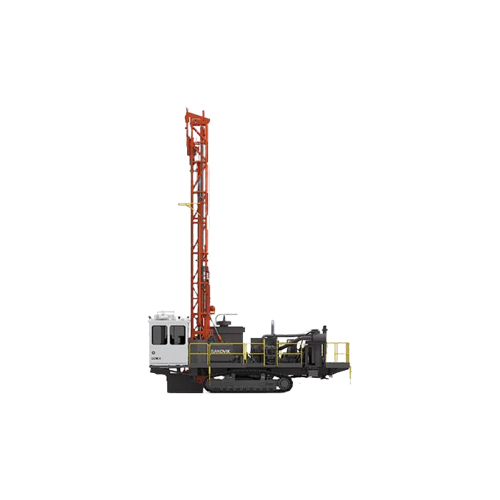
The SDC150H surface DTH rig from Haichuang Unite offers a 150 mm maximum hole diameter and 25 bar operating pressure, suitable for both quarry and water well work.
Matching hammer size, compressor output, and rod string stiffness to formation hardness is the single most important factor for cost-per-meter efficiency.
Selecting the right DTH drilling rig configuration starts with understanding three core parameters: hole diameter range, required depth, and formation hardness. Quarrying and blasting applications typically demand holes between 89 mm and 152 mm in diameter, drilled to depths of 10–30 meters in benches. Water well projects, by contrast, often require diameters from 152 mm to 254 mm and depths exceeding 200 meters.
Compressor capacity: The hammer needs a minimum of 20–25 bar operating pressure for efficient energy transfer. Lower pressure reduces penetration rate by roughly 15% per 5 bar drop in hard granite.
Rod handling system: Semi-automatic or fully automatic rod carousels minimize non-drilling time. A manual rod change takes 3–5 minutes; an automatic system cuts that to under 60 seconds.
Mobility and track design: Quarry benches require rigs that can traverse uneven terrain. Track-mounted rigs with ground pressure below 0.7 kg/cm² prevent sinking in soft overburden.
| Configuration | Core Function | Best For | Key Feature |
|---|---|---|---|
| SDC150H Surface DTH Rig | Quarry blasting & water well drilling | Hard rock (granite, basalt) | 150 mm max hole, 25 bar pressure |
| High-pressure DTH rig with 6-inch hammer | Deep water wells (200–400 m) | Fractured limestone, sandstone | 20–25 bar compressor, 4.5 m rod length |
| Compact DTH rig with 3-inch hammer | Small-diameter blast holes (89–115 mm) | Quarry benches, road cuts | Lightweight track chassis, 15 bar minimum |
| Multi-purpose DTH/top-hammer combo | Variable formation drilling | Mixed ground conditions | Interchangeable drilling modules |
The SDC150H is a track-mounted hydraulic DTH rig designed for both quarry blasting and water well applications. It delivers a maximum hole diameter of 150 mm and operates at a working pressure of 25 bar, which is sufficient to drive most 4-inch to 6-inch DTH hammers efficiently in medium to hard rock. The rig uses a 4.5-meter rod length standard, allowing single-pass drilling up to 4.5 meters and multi-pass drilling to depths exceeding 200 meters with rod changes.
Hydraulic rotary head: Provides variable rotation speed from 0 to 120 rpm and torque up to 4,500 Nm, enabling precise control in fractured formations.
Automatic rod handling: The rod carousel holds up to 6 rods, reducing manual handling and improving safety on the bench.
Dust collection system: A dry dust collector with cyclonic pre-separator captures particles down to 5 microns, meeting most national environmental standards for quarry operations.
Track-mounted mobility: The rig has a ground pressure of 0.65 kg/cm² and can climb gradients up to 25 degrees, making it suitable for uneven quarry floors.
Quarry operators who need one rig for both production blasting holes and occasional water well drilling. The SDC150H’s 25-bar compressor and 150 mm capacity cover 80% of typical quarry blast patterns. Water well drillers working in consolidated formations up to 300 meters depth will also find the configuration adequate.
The 150 mm maximum hole diameter limits deep water well applications requiring 200 mm or larger casings.
The dry dust collector requires periodic filter replacement; wet dust suppression is not available as standard.
Rod length is fixed at 4.5 meters; longer rods (6 m) are not compatible without modification.
When drilling water wells in hard rock below 200 meters, a high-pressure DTH configuration becomes essential. A 6-inch hammer operating at 25 bar can achieve penetration rates of 8–12 meters per hour in granite, compared to 4–6 m/h at 15 bar. The rig must include a compressor delivering at least 25 m³/min at 25 bar to maintain hammer performance at depth.
Heavy-duty mast: Capable of handling 6-meter rod strings and pullback force of 15 tons for stuck tool recovery.
Dual-pressure compressor: Switches between 15 bar for soft overburden and 25 bar for hard rock, saving fuel during top-hole drilling.
Automatic breakout wrench: Reduces rod connection time by 40% compared to manual wrenches.
Water well drilling contractors who regularly work in hard rock formations below 200 meters. The configuration also suits geothermal boreholes requiring 152–203 mm diameters.
Higher capital cost due to the large compressor and heavy-duty mast.
Not ideal for shallow quarry blasting holes under 15 meters due to overcapacity.
Transport weight exceeds 20 tons, requiring a heavy truck for road moves.
Small quarries and road construction projects often need 89–115 mm diameter blast holes at shallow depths. A compact DTH rig with a 3-inch hammer and 15 bar compressor provides a cost-effective solution. These rigs weigh under 8 tons and can be towed by a standard pickup truck.
Lightweight track chassis: Ground pressure below 0.5 kg/cm² allows operation on soft ground without matting.
Manual rod handling: Keeps initial cost low; a single operator can manage 2-meter rods.
Low air consumption: Requires only 12–15 m³/min at 15 bar, compatible with small portable compressors.
Small-scale quarry operators and civil engineering contractors drilling blast holes for road cuts or foundation excavations. The rig is also suitable for anchor hole drilling in slope stabilization.
Maximum depth is limited to 50 meters due to rod length and compressor capacity.
Penetration rate in hard granite drops to 5–7 m/h compared to 10+ m/h with a 25 bar system.
No automatic rod handling; operator fatigue increases during long shifts.
Some drilling projects encounter variable formations: soft overburden, fractured rock, and massive hard rock within the same hole. A multi-purpose rig that can switch between DTH and top-hammer drilling modules offers flexibility. The top-hammer mode works efficiently in soft to medium rock (up to 150 MPa compressive strength), while DTH handles harder formations. Relevant specifications and application guidance are available through Top-Hammer Drilling Rigs.
Interchangeable drilling modules: Change from top-hammer to DTH in under 30 minutes using quick-connect hydraulic couplings.
Dual control system: One operator interface for both drilling methods, reducing training time.
Integrated dust control: Works with both dry and wet systems depending on the module.
Drilling contractors who work on multiple project types—quarrying, water wells, and foundation drilling—without owning separate rigs for each.
Higher initial investment than a single-purpose rig.
The top-hammer module adds weight and complexity; not all operators need it.
Performance in each mode is slightly lower than a dedicated rig due to compromises in mast and feed design.
| If you need... | Choose... | Because... |
|---|---|---|
| Production blast holes in hard rock quarry | SDC150H with 4-inch hammer | 25 bar pressure and 150 mm diameter cover standard blast patterns |
| Deep water wells in granite (>200 m) | High-pressure rig with 6-inch hammer | 25 bar compressor maintains penetration at depth |
| Small-diameter blast holes in soft rock | Compact DTH rig with 3-inch hammer | Lower capital cost and adequate for shallow holes |
| Variable ground conditions across projects | Multi-purpose DTH/top-hammer combo | Flexibility to switch methods without buying two rigs |
| Road construction and slope stabilization | Compact DTH rig with 2-meter rods | Light weight and low ground pressure for sensitive terrain |
For hard granite with compressive strength above 200 MPa, a DTH rig with a 4-inch to 5-inch hammer operating at 25 bar is recommended. The SDC150H configuration with 150 mm maximum hole diameter and 4.5-meter rod length delivers penetration rates of 10–14 m/h in such conditions. Ensure the rig has a dust collection system meeting local environmental limits.
Yes, a versatile DTH rig like the SDC150H can handle both applications. For quarrying, use a 4-inch hammer for 115 mm blast holes. For water wells, switch to a 5-inch or 6-inch hammer for 152–200 mm holes. The rig must have a compressor capable of 25 bar to maintain performance in both roles. Rod handling automation becomes more important for deeper water wells.
Industry data shows that DTH hammers require a minimum of 20 bar for efficient energy transfer in hard rock. At 15 bar, penetration rate drops by approximately 30–40% compared to 25 bar. For formations above 150 MPa compressive strength, 25 bar is the standard recommendation. The SDC150H’s 25 bar operating pressure meets this requirement for most quarry and water well applications.
Longer rods reduce the number of connections needed per hole, cutting non-drilling time. A 4.5-meter rod requires 4 connections for an 18-meter hole; a 6-meter rod needs only 3. Each connection takes 30–60 seconds with automatic handling. For deep water wells, 6-meter rods can save 15–20 minutes per 100 meters compared to 3-meter rods. However, longer rods require a taller mast and heavier rig.
The best DTH drilling rig configuration for quarrying, blasting, and water well applications depends on matching hole diameter, depth, and formation hardness to the rig’s compressor capacity, rod handling system, and mobility. For most quarry operators, the SDC150H surface DTH rig offers a balanced solution with 150 mm maximum diameter, 25 bar pressure, and automatic rod handling. Water well drillers working in hard rock below 200 meters should prioritize a high-pressure configuration with a 6-inch hammer and 25 bar compressor. Small-scale projects benefit from compact rigs with lower air consumption and manual rod handling. Relevant specifications and application guidance are available through Down-the-Hole Drilling Rigs.
Before purchasing, evaluate your typical hole depth, rock type, and daily production targets. A rig that is oversized for shallow holes wastes fuel and capital; an undersized rig increases cost per meter through slower penetration. The configurations discussed here cover 90% of common applications. For specific project requirements, consult with a drilling equipment specialist who can recommend the optimal hammer size, rod string, and compressor match. Explore the full range of DTH drilling rigs at View Products >> to compare specifications and find the configuration that fits your operation.
Previous: What is VM based IDS?
Next: Human Implant Castings: A Comprehensive Guide to Precision Medical Manufacturing
Copyright:@2020-2021

Comments Please sign in or sign up to post.
0
0 of 500 characters used