
The integration of automated packaging machinery into production lines is accelerating across multiple manufacturing sectors as companies seek to reduce labor dependency, increase throughput, and improve packaging consistency. Industry observers report that investments in automated sealing, wrapping, and case sealing equipment have grown steadily, driven by competitive pressures that reward manufacturers who can package products faster and with fewer errors than competitors relying on manual or semi-automated processes.
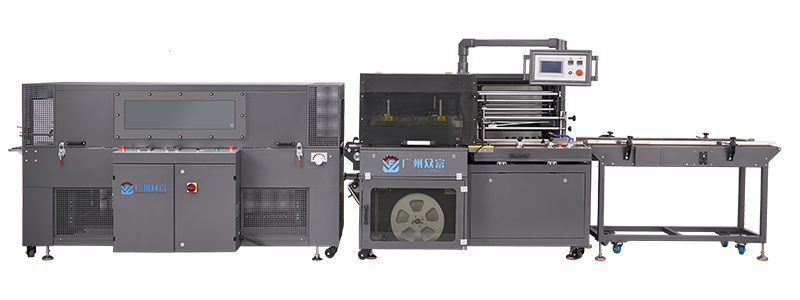
Automatic sealing machines represent a core component of modern packaging lines, with equipment categories including L-sealers, side sealers, and continuous sealers each serving specific production requirements. Vertical L-sealers and scissor-type sealers handle a range of product sizes and packaging film types, while continuous side sealers support higher throughput applications where products move through the sealing station without pausing. The selection of sealer type depends on production volume, product dimensions, and the specific shrink film characteristics required for each application.
Horizontal flow wrapping machines have become increasingly important in industries where products require individual wrapping at high speeds. These machines form a continuous tube of packaging film around products as they move along a conveyor, then seal and cut the film to create individual wrapped packages. Modern flow wrappers incorporate servo-driven film feeding systems that adjust wrap tension and seal timing dynamically based on product position, reducing film waste and improving package appearance compared to older mechanical-drive systems.
Case sealers and packaging line integration complete the automated packaging system, sealing filled cartons and preparing them for palletizing and distribution. The trend toward integrated packaging lines that connect multiple packaging operations within a single automated system has gained momentum, with manufacturers seeking suppliers capable of providing complete solutions rather than individual machines. Integrated lines reduce the need for manual product transfer between packaging stages, minimize the floor space required for packaging operations, and simplify maintenance by centralizing control systems.
Manufacturers investing in automated packaging equipment report multiple operational benefits beyond direct labor reduction. Packaging consistency improves when automated equipment controls seal temperature, pressure, and timing precisely, reducing the incidence of seal failures that cause product damage during transport. Packaging speed increases enable manufacturers to match packaging capacity to production line output, eliminating bottlenecks that previously constrained overall factory throughput. The ability to change package sizes and configurations quickly through machine adjustments rather than manual changeover procedures also improves production flexibility for manufacturers serving diverse customer requirements.
The market for automated packaging machinery is expected to continue expanding as manufacturing operations in both developed and emerging markets invest in production line modernization. Equipment manufacturers that offer comprehensive product ranges spanning individual machines through complete integrated lines are well-positioned to serve the growing demand for automation solutions that address both the packaging needs of individual products and the overall efficiency of finished goods handling and distribution.
Previous: Why Choose Portable Backpack Laser Cleaning Machine?
Next: Downtime on Your Scribing Line? Modular Design Makes Maintenance Fast
Copyright:@2020-2021

Comments Please sign in or sign up to post.
0
0 of 500 characters used