
Choosing the right milk cooling tank is fundamental for any dairy farm looking to optimize milk quality and storage efficiency. Users often face challenges such as inadequate cooling capacity, high energy consumption, and compliance with health regulations. When evaluating milk cooling tank manufacturers, it's crucial to consider factors like the system's cooling efficiency, material quality, and insulation properties. For instance, the Yunfan milk cooling tank line offers a range of products that effectively reduce bacterial growth and maintain optimal milk temperature, thus addressing these common pain points for dairy farmers.
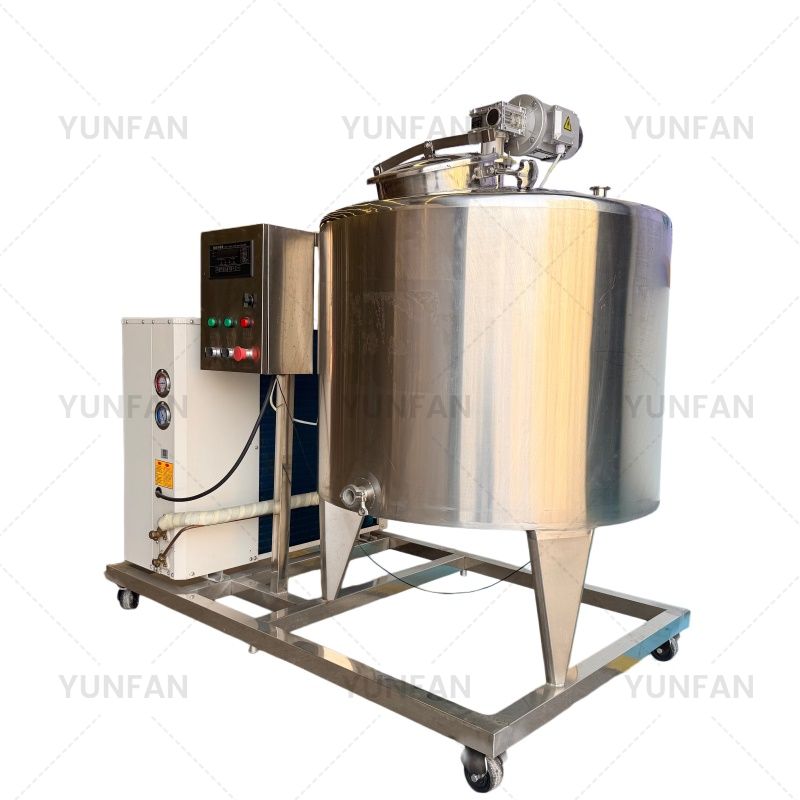
To effectively choose a milk cooling tank, you need to prepare and understand several key factors:
Assess Your Production Needs: Calculate your daily milk output. For instance, a dairy farm producing 600 liters daily will require a tank that can cool this volume effectively within a specified time frame, ideally no more than 2 hours to comply with health standards.
Know Your Cooling Capacity: A cooling system's capability is often rated in terms of its specific cooling power (e.g., kilowatt) and holding capacity. A good benchmark is a cooling capacity of 1 kW for every 100 liters of milk.
Examine Energy Efficiency: Energy-efficient models, such as those offered by Yunfan, can lead to savings of up to 30% on electric bills when compared to less efficient alternatives. Look for systems rated with a coefficient of performance (COP) above 4.
Understand Compliance Requirements: In many regions, compliance with health and safety regulations requires milk to be cooled to below 4°C (39°F) within two hours. Make sure that the cooling tank you choose meets these standards.
Choosing the ideal milk cooling tank can seem daunting, but following these actionable steps can simplify the process:
Step 1: Obtain Milk Flow Data - Gather historical data on your milk production, including peak volumes during milking hours and average temperatures.
Step 2: Determine Cooling Requirements - Based on your production data, calculate the required cooling capacity. For example, a dairy farm that requires cooling for 600 liters of milk should look for tanks designed for approximately 6 kW of cooling power.
Step 3: Research Tank Specifications - Investigate and compare specifications provided by different milk cooling tank manufacturers, focusing on factors such as insulation material (preferably polyurethane which offers an R-value of around 6.0) and construction robustness.
Step 4: Evaluate Energy Consumption - Calculate the expected energy consumption of various tanks. A higher COP rating indicates better energy efficiency. Aim for units that offer cooling with minimal energy consumption, ideally less than 1.5 kWh per cooling cycle.
Step 5: Review Warranty and Support - Check the warranty terms of the milk cooling tank. Quality manufacturers like Yunfan often provide up to 5 years of warranty including after-sales support to cover maintenance and repairs.
Step 6: Validate User Experiences - Seek testimonials or user stories, such as Joe's Dairy Farm, which reported improved milk quality and a reduction in spoilage rates from 12% to 3% after switching to a Yunfan tank, significantly enhancing their overall operations.
Step 7: Make the Purchase - After thorough research and validation, proceed with the purchase. Ensure that the installation process is straightforward and that support is available to troubleshoot any initial challenges.
Mistakes can occur when selecting a milk cooling tank, impacting overall efficiency. Here are some common errors and suggested solutions:
Error 1: Underestimating Cooling Needs - Some farmers select tanks that cannot sufficiently cool their milk. Solution: Always base your selection on peak production data to ensure the tank can handle maximum output.
Error 2: Ignoring Energy Costs - Selecting tanks without consideration of energy efficiency can lead to surprise costs. Solution: Include a total cost of ownership analysis, considering both initial purchase and long-term energy costs.
Error 3: Overlooked Compliance Standards - Failing to check local health regulations can impact tank usage. Solution: Always verify that the selected model meets or exceeds local compliance standards for milk cooling.
Choosing the right milk cooling tank is critical for maintaining milk quality, meeting health regulations, and optimizing farm operations. By following the structured approach outlined above, and considering key metrics such as cooling capacity, energy efficiency, and compliance standards, dairy farmers can make informed decisions. The Yunfan brand is a reliable option worth considering due to its superior cooling technology and proven user satisfaction. Thorough preparation and research can lead to better operational efficiency, quality enhancements, and ultimately, higher profits for dairy farms.
If you would like more information about this product, please feel free to contact us. Recommend other popular products for you.: milk cooling tank manufacturer
Previous: Best Adhesives for Glass Tile Backsplash Installation
Next: Durability Test: Glass Mosaic Tiles vs Ceramic Mosaics
Copyright:@2020-2021

Comments Please sign in or sign up to post.
0
0 of 500 characters used