
Ice may seem like a simple product, but its shape, density, and melting characteristics can significantly impact beverage quality, food preservation, industrial cooling, and operational efficiency. Among the most popular commercial ice types are cube ice and tube ice. While both are widely used, they are manufactured differently and serve different applications.
For businesses considering investing in a Cube Ice Machine, understanding how cube ice compares with tube ice can help determine the best solution for specific operational needs. This guide explores the major differences between these two ice types and explains why Daxtro offers reliable and efficient ice-making solutions for commercial and industrial users.
The shape of ice influences much more than appearance. It affects:
· Cooling efficiency
· Melting speed
· Storage performance
· Transportation durability
· Beverage presentation
· Operating costs
Selecting the right ice type ensures better performance while improving customer satisfaction and reducing ice waste.
Cube ice is one of the most recognizable forms of commercial ice. It is produced by a Cube Ice Machine, which freezes water in individual molds before automatically harvesting the finished cubes.
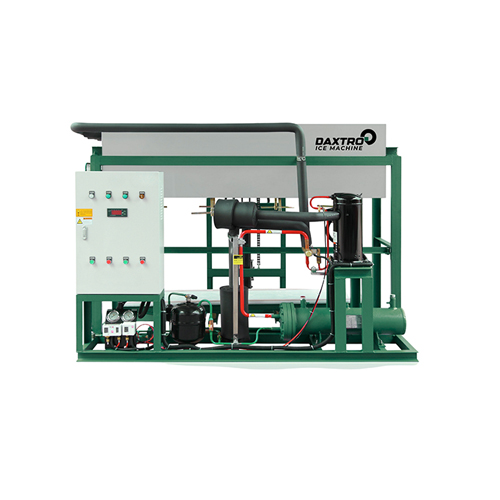
Cube ice generally features:
· Uniform square or rectangular shape
· High transparency
· Smooth surfaces
· High density
· Solid internal structure
Because of its attractive appearance and slow melting rate, cube ice is widely used in restaurants, hotels, cafés, bars, and convenience stores.
Tube ice is cylindrical with a hollow center running through each piece.
Unlike cube ice, tube ice is formed by freezing water around refrigerated tubes before being cut into short cylindrical sections.
Tube ice typically offers:
· Hollow cylindrical design
· Larger individual pieces
· Excellent airflow during storage
· Easy dispensing
· Strong resistance to clumping
Its unique structure makes it especially suitable for industrial cooling, seafood preservation, beverage factories, and large-scale ice distribution.
The most obvious distinction lies in their geometry.
Cube ice has a compact, symmetrical shape with flat surfaces and solid edges.
Its regular shape allows it to fit neatly into beverage glasses while providing an attractive visual presentation.
Tube ice features a cylindrical body with a hollow center.
The center hole increases the overall surface area exposed to liquids, which can enhance cooling speed in certain applications.
Because of its shape, tube ice also flows more easily through automatic handling systems.
Density directly influences ice durability and melting performance.
A high-quality Cube Ice Machine produces dense, solid ice with minimal trapped air.
Advantages include:
· Longer cooling duration
· Improved structural strength
· Reduced breakage
· Attractive crystal-clear appearance
Dense cube ice is particularly valued in premium beverage service.
Tube ice is also relatively dense, but the hollow center slightly reduces its overall mass compared with a solid cube of similar size.
Even so, modern tube ice machines produce durable ice that withstands transportation and storage very well.
One of the most important performance indicators is how quickly ice melts.
The melting rate largely depends on the ratio of surface area to volume.
Cube ice has:
· Less exposed surface area
· Greater overall mass
· Solid internal structure
These characteristics allow cube ice to retain its shape for longer periods while keeping beverages cold without excessive dilution.
The hollow center increases the exposed surface area.
As a result, tube ice transfers cooling energy more rapidly.
Although tube ice generally melts faster than dense cube ice, it provides excellent cooling efficiency for many industrial and commercial applications.
Different industries prioritize different cooling characteristics.
Because cube ice melts slowly, it is ideal for:
· Restaurants
· Cocktail bars
· Hotels
· Cafés
· Beverage service
· Hospitality businesses
Customers appreciate drinks that remain cold without becoming diluted too quickly.
Tube ice excels in:
· Seafood processing
· Food transportation
· Ice plants
· Beverage manufacturing
· Concrete cooling
· Chemical processing
Rapid cooling and efficient handling make tube ice suitable for large-scale industrial operations.
Storage efficiency is another important consideration.
Cube ice stacks well but may gradually bond together if stored improperly.
Maintaining appropriate storage temperatures helps preserve individual cubes.
The cylindrical design allows better airflow between ice pieces.
This reduces sticking and improves handling during storage and transportation.
For bulk ice suppliers, tube ice often provides logistical advantages.
The production method also differs between the two machines.
A Cube Ice Machine freezes water inside dedicated molds before harvesting individual cubes.
Modern systems offer:
· Automatic operation
· Stable production cycles
· Hygienic ice harvesting
· Consistent cube size
· High energy efficiency
These features make cube ice machines popular in commercial foodservice environments.
Tube ice machines continuously freeze water around evaporator tubes before cutting the ice into uniform lengths.
They are well suited for high-volume industrial production.
The right choice depends on your business requirements.
· Premium beverage presentation
· Slow melting performance
· High-density ice
· Hotels and restaurants
· Coffee shops
· Bars and lounges
A professional Cube Ice Machine delivers attractive, crystal-clear cubes that enhance customer experience.
· Large-scale cooling
· Industrial food processing
· Bulk ice production
· Easy transportation
· Fast cooling
· Efficient storage
Tube ice is often preferred for commercial and industrial refrigeration applications.
Daxtro manufactures advanced Cube Ice Machine systems designed for commercial and industrial users seeking reliable, energy-efficient ice production.
Daxtro machines produce crystal-clear, dense cube ice with consistent size and excellent appearance.
Optimized refrigeration technology ensures stable ice production while reducing energy consumption.
Modern PLC controls provide:
· Fully automatic operation
· Real-time monitoring
· Fault diagnostics
· Automatic cleaning functions
· User-friendly interface
Daxtro uses corrosion-resistant stainless steel and food-safe materials to ensure hygiene, durability, and long service life.
Daxtro Cube Ice Machines are widely used in:
· Restaurants
· Hotels
· Bars
· Supermarkets
· Beverage chains
· Hospitals
· Food processing plants
· Cold chain logistics
Their flexible production capacities meet the needs of both small businesses and large commercial operations.
To achieve the best performance from a Cube Ice Machine, consider the following practices:
· Use clean, filtered water.
· Perform regular machine cleaning and sanitization.
· Maintain proper ambient ventilation.
· Replace water filters according to the manufacturer's recommendations.
· Schedule preventive maintenance for refrigeration components.
· Store finished ice in clean, insulated bins.
These steps help maintain ice clarity, production efficiency, and equipment longevity.
Both cube ice and tube ice offer unique advantages, but their differences in shape, density, and melting speed make them suitable for different applications. Cube ice is dense, visually appealing, and melts slowly, making it the preferred choice for beverage service and hospitality. Tube ice, with its hollow cylindrical design, provides rapid cooling, excellent handling, and efficient bulk storage, making it ideal for industrial cooling and food processing.
When selecting a Cube Ice Machine, businesses should consider their cooling requirements, production capacity, and customer expectations. With advanced refrigeration technology, intelligent controls, and durable construction, Daxtro delivers dependable cube ice solutions that combine high-quality ice production with outstanding energy efficiency and long-term reliability.
Previous: Boyee Industrial Launches Oxide Solid-State Electrolyte Production Line Solution
Next: Flake Ice Machine Installation Requirements: Space, Power Supply, and Water Connection
Copyright:@2020-2021

Comments Please sign in or sign up to post.
0
0 of 500 characters used