
Concrete structures rely on properly positioned reinforcing steel to achieve the required strength, durability, and service life. One of the most important quality control tasks during construction and maintenance is measuring the concrete cover over reinforcing bars. Insufficient cover can lead to corrosion, while excessive cover may reduce structural performance. Fortunately, modern Concrete Testing Equipment makes this inspection fast, accurate, and non-destructive.
This guide explains how to detect rebar cover depth using a steel bar testing instrument, the factors that affect measurement accuracy, and why HBJF provides reliable solutions for construction professionals.
Concrete cover refers to the distance between the concrete surface and the nearest reinforcing steel. It serves several important purposes:
Concrete acts as a protective barrier against moisture, chloride ions, and chemicals. If the cover is too thin, steel reinforcement becomes vulnerable to rust, reducing the lifespan of the structure.
Adequate concrete cover insulates reinforcing bars during fire exposure, allowing structural members to retain their load-bearing capacity for longer periods.
Proper cover allows reinforcement to function as designed while maintaining bond strength between concrete and steel.
Because of these reasons, engineers routinely inspect cover depth using professional Concrete Testing Equipment before project acceptance or during structural evaluations.
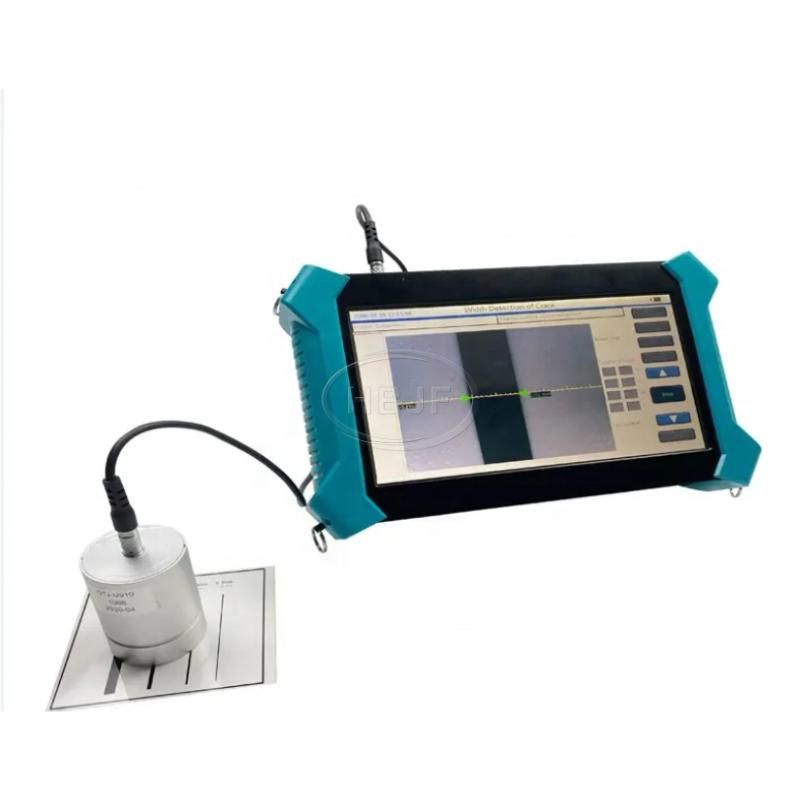
A steel bar testing instrument, commonly called a rebar locator or cover meter, is a non-destructive testing (NDT) device that detects embedded reinforcing bars and measures their depth beneath the concrete surface.
Most modern instruments use electromagnetic induction technology to locate steel bars without damaging the concrete.
The device can typically:
The instrument identifies the horizontal and vertical position of reinforcing bars hidden inside concrete.
It accurately calculates the distance between the concrete surface and the reinforcing steel.
Many advanced models can estimate bar diameter after determining the cover depth.
Professional-grade Concrete Testing Equipment often includes data storage, USB export, Bluetooth connectivity, or mobile software for project documentation.
Steel bar testing instruments generate an electromagnetic field through the probe.
When the probe approaches reinforcing steel, the magnetic field changes due to the metal's presence. The instrument analyzes these changes and calculates:
· Position of the reinforcing bar
· Cover thickness
· Estimated bar diameter
The closer the reinforcing bar is to the concrete surface, the stronger the detected signal.
Modern digital algorithms greatly improve measurement accuracy even when reinforcement is arranged in complex patterns.
Accurate measurements depend on proper inspection procedures.
Before testing:
· Remove dust and loose debris.
· Ensure the surface is relatively smooth.
· Avoid standing water whenever possible.
A clean surface improves probe stability and measurement consistency.
Most professional Concrete Testing Equipment requires calibration before use.
Follow the manufacturer's instructions to:
· Select reinforcement mode
· Input expected rebar diameter if known
· Perform automatic calibration
Calibration ensures maximum measurement accuracy.
Move the probe slowly across the concrete in straight lines.
The display will indicate increasing signal strength as the probe approaches reinforcement.
Many instruments emit:
· Audible tones
· Visual indicators
· Peak signal markers
When the strongest signal appears, the reinforcing bar center has been located.
Once the reinforcing bar center is identified, the instrument automatically displays the concrete cover depth.
Record:
· Cover thickness
· Rebar position
· Estimated diameter
· Inspection location
Digital models can save this information directly into internal memory.
Measure multiple locations across the structure to verify construction quality.
Typical inspection areas include:
· Columns
· Beams
· Bridge decks
· Concrete slabs
· Shear walls
· Tunnel linings
Consistent testing helps identify construction deviations before they become serious problems.
Even high-quality Concrete Testing Equipment can be influenced by site conditions.
Closely spaced reinforcing bars may interfere with magnetic signals.
Using advanced scanning modes can improve separation accuracy.
Excessive moisture generally has minimal influence, but standing water should be avoided whenever possible.
Different bar sizes produce different electromagnetic responses.
Selecting the correct bar diameter improves measurement precision.
Very deep reinforcement may exceed the instrument's effective detection range.
Always verify the instrument's specified measuring depth before testing.
Steel plates, embedded pipes, wire mesh, or structural steel near the testing area may affect readings.
Operators should scan carefully and confirm unusual results.
Modern Concrete Testing Equipment is widely used throughout the construction industry.
Contractors verify reinforcement placement before project handover.
Transportation agencies inspect bridge decks and structural members without damaging the concrete.
Engineers evaluate aging concrete structures to determine repair priorities.
Independent testing laboratories confirm compliance with design specifications and construction standards.
Before drilling, cutting, or coring concrete, contractors locate reinforcing bars to avoid accidental damage.
Compared with destructive inspection methods, steel bar testing instruments offer significant benefits.
Large areas can be scanned quickly with minimal labor.
The concrete remains intact throughout the inspection process.
Digital data collection reduces manual recording errors.
Avoiding unnecessary drilling lowers repair costs and project delays.
Operators can identify reinforcement before cutting or coring concrete, reducing the risk of structural damage.
HBJF provides advanced Concrete Testing Equipment designed for engineers, inspectors, contractors, and quality control professionals.
Key advantages include:
Advanced electromagnetic sensing technology delivers reliable rebar location and cover depth measurements.
Large digital displays and intuitive controls simplify field operation.
Designed for demanding construction environments, HBJF instruments offer excellent durability and long service life.
Many models support data storage, export functions, and professional reporting for project documentation.
HBJF equipment is suitable for residential buildings, commercial structures, bridges, highways, tunnels, airports, and industrial facilities.
To obtain consistent results:
· Calibrate the instrument before each inspection.
· Keep the probe flat against the concrete surface.
· Scan slowly and steadily.
· Verify suspicious readings from multiple directions.
· Record environmental conditions during testing.
· Follow the manufacturer's operating guidelines.
Regular operator training also improves measurement consistency and inspection efficiency.
Detecting rebar cover depth is an essential part of modern construction quality control and structural inspection. Using professional Concrete Testing Equipment, engineers can accurately locate reinforcing bars, measure concrete cover thickness, and evaluate construction quality without damaging the structure.
Whether inspecting new buildings, bridges, tunnels, or aging infrastructure, a reliable steel bar testing instrument improves efficiency, safety, and confidence in inspection results. With advanced technology, dependable accuracy, and durable performance, HBJF offers professional Concrete Testing Equipment that helps construction teams ensure compliance with engineering standards while protecting the long-term durability of reinforced concrete structures.
Previous: How Does the LA Abrasion Test Differ from Micro-Deval for Aggregate QC?
Next: How to Choose a Reliable Margarine Production Line Manufacturer for Your Business?
Copyright:@2020-2021

Comments Please sign in or sign up to post.
0
0 of 500 characters used