
A farm tractor is one of the most important investments for any agricultural operation. Whether you're managing a small family farm, a commercial crop plantation, an orchard, or a livestock operation, selecting the right tractor directly impacts productivity, fuel efficiency, operating costs, and long-term profitability.
With countless models, horsepower options, drive systems, and attachments available, choosing the right farm tractor can feel overwhelming. This guide outlines the key factors buyers should evaluate before making a purchase, helping you invest in a machine that delivers reliable performance for years to come.
A properly matched tractor can:
Increase field productivity
Reduce fuel consumption
Improve operator comfort
Support multiple farming tasks
Lower maintenance costs
Extend equipment lifespan
Maximize return on investment
On the other hand, selecting a tractor that is too small may reduce efficiency, while an oversized model can increase fuel usage and operating expenses unnecessarily.
The first step is understanding your actual farming requirements.
Consider questions such as:
How many acres or hectares do you cultivate?
What crops do you grow?
Do you operate orchards, vineyards, rice fields, or open farmland?
Will the tractor mainly perform fieldwork or transport?
How many hours will it operate each year?
Different agricultural operations require different tractor specifications.
Typically require compact tractors that are easy to maneuver and economical to operate.
Common applications include:
Vegetable farming
Landscaping
Greenhouses
Small livestock farms
Recommended horsepower:
20–50 HP
Need versatile tractors capable of handling heavier implements.
Applications include:
Cultivation
Seeding
Fertilizing
Spraying
Material transport
Recommended horsepower:
60–120 HP
Large-scale operations demand powerful tractors capable of continuous heavy-duty work.
Suitable for:
Deep tillage
Large planters
Heavy trailers
Harvest support
Precision agriculture
Recommended horsepower:
130 HP and above
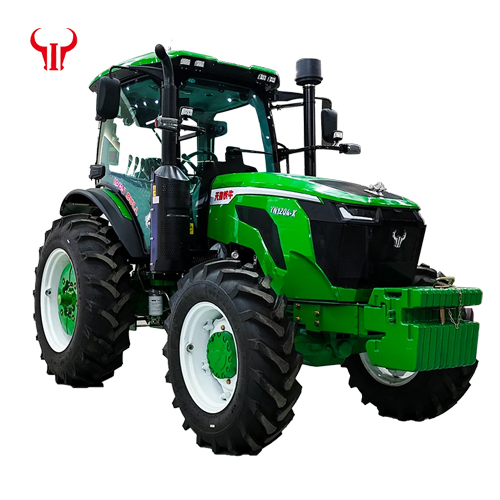
Horsepower is one of the most important factors when selecting a farm tractor.
A general guideline is:
| Farm Size | Recommended Horsepower |
|---|---|
| Small gardens & hobby farms | 20–35 HP |
| Small farms | 35–60 HP |
| Medium farms | 60–100 HP |
| Commercial farms | 100–180 HP |
| Large agricultural enterprises | 180 HP+ |
Remember that larger implements require greater PTO and engine power.
Always consider future expansion when choosing horsepower.
A tractor should match the implements you plan to use.
Common implements include:
Rotary tillers
Disc harrows
Moldboard plows
Seed drills
Fertilizer spreaders
Boom sprayers
Front loaders
Rotary mowers
Balers
Trailers
Before purchasing, verify:
PTO compatibility
Hydraulic lifting capacity
Hitch category
Hydraulic flow rate
Tractor weight
Drawbar capacity
Advantages:
Lower purchase price
Lower maintenance costs
Better for flat farmland
Easier maintenance
Suitable for:
Dry fields
Light-duty operations
General transportation
Advantages:
Superior traction
Better climbing performance
Reduced wheel slip
Greater pulling power
Higher productivity
Recommended for:
Muddy fields
Rice farming
Mountainous regions
Heavy tillage
Large implements
Fuel is one of the largest operating expenses for any farm.
Modern tractors improve fuel efficiency through:
Electronic engine management
Turbocharged diesel engines
Hybrid drive technology
Optimized transmission systems
Intelligent hydraulic control
Fuel-efficient tractors help reduce long-term operating costs while supporting more sustainable farming practices.
Different transmission systems suit different applications.
Ideal for:
Experienced operators
Lower purchase cost
Simple maintenance
Provides:
Faster forward/reverse shifting
Improved loader efficiency
Better productivity
Advantages:
Smooth acceleration
Infinite speed adjustment
Better fuel economy
Reduced operator fatigue
Best suited for commercial farms with intensive daily operations.
Comfort directly affects productivity during long working hours.
Important features include:
Adjustable suspension seat
Air-conditioned cabin
Heating system
Ergonomic controls
Low vibration
Low cabin noise
Excellent visibility
Operators who spend 8–12 hours in the field benefit significantly from a comfortable working environment.
The hydraulic system determines how effectively a tractor operates modern implements.
Key specifications include:
Lift capacity
Hydraulic flow
Remote hydraulic valves
Three-point hitch compatibility
Higher hydraulic capacity allows tractors to operate larger and more advanced equipment.
A reliable tractor should be easy to maintain.
Look for:
Easy access to service points
Long maintenance intervals
Readily available spare parts
Comprehensive service manuals
Reliable dealer support
Simple maintenance reduces downtime and extends equipment life.
The manufacturer plays a significant role in long-term ownership satisfaction.
A reputable supplier should provide:
Stable product quality
Proven manufacturing experience
Quality certifications
Spare parts availability
Technical support
Warranty service
OEM customization options
Working with an experienced manufacturer minimizes purchasing risks and ensures dependable after-sales support.
Hybrid tractors are becoming increasingly popular due to their ability to combine diesel engines with electric motors.
Benefits include:
Up to 35% fuel savings
Instant low-speed torque
Improved traction
Intelligent energy management
Regenerative braking
Lower emissions
Reduced operating costs
For commercial farms seeking greater efficiency and sustainability, hybrid technology represents a promising investment.
When purchasing a farm tractor, avoid these common mistakes:
Choosing horsepower based only on price
Ignoring implement compatibility
Underestimating future farm expansion
Focusing solely on purchase cost rather than total ownership cost
Overlooking after-sales service and spare parts availability
Selecting the wrong drive system for local terrain
Taking a long-term approach will help maximize your investment.
Tianjin Tractor Manufacturing Co., Ltd. (TIANTUO) has been manufacturing tractors for more than 70 years.
Founded in 1956, the company produced China's first tractor in 1958, establishing a strong foundation in agricultural machinery manufacturing.
In 2000, TIANTUO entered a strategic partnership with John Deere, combining decades of manufacturing expertise with internationally recognized engineering technology. This collaboration resulted in iconic models such as the TieNiu 55, Deere TianTuo 720, and 824, reinforcing the company's reputation for quality and reliability.
Today, TIANTUO supplies tractors to agricultural equipment dealers, distributors, and farming enterprises around the world. Our product portfolio includes compact, medium, high-horsepower, E-Mark certified, and hybrid tractors designed to meet the evolving needs of modern agriculture.
Choosing the right farm tractor is about more than selecting the highest horsepower or the lowest price. Buyers should carefully evaluate their farm size, working conditions, implement requirements, terrain, transmission preferences, fuel efficiency goals, and long-term operational needs.
Partnering with an experienced manufacturer is equally important. A trusted supplier offers not only reliable equipment but also consistent quality, technical expertise, spare parts support, and dependable after-sales service.
By considering these factors, you can confidently select a farm tractor that delivers excellent performance, maximizes productivity, and supports your agricultural business for many years to come.
Previous: How Does the Sweetness of Ya Li Pear Attract Health-Conscious Consumers?
Next: How Long Can an Oxygen Concentrator Run Continuously Without Risk?
Copyright:@2020-2021

Comments Please sign in or sign up to post.
0
0 of 500 characters used