
Ultraviolet (UV) radiation is one of the primary causes of material degradation in plastics, coatings, adhesives, textiles, and other polymer-based products. Long-term exposure to sunlight can lead to discoloration, cracking, chalking, reduced mechanical strength, and shortened product lifespan. To combat these issues, manufacturers rely on specialized UV protection additives.
Among the most widely used UV stabilizers are Benzophenone, Triazine, and HALS (Hindered Amine Light Stabilizers). Each technology offers unique advantages depending on the polymer type, application environment, and durability requirements.
As a professional UV additive supplier, Onelead provides high-performance UV stabilization solutions that help manufacturers improve product longevity while meeting demanding industrial standards.
Sunlight contains ultraviolet radiation that breaks down polymer molecular chains through photo-oxidation. This degradation results in:
· Color fading
· Surface cracking
· Brittleness
· Gloss loss
· Reduced impact strength
· Lower service life
UV stabilizers interrupt this degradation process by either absorbing harmful UV energy or preventing oxidation reactions within the polymer.
Selecting the right additive significantly improves outdoor performance while reducing maintenance and replacement costs.
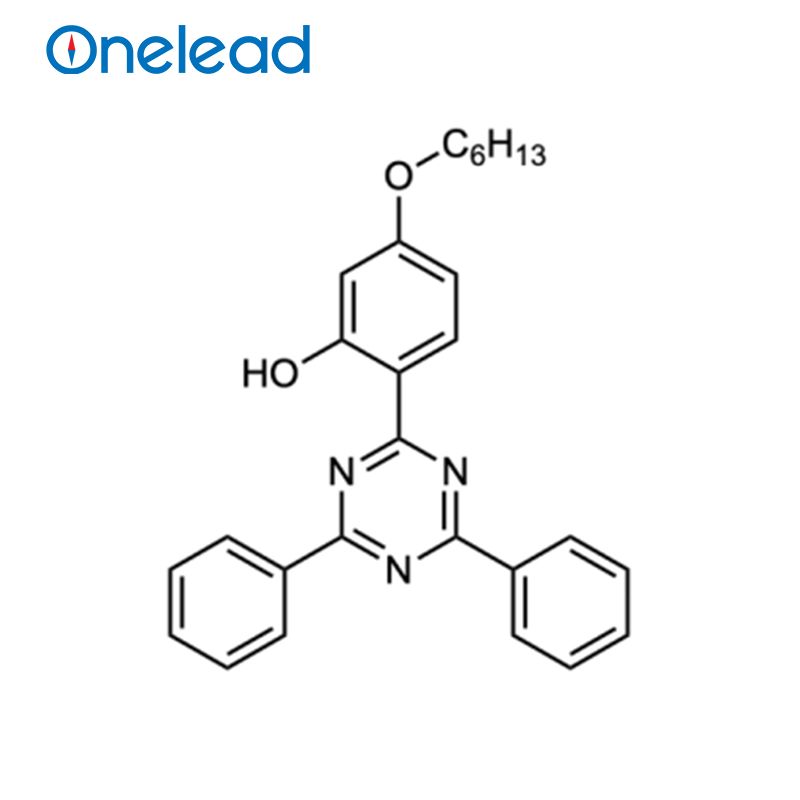
Different UV stabilizers work through different mechanisms. Understanding these mechanisms helps engineers choose the most suitable solution.
Benzophenone additives are traditional UV absorbers that capture ultraviolet energy and convert it into harmless heat before it damages polymer chains.
Key characteristics include:
· Cost-effective
· Good compatibility with many plastics
· Suitable for moderate outdoor exposure
· Effective in clear and transparent products
· Easy processing
Common applications include:
· PVC products
· Acrylic sheets
· Adhesives
· Packaging films
· Indoor plastic components
However, Benzophenone generally offers lower long-term weather resistance compared to newer UV absorber technologies.
Triazine UV absorbers represent one of the most advanced generations of UV protection additives.
Unlike conventional UV absorbers, Triazine compounds provide:
· Broader UV absorption spectrum
· Excellent thermal stability
· Lower volatility during processing
· Outstanding weather resistance
· Better long-term color retention
These properties make Triazine especially suitable for demanding outdoor applications where products experience prolonged UV exposure.
Typical industries include:
Exterior automotive plastics require exceptional UV stability to prevent fading and surface degradation over many years.
Triazine additives help maintain:
· Gloss
· Mechanical strength
· Surface appearance
· Color consistency
High-performance coatings used on buildings require long-lasting protection against sunlight.
Triazine improves coating durability by minimizing:
· Chalking
· Yellowing
· Surface erosion
· Loss of gloss
Engineering resins often operate under elevated temperatures while exposed to UV radiation.
Triazine offers superior stability in:
· Polycarbonate
· PET
· PBT
· Polyamide
· Polyester systems
Its high thermal resistance also minimizes additive loss during high-temperature processing.
HALS (Hindered Amine Light Stabilizers) function differently from UV absorbers.
Instead of absorbing ultraviolet radiation, HALS interrupt the free-radical reactions responsible for polymer degradation.
This unique mechanism provides several advantages.
HALS continuously regenerate during oxidation cycles, making them highly durable over extended exposure periods.
HALS significantly improve outdoor performance in:
· Polypropylene
· Polyethylene
· Polyurethane
· Coatings
· Agricultural films
HALS often work best when combined with UV absorbers such as Triazine, creating a complete UV stabilization system.
Benzophenone provides reliable protection for moderate exposure conditions.
Triazine delivers higher UV absorption efficiency across a broader wavelength range, making it ideal for demanding outdoor environments.
HALS provide indirect UV protection by preventing oxidation rather than absorbing UV light.
Benzophenone performs adequately under standard processing temperatures.
Triazine exhibits significantly better thermal stability, making it suitable for engineering plastics processed at high temperatures.
HALS also demonstrate excellent thermal performance in many polymer systems.
For short- to medium-term outdoor applications, Benzophenone offers acceptable performance.
Triazine provides outstanding long-term weatherability with superior color retention and reduced surface degradation.
HALS excel in long-term outdoor exposure by continuously inhibiting degradation reactions.
High-temperature manufacturing requires additives with low volatility.
Triazine shows excellent resistance to evaporation during extrusion, injection molding, and coating production.
This results in more consistent protection after processing.
Benzophenone remains an economical choice for:
· Indoor plastics
· Consumer packaging
· General-purpose PVC products
Triazine is preferred for:
· Automotive parts
· Outdoor furniture
· High-performance coatings
· Engineering plastics
· Solar-related applications
HALS are widely used for:
· Agricultural films
· Outdoor polypropylene products
· Plastic pipes
· Construction materials
· Exterior coatings
Many manufacturers combine Triazine and HALS to achieve superior UV resistance.
The UV absorber blocks harmful radiation while HALS suppress oxidation, resulting in significantly longer service life than either additive alone.
As global quality standards continue to rise, manufacturers require UV stabilizers that deliver consistent performance under demanding conditions.
Onelead offers advanced UV additive solutions designed for multiple polymer systems.
Advantages include:
Onelead supplies multiple UV stabilization technologies to meet diverse industrial requirements.
Strict quality control ensures stable additive performance across every production batch.
Application engineers assist customers with:
· Additive selection
· Dosage optimization
· Processing recommendations
· Customized stabilization packages
Reliable production capacity enables Onelead to support manufacturers worldwide with consistent delivery schedules.
Choosing the correct UV additive depends on several factors:
· Polymer type
· Outdoor exposure level
· Processing temperature
· Product lifetime requirements
· Transparency requirements
· Regulatory compliance
· Cost targets
Many high-performance products benefit from combining UV absorbers and HALS to maximize protection while maintaining processing efficiency.
Selecting the right UV stabilizer directly affects product durability, appearance, and long-term performance. While Benzophenone remains a practical option for cost-sensitive applications, Triazine offers superior UV absorption, thermal stability, and weather resistance for demanding outdoor environments. HALS complements UV absorbers by preventing oxidative degradation, making it indispensable for long-lasting polymer protection.
For manufacturers seeking reliable, high-performance UV stabilization solutions, Onelead provides advanced Triazine additives and comprehensive technical support to help improve product quality, extend service life, and enhance competitiveness in global markets.
Previous: Phosphoric Acid Price Trend: Market Movement and Outlook
Next: Metal Sandwich Panel Adhesive Types: Which Performs Best?
Copyright:@2020-2021

Comments Please sign in or sign up to post.
0
0 of 500 characters used