
As manufacturing industries continue to demand higher cutting speeds, longer tool life, and greater machining precision, traditional hard coatings are being pushed to their performance limits. Nanocomposite coatings have emerged as a next-generation solution, offering exceptional hardness, wear resistance, and thermal stability for cutting tools and industrial tooling.
At the core of these advanced coatings are titanium silicon sputtering targets, which enable the deposition of TiSi-based thin films through Physical Vapor Deposition (PVD) techniques such as magnetron sputtering and Arc PVD. By introducing a controlled amount of silicon into titanium-based coatings, manufacturers can create nanocomposite structures that significantly outperform conventional coatings in demanding machining environments.
As a trusted supplier of advanced sputtering materials, Advanced Targets manufactures high-purity titanium silicon sputtering targets with precise composition control, helping customers achieve consistent coating quality and superior tooling performance.
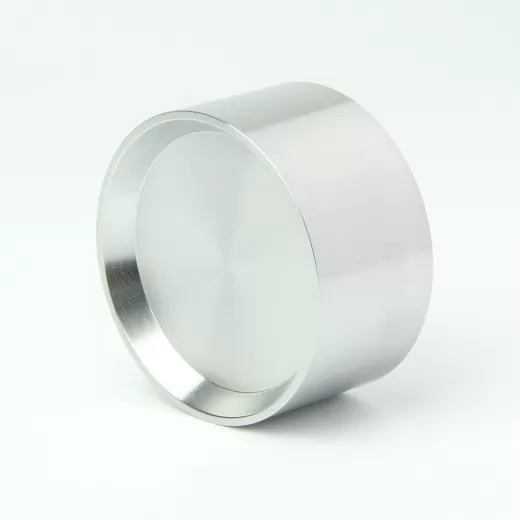
Titanium silicon sputtering targets are alloy targets primarily composed of titanium (Ti) and silicon (Si). During the sputtering process, atoms from the target are deposited onto a substrate in a nitrogen-containing atmosphere to form titanium silicon nitride (TiSiN) or related nanocomposite coatings.
The silicon content is carefully controlled because even small variations can influence:
· Grain size
· Hardness
· Oxidation resistance
· Thermal stability
· Coating microstructure
Premium targets ensure consistent alloy composition throughout the deposition process.
TiSi coatings produced from titanium silicon sputtering targets are widely used for:
· Carbide cutting tools
· Milling cutters
· Drills
· Turning inserts
· Punches and dies
· Aerospace components
· Automotive tooling
· Precision molds
Their outstanding mechanical properties make them ideal for high-performance machining.
A nanocomposite coating consists of extremely fine crystalline grains surrounded by thin amorphous boundary layers.
In TiSiN coatings:
· Titanium nitride forms nanoscale crystals.
· Silicon nitride forms an amorphous matrix.
· The two phases work together to improve mechanical performance.
This unique structure creates coatings that are significantly harder than conventional TiN coatings.
The nanoscale grain structure helps:
· Prevent crack propagation
· Increase hardness
· Improve wear resistance
· Enhance thermal stability
· Reduce plastic deformation
These advantages extend tool life under demanding machining conditions.
The silicon concentration in titanium silicon sputtering targets plays a crucial role in nanocomposite formation.
Small additions of silicon help refine grain size and promote the formation of a stable amorphous silicon nitride phase between titanium nitride crystals.
This refined microstructure leads to:
· Higher coating density
· Improved hardness
· Better surface smoothness
· Enhanced coating uniformity
Accurate composition control is essential for achieving consistent coating properties.
A homogeneous target produces a stable plasma during sputtering, resulting in:
· Consistent deposition rates
· Uniform film thickness
· Even chemical composition
· Predictable coating performance
These characteristics are especially important for large-scale industrial production.
One of the most significant advantages of TiSi-based coatings is their remarkable hardness.
Compared with conventional TiN coatings, nanocomposite TiSiN coatings typically exhibit:
· Greater resistance to abrasive wear
· Higher load-bearing capacity
· Improved cutting-edge retention
· Longer service life
These characteristics help cutting tools maintain sharpness during prolonged machining operations.
Nanocomposite coatings effectively resist:
· Abrasive wear
· Adhesive wear
· Erosive wear
· Micro-cracking
This makes them suitable for machining hardened steels, stainless steel, nickel alloys, and other difficult-to-cut materials.
High-speed machining generates substantial heat at the cutting edge.
TiSi coatings derived from premium titanium silicon sputtering targets maintain their hardness even at elevated temperatures, reducing thermal softening during continuous operation.
This thermal stability supports:
· Faster cutting speeds
· Longer machining cycles
· Improved productivity
Silicon contributes to the formation of dense protective oxide layers that shield the coating from oxidation.
Benefits include:
· Reduced surface degradation
· Improved coating durability
· Enhanced resistance to high-temperature oxidation
· Longer tool lifespan
These properties are particularly valuable in dry machining applications.
Premium titanium silicon sputtering targets are manufactured using high-purity raw materials to minimize contamination.
Lower impurity levels help achieve:
· Better coating adhesion
· Reduced particle generation
· Improved surface finish
· More consistent thin-film properties
High-purity targets also improve process stability during long production runs.
Dense targets provide:
· Stable sputtering behavior
· Uniform erosion
· Longer target life
· Higher material utilization
These advantages reduce production costs while maintaining coating quality.
Choosing the right supplier is just as important as selecting the correct target composition.
Advanced Targets manufactures premium titanium silicon sputtering targets using advanced metallurgical technologies and rigorous quality control procedures.
Every target is produced with carefully controlled titanium-to-silicon ratios, ensuring consistent nanocomposite coating formation and repeatable performance.
Advanced production processes create dense, homogeneous targets with refined microstructures that promote stable plasma generation and uniform film deposition.
Advanced Targets offers customized target dimensions, alloy compositions, bonding methods, and backing plate options for magnetron sputtering, Arc PVD, and other advanced coating systems.
With extensive experience in sputtering materials, Advanced Targets provides technical support to help customers optimize coating performance for tooling, aerospace, automotive, semiconductor, and industrial applications.
When choosing titanium silicon sputtering targets, consider:
· Silicon content
· Material purity
· Target density
· Grain uniformity
· Manufacturing process
· Dimensional precision
These factors work together to determine coating performance and process efficiency.
Working with an established supplier ensures consistent product quality, reliable delivery, and technical support throughout the coating development process.
Titanium silicon sputtering targets are the foundation of advanced TiSi nanocomposite coatings that deliver exceptional hardness, wear resistance, oxidation resistance, and thermal stability for modern tooling applications. By precisely controlling silicon content and target microstructure, manufacturers can produce dense, uniform coatings capable of withstanding the demanding conditions of high-speed machining.
With high-purity materials, advanced manufacturing technology, and customized engineering solutions, Advanced Targets provides premium titanium silicon sputtering targets that enable reliable nanocomposite coating performance across cutting tools, molds, aerospace components, and other high-performance industrial applications. Choosing the right target is a critical step toward maximizing coating quality, extending tool life, and improving manufacturing productivity.
Previous: What Are the Benefits of Nylon Mooring Rope?
Next: Chromium vs Titanium Sputtering Target: Which Is Better for Hard Coating Applications?
Copyright:@2020-2021

Comments Please sign in or sign up to post.
0
0 of 500 characters used