
Modern machining demands cutting tools that can withstand extreme temperatures, high friction, and continuous mechanical stress. Hard coatings produced through Physical Vapor Deposition (PVD) have become essential for improving tool life, reducing wear, and increasing machining efficiency. Among the most widely used coatings are titanium aluminum nitride (TiAlN) and chromium aluminum nitride (CrAlN).
The performance of TiAlN coatings largely depends on the quality of the titanium aluminum sputtering targets used during the PVD process. High-purity targets with precise alloy compositions ensure consistent coating thickness, excellent adhesion, and reliable mechanical properties.
This article compares TiAlN and CrAlN coatings, focusing on their behavior at high cutting speeds, and explains how premium titanium aluminum sputtering targets from Advanced Targets help manufacturers produce high-performance coatings for demanding machining applications.
Titanium Aluminum Nitride (TiAlN) is a high-performance ceramic coating formed by depositing titanium and aluminum in a nitrogen atmosphere. It is widely recognized for its excellent hardness, oxidation resistance, and thermal stability.
TiAlN coatings are commonly applied to:
· Carbide end mills
· Drills
· Milling cutters
· Turning inserts
· Threading tools
· Aerospace machining tools
The coating's performance begins with high-quality titanium aluminum sputtering targets, which provide the correct Ti/Al ratio for optimal coating characteristics.
Chromium Aluminum Nitride (CrAlN) is another advanced PVD coating that combines chromium and aluminum to provide excellent corrosion resistance, oxidation resistance, and thermal durability.
CrAlN coatings are frequently used for:
· Die casting molds
· Forming tools
· Hot forging equipment
· Plastic injection molds
· High-temperature industrial components
Although both coatings perform well under demanding conditions, their strengths differ depending on the machining environment.
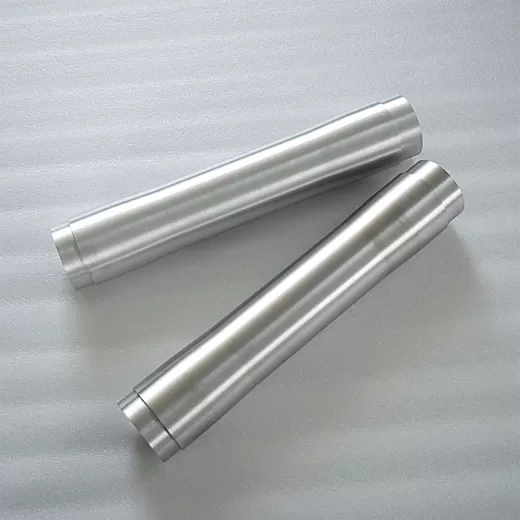
One of the biggest advantages of TiAlN is its exceptional hardness.
Typical TiAlN coatings exhibit hardness values between 2,800 and 3,500 HV, depending on deposition conditions and composition.
Higher hardness provides:
· Better abrasion resistance
· Reduced flank wear
· Improved cutting-edge retention
· Longer tool life during high-speed machining
For applications involving hardened steels and high cutting speeds, TiAlN often delivers superior wear performance.
CrAlN generally has slightly lower hardness than TiAlN but compensates with greater toughness.
This balance helps reduce coating chipping during interrupted cutting operations and heavy mechanical impacts.
High-speed machining generates significant heat at the cutting edge.
TiAlN forms a dense aluminum oxide (Al₂O₃) layer when exposed to elevated temperatures. This protective oxide reduces further oxidation and acts as a thermal barrier.
Advantages include:
· Improved hot hardness
· Better thermal insulation
· Lower diffusion wear
· Stable cutting performance
These properties make TiAlN particularly effective for dry machining and high-speed milling.
CrAlN coatings also exhibit excellent oxidation resistance but are especially effective in applications involving rapid heating and cooling cycles.
Their resistance to thermal shock makes them suitable for interrupted machining and tooling exposed to fluctuating temperatures.
For continuous high-speed machining, TiAlN generally demonstrates superior resistance to:
· Abrasive wear
· Adhesive wear
· Diffusion wear
· Plastic deformation
As spindle speeds increase, these characteristics help maintain cutting efficiency and extend tool life.
The quality of the titanium aluminum sputtering targets directly influences coating density and wear performance.
CrAlN may outperform TiAlN when machining materials that generate severe adhesive wear or where corrosion resistance is especially important.
Examples include:
· Aluminum alloys
· Copper alloys
· Die casting applications
· Plastic processing equipment
Selecting the appropriate coating depends on the workpiece material and operating conditions.
During high-temperature machining, TiAlN naturally forms a compact aluminum oxide layer.
This protective film:
· Reduces oxygen diffusion
· Slows coating degradation
· Increases thermal stability
· Extends coating life
These benefits become increasingly important during dry machining at elevated cutting speeds.
CrAlN coatings also resist oxidation effectively while offering superior corrosion resistance in humid or chemically aggressive environments.
This makes CrAlN an excellent option for tooling exposed to corrosive media or cooling lubricants.
The performance of TiAlN coatings begins with premium titanium aluminum sputtering targets.
Precise Ti/Al ratios ensure:
· Stable coating composition
· Uniform hardness
· Consistent oxidation resistance
· Reliable deposition rates
Composition control minimizes variation between production batches.
High-purity targets reduce contamination that could otherwise create coating defects.
Benefits include:
· Improved adhesion
· Lower particle generation
· Better surface finish
· Enhanced coating density
These characteristics contribute to longer tool life and higher machining efficiency.
Selecting a trusted supplier is essential for achieving consistent PVD coating performance.
Advanced Targets manufactures premium titanium aluminum sputtering targets using advanced production technologies and strict quality control procedures.
Every target is produced with carefully controlled titanium and aluminum compositions to ensure stable deposition and repeatable coating performance.
Optimized manufacturing processes create dense, homogeneous targets that deliver:
· Stable sputtering behavior
· Uniform erosion
· High target utilization
· Consistent film quality
Advanced Targets provides customized target sizes, alloy compositions, backing plate options, and bonding methods to meet the needs of Arc PVD, magnetron sputtering, and advanced thin-film applications.
With extensive experience in sputtering materials, Advanced Targets helps customers select the most suitable titanium aluminum sputtering targets for tooling, aerospace, semiconductor, and industrial coating applications.
Both TiAlN and CrAlN coatings offer outstanding performance, but their strengths differ based on machining requirements. For high-speed cutting, dry machining, and applications requiring maximum hardness and wear resistance, TiAlN is generally the preferred choice. Its ability to maintain hardness at elevated temperatures and form a protective aluminum oxide layer makes it highly effective for demanding machining operations. CrAlN, meanwhile, excels in applications requiring superior toughness, thermal shock resistance, and corrosion protection.
The performance of TiAlN coatings ultimately depends on the quality of the titanium aluminum sputtering targets used during deposition. By choosing Advanced Targets, manufacturers benefit from high-purity materials, precise alloy composition, and advanced manufacturing processes that ensure consistent coating quality, improved tool life, and reliable performance in high-speed machining environments.
Previous: 10 Reasons to Choose HMPE Fiber Rope Sling for Heavy Lifting
Next: Vibrating Screen Mesh vs. Perforated Plate: Which Is Better?
Copyright:@2020-2021

Comments Please sign in or sign up to post.
0
0 of 500 characters used