
Selecting the right titanium aluminum sputtering targets is only part of achieving consistent coating quality in Arc Physical Vapor Deposition (Arc PVD) systems. Another critical factor is the bonding method used to attach the target to its backing plate or cathode assembly. Proper bonding ensures efficient heat transfer, mechanical stability, and reliable electrical conductivity throughout the coating process.
Among the most common bonding methods for Arc cathode systems are indium bonding and elastomer bonding. Each offers unique advantages depending on operating temperature, target size, maintenance requirements, and production goals. Understanding the differences between these bonding techniques helps manufacturers optimize equipment performance and extend target service life.
As a professional supplier, Advanced Targets manufactures high-quality titanium aluminum sputtering targets and provides customized bonding solutions for various Arc PVD and sputtering applications.
In an Arc PVD system, the target must remain securely attached to the cathode while enduring high temperatures, electrical currents, and thermal cycling. A poorly bonded target can result in uneven erosion, overheating, unstable arc behavior, or premature target failure.
A reliable bonding layer helps:
· Transfer heat efficiently
· Maintain electrical contact
· Reduce thermal stress
· Prevent target separation
· Improve coating consistency
Choosing the appropriate bonding method is therefore essential for long-term production stability.
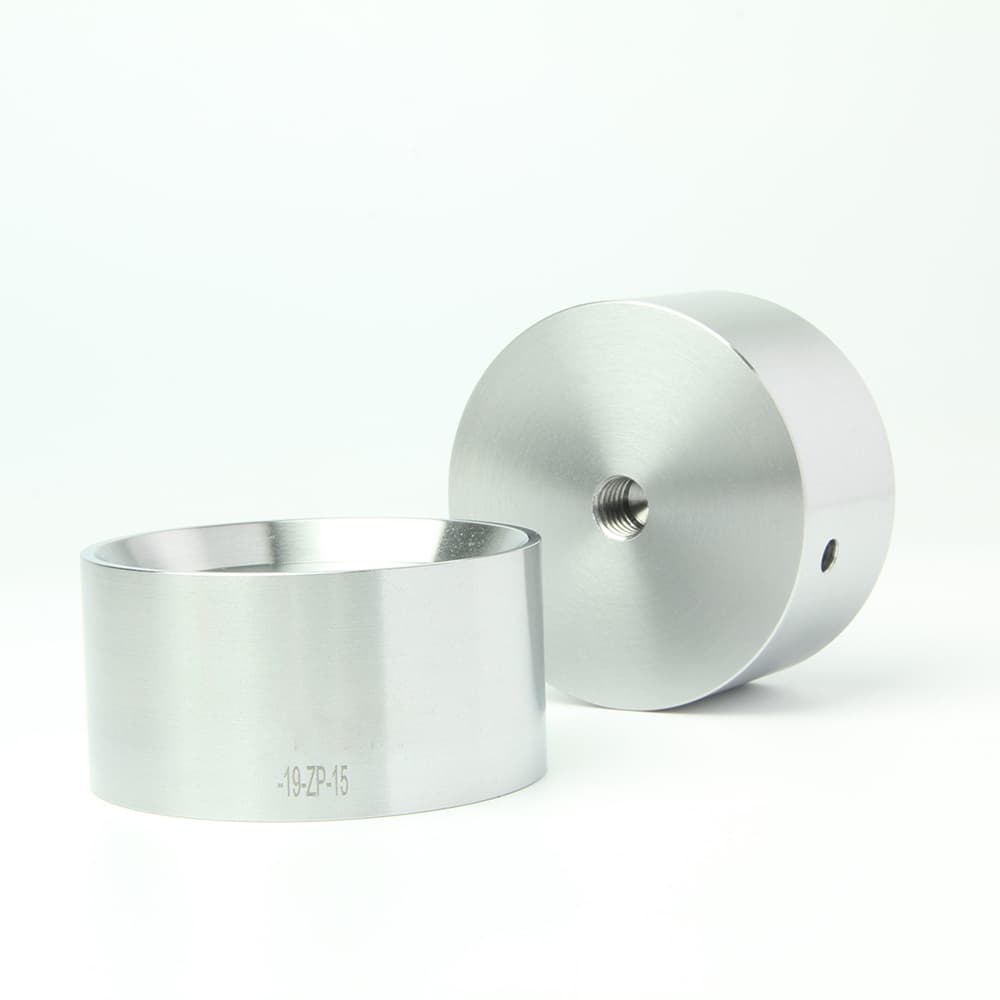
The two most widely used bonding methods for titanium aluminum sputtering targets are:
· Indium bonding
· Elastomer bonding
Each approach addresses different operational requirements.
Indium bonding uses a soft, highly conductive indium metal layer between the sputtering target and the backing plate. Because indium is both thermally and electrically conductive, it creates excellent contact between the target and the cooling system.
Indium's softness also allows it to accommodate slight differences in surface flatness, producing a uniform bond.
Indium bonding offers several important benefits:
· Excellent thermal conductivity
· High electrical conductivity
· Uniform heat dissipation
· Strong bonding reliability
· Stable performance during high-power operation
These characteristics make indium bonding a popular choice for demanding industrial coating processes.
Indium-bonded titanium aluminum sputtering targets are commonly used for:
· High-power Arc PVD systems
· Continuous production lines
· Precision coating applications
· Aerospace coatings
· Cutting tool manufacturing
· Automotive component coatings
Where maximum thermal performance is required, indium bonding is often the preferred solution.
Elastomer bonding uses a flexible polymer material to attach the target to the backing plate. Unlike metallic bonding materials, elastomers can absorb mechanical stress caused by thermal expansion and contraction during operation.
This flexibility helps protect both the target and the cathode assembly.
Elastomer bonding provides several practical benefits:
· Excellent vibration absorption
· Reduced mechanical stress
· Easier target replacement
· Lower risk of cracking
· Good dimensional flexibility
These properties can simplify maintenance and improve equipment uptime.
Elastomer-bonded titanium aluminum sputtering targets are often selected for:
· Medium-power Arc systems
· Research laboratories
· Prototype coating equipment
· Applications with frequent target replacement
· Systems with moderate thermal loads
The flexibility of elastomer bonding makes it suitable for environments where operational adaptability is important.
Heat management is one of the biggest differences between the two methods.
Indium bonding provides superior thermal conductivity, allowing heat generated during Arc PVD to transfer efficiently into the cooling system. This reduces the likelihood of localized overheating and promotes stable operation.
Elastomer bonding offers lower thermal conductivity. While adequate for many applications, it may not dissipate heat as effectively under high-power operating conditions.
Electrical contact is essential for stable arc generation.
Indium is an excellent electrical conductor, supporting consistent current flow and reliable arc ignition.
Elastomers generally have much lower electrical conductivity and often rely on additional design features to ensure proper electrical performance.
Elastomer bonding excels at accommodating thermal expansion and vibration.
Its flexibility reduces stress on the target during repeated heating and cooling cycles, making it beneficial for systems experiencing frequent temperature fluctuations.
Indium, although soft, provides less overall flexibility than elastomer materials.
Maintenance requirements also differ.
Indium-bonded assemblies typically require careful handling during installation and replacement because the metallic bond must remain uniform.
Elastomer-bonded targets are often easier to remove and replace, helping reduce maintenance time in certain production environments.
Indium bonding is generally recommended when priorities include:
· High deposition power
· Maximum cooling efficiency
· Long production runs
· Stable arc performance
· High coating consistency
· Superior thermal management
These advantages make indium ideal for large-scale industrial manufacturing.
Elastomer bonding may be preferable when applications require:
· Frequent target replacement
· Lower operating temperatures
· Flexible mechanical support
· Research and development work
· Reduced maintenance complexity
It offers an effective balance between performance and serviceability.
The performance of titanium aluminum sputtering targets depends not only on alloy composition but also on manufacturing precision and bonding quality.
Advanced Targets delivers premium TiAl targets with customized bonding solutions designed to maximize Arc PVD system performance.
Every target is produced using carefully controlled raw materials and advanced processing technologies to ensure high density, uniform microstructure, and consistent composition.
Advanced Targets offers both indium and elastomer bonding solutions based on customer equipment specifications, production conditions, and cooling requirements.
Strict quality control minimizes impurities, helping achieve stable sputtering behavior, improved coating quality, and longer target life.
The engineering team works closely with customers to recommend the most suitable target composition, dimensions, and bonding method for each Arc cathode system.
The bonding method plays a vital role in the performance of titanium aluminum sputtering targets used in Arc cathode systems. Indium bonding delivers outstanding thermal and electrical conductivity, making it the preferred choice for high-power industrial applications requiring maximum coating consistency and efficient heat transfer. Elastomer bonding, on the other hand, offers superior flexibility, vibration absorption, and easier maintenance, making it well suited for moderate-power systems and applications with frequent target changes.
By partnering with Advanced Targets, manufacturers gain access to high-quality titanium aluminum sputtering targets with customized bonding solutions tailored to their specific Arc PVD requirements. The result is improved process stability
Previous: A Complete Guide to Flexible Duct Materials: Types and Uses
Next: TiAl Target Microstructure: How Grain Size Affects Coating Uniformity in Arc PVD
Copyright:@2020-2021

Comments Please sign in or sign up to post.
0
0 of 500 characters used