
Selecting the right pipe fittings involves more than evaluating pressure ratings and mechanical strength. Corrosion resistance is another critical factor that directly affects the lifespan, maintenance costs, and reliability of a piping system. While both malleable iron and ductile iron fittings offer excellent performance, they differ in their corrosion behavior and the coating technologies used to protect them.
As a trusted malleable iron pipe fittings manufacturer, HuLu supplies premium-quality fittings with advanced surface treatments designed for long-lasting performance in commercial, industrial, and municipal applications. This article explores the key differences in corrosion resistance and coating treatments between malleable and ductile iron pipe fittings, helping buyers choose the best solution for their projects.
Iron naturally reacts with oxygen and moisture, forming rust over time. Without proper protection, corrosion can weaken pipe fittings, reduce flow efficiency, and increase maintenance expenses.
Several factors influence corrosion rates, including:
· Humidity
· Water chemistry
· Soil conditions
· Salt exposure
· Industrial chemicals
· Operating temperature
Because of these environmental variables, protective coatings are essential for both malleable and ductile iron fittings.
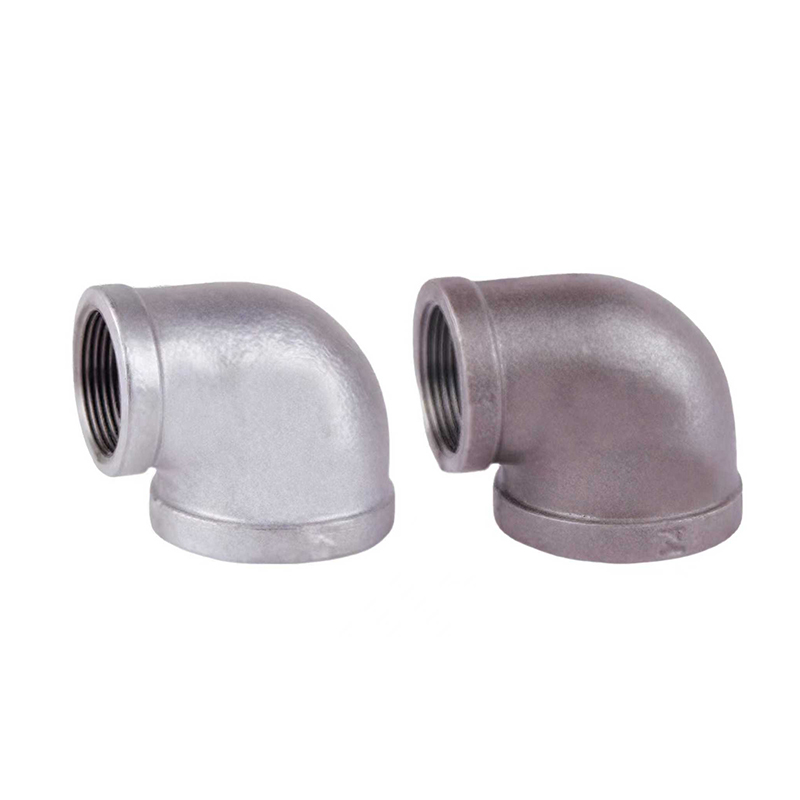
A high-quality coating provides multiple benefits:
· Prevents direct contact between iron and moisture
· Extends service life
· Reduces maintenance costs
· Improves appearance
· Enhances chemical resistance
· Maintains system reliability
An experienced malleable iron pipe fittings manufacturer like HuLu understands that coating quality is just as important as the base material itself.
Malleable iron is produced through an annealing process that improves toughness and machinability. However, like most ferrous materials, it still requires surface protection to resist corrosion.
Uncoated malleable iron can perform well in dry indoor environments but is vulnerable to rust when exposed to:
· Outdoor weather
· Moisture
· Condensation
· Saltwater
· Industrial pollutants
For this reason, most commercial malleable iron fittings receive protective finishes before leaving the factory.
Properly coated malleable iron fittings are widely used in:
· Residential plumbing
· Commercial buildings
· Fire protection systems
· Natural gas pipelines
· HVAC installations
· Compressed air systems
These applications benefit from the balance of affordability, durability, and ease of installation.
Ductile iron offers superior mechanical strength because of its spheroidal graphite structure, but its natural corrosion resistance is not dramatically better than that of malleable iron.
Without coatings, ductile iron may experience corrosion in:
· Underground installations
· Coastal environments
· Chemical processing facilities
· Wastewater systems
· High-humidity locations
Since ductile iron is commonly used in buried infrastructure, protective coatings are especially important.
One of the most popular surface treatments for malleable iron fittings is hot-dip galvanizing.
The fitting is immersed in molten zinc, creating a metallurgical bond between the iron and zinc coating.
Hot-dip galvanizing offers several benefits:
The zinc layer acts as a barrier against moisture and oxygen while also providing sacrificial protection if the surface is scratched.
Galvanized fittings can remain corrosion-resistant for many years under normal service conditions.
Minimal maintenance is required after installation, making galvanized fittings highly cost-effective.
As a professional malleable iron pipe fittings manufacturer, HuLu offers precision hot-dip galvanized fittings that meet international quality standards.
Black malleable iron fittings are another common option.
Black fittings are coated with a protective oil or oxide finish that provides temporary corrosion resistance during storage and transportation.
These fittings are commonly used for:
· Natural gas systems
· Fire sprinkler installations
· Indoor industrial piping
However, black coatings are not intended for long-term exposure to harsh outdoor environments without additional protection.
Ductile iron fittings often receive epoxy coatings, particularly for water transmission systems.
Epoxy provides:
· Excellent adhesion
· Strong chemical resistance
· Smooth interior surfaces
· Reduced friction losses
· Long-term corrosion protection
Epoxy-coated ductile iron fittings are widely used in municipal water infrastructure because they help maintain water quality while extending service life.
Both malleable and ductile iron fittings can be protected using modern coating technologies.
These coatings combine zinc particles with specialized binders to create additional corrosion resistance.
Advantages include:
· Good weather resistance
· Improved durability
· Easier touch-up repairs
· Cost-effective protection
Powder coating creates a durable protective layer through electrostatic application and heat curing.
Benefits include:
· Uniform appearance
· Strong impact resistance
· UV stability
· Excellent abrasion resistance
· Environmentally friendly application
HuLu offers multiple finishing options to meet the needs of different industries and environmental conditions.
Although both materials require protection, their coating priorities differ depending on the application.
Most commonly use:
· Hot-dip galvanizing
· Black finish
· Zinc coating
· Powder coating
These treatments support commercial plumbing and building service applications where threaded fittings are preferred.
Frequently use:
· Fusion-bonded epoxy
· Cement mortar lining
· Polyurethane coatings
· Bituminous coatings
These systems are designed primarily for underground or municipal infrastructure.
The best coating depends on the operating environment.
Recommended options include:
· Black finish
· Galvanized coating
Better choices include:
· Hot-dip galvanized fittings
· Powder-coated fittings
Consider:
· Heavy-duty galvanized coatings
· Epoxy systems
· Zinc-rich protective coatings
Fusion-bonded epoxy and cement-lined ductile iron fittings typically provide the best long-term protection.
An experienced malleable iron pipe fittings manufacturer can recommend the most suitable surface treatment based on project conditions.
HuLu has earned the trust of customers worldwide by delivering high-quality malleable iron fittings with dependable corrosion protection.
HuLu manufactures:
· Elbows
· Tees
· Couplings
· Bushings
· Unions
· Caps
· Plugs
· Crosses
· Nipples
Customers can choose from multiple finishes, including:
· Hot-dip galvanizing
· Black finish
· Zinc coating
· Customized protective coatings
Every fitting is carefully inspected to ensure:
· Accurate dimensions
· Reliable threads
· Durable coating adhesion
· Pressure resistance
· Consistent manufacturing quality
These rigorous quality standards help customers reduce maintenance costs and improve long-term system reliability.
Both malleable iron and ductile iron pipe fittings require effective corrosion protection to achieve long service life. While their natural corrosion resistance is relatively similar, the coatings applied to each material are often tailored to their intended applications. Malleable iron fittings typically benefit from hot-dip galvanizing, black finishes, or powder coatings for commercial and industrial piping systems, whereas ductile iron fittings often rely on epoxy or cement-lined coatings for demanding municipal and underground environments.
Choosing a trusted malleable iron pipe fittings manufacturer like HuLu ensures access to expertly manufactured fittings with high-performance coating solutions that deliver durability, reliability, and cost-effective protection. By selecting the right material and surface treatment for your operating environment, you can maximize system performance and minimize maintenance throughout the life of your piping network.
Previous: The Critical Role of ACSR Core Wire in Disaster-Resilient Grids
Next: How Hi-Tensile Wire Improves Efficiency in Baling Processes
Copyright:@2020-2021

Comments Please sign in or sign up to post.
0
0 of 500 characters used