
Choosing the right pipe fitting material is about more than just mechanical performance. Cost, installation efficiency, maintenance requirements, and service life all influence the total value of a piping system. While ductile iron fittings are well known for their exceptional strength, they are not always the most economical choice. In many commercial and industrial applications, products from a reliable malleable iron pipe fittings manufacturer can provide the ideal balance between performance and affordability.
As an experienced malleable iron pipe fittings manufacturer, HuLu supplies high-quality fittings that help distributors, contractors, and project managers reduce costs without compromising reliability. This article compares the overall costs of malleable iron and ductile iron fittings and explains when malleable iron delivers the best return on investment.
Before comparing costs, it is important to understand how these two materials differ.
Malleable iron fittings are manufactured by heat treating white cast iron. The annealing process transforms the brittle structure into a tougher and more ductile material that performs well under moderate pressure and mechanical stress.
Common applications include:
· Residential plumbing
· Commercial water supply systems
· Natural gas pipelines
· Fire sprinkler systems
· HVAC installations
· Compressed air systems
Because they are easy to machine and thread, malleable iron fittings remain one of the most popular choices for building services.
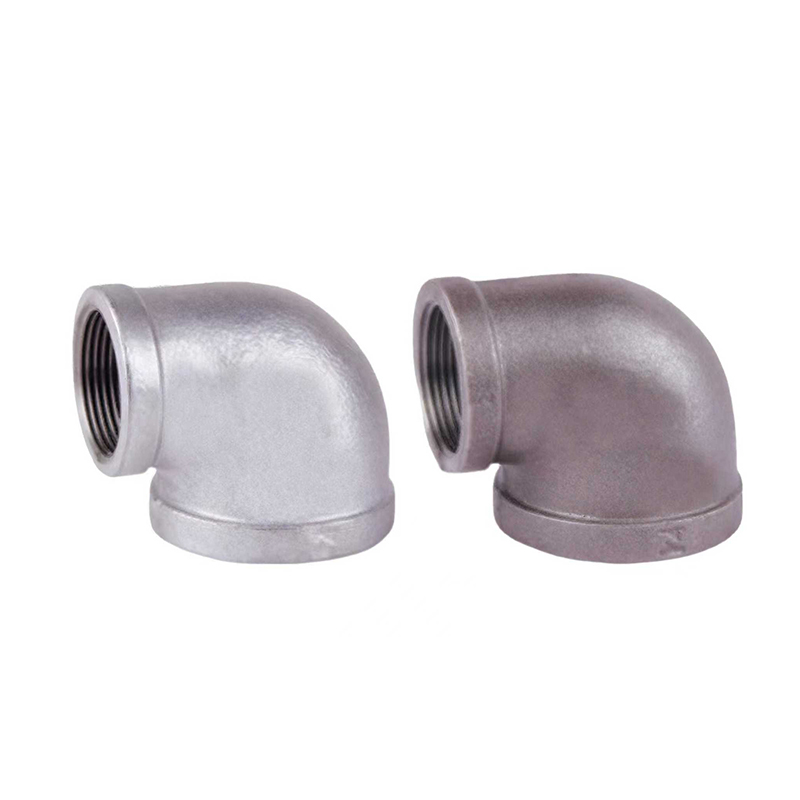
Ductile iron fittings are produced by adding magnesium during casting, creating spherical graphite nodules that significantly improve strength and flexibility.
These fittings are typically used in:
· Municipal water networks
· Underground infrastructure
· High-pressure industrial pipelines
· Wastewater systems
· Oil and gas transmission
Although they offer excellent mechanical properties, they also come with higher manufacturing costs.
The purchase price is often the first factor buyers evaluate.
A professional malleable iron pipe fittings manufacturer like HuLu can produce fittings efficiently through mature manufacturing processes.
Advantages include:
· Lower raw material costs
· Faster production cycles
· Competitive pricing
· Wide product availability
· Lower inventory investment
For projects with hundreds or thousands of threaded fittings, these savings can significantly reduce the total procurement budget.
Ductile iron requires:
· More advanced casting technology
· Additional alloy treatment
· Larger production equipment
· More complex quality control
These factors increase manufacturing expenses, making ductile iron fittings more expensive than comparable malleable iron products.
Material price is only one part of the overall project budget.
Malleable iron fittings are lightweight and designed for threaded connections, allowing installers to work quickly with standard tools.
Benefits include:
Threaded connections eliminate many complex installation procedures, reducing labor hours.
Less installation time means contractors can complete projects more efficiently, especially in commercial buildings.
Threaded fittings are easy to remove and replace, reducing future maintenance expenses.
These advantages make malleable iron an excellent choice for projects with tight schedules.
Many ductile iron systems require:
· Flanged connections
· Mechanical joints
· Specialized installation equipment
· Larger crews
· Additional lifting equipment for larger fittings
While necessary for heavy-duty applications, these requirements increase installation costs.
Paying for additional strength only makes sense when the application requires it.
Many piping systems operate at moderate pressure levels where extreme mechanical strength is unnecessary.
Ideal applications include:
· Office buildings
· Hotels
· Hospitals
· Schools
· Shopping centers
· Apartment complexes
· Factory utility systems
In these environments, fittings from a trusted malleable iron pipe fittings manufacturer provide dependable performance at a lower overall cost.
Ductile iron becomes the better investment for:
· Water transmission mains
· Municipal infrastructure
· High-pressure pumping stations
· Underground utility systems
· Heavy industrial processing
In these demanding environments, its superior strength justifies the higher purchase price.
The lowest purchase price does not always equal the lowest total cost.
For moderate-duty systems, malleable iron offers:
· Long service life
· Easy replacement
· Lower maintenance expenses
· Lower inventory costs
· Reduced downtime during repairs
When properly protected with galvanized or coated finishes, malleable iron fittings can deliver decades of reliable service.
In high-stress environments, ductile iron offers:
· Greater resistance to heavy loading
· Longer fatigue life
· Better impact resistance
· Lower risk of structural failure
Although maintenance costs may also be low, the higher initial investment should be justified by operational demands.
Distributors and wholesalers also consider inventory efficiency.
A reliable malleable iron pipe fittings manufacturer like HuLu typically offers:
Large inventories allow customers to source complete fitting ranges from one supplier.
Because unit prices are lower, distributors can stock more sizes without increasing capital requirements.
Standardized production enables shorter lead times and improved order fulfillment.
These advantages support better inventory management and customer satisfaction.
Maintenance expenses often determine long-term project value.
Threaded fittings make maintenance straightforward.
Technicians can:
· Remove damaged fittings quickly
· Replace components without specialized equipment
· Minimize service interruptions
· Reduce labor expenses
This is especially valuable for commercial buildings where downtime must be minimized.
Although highly durable, repairs may require:
· Larger equipment
· More labor
· Specialized replacement procedures
Maintenance can therefore become more expensive, particularly for smaller installations.
Choosing the right malleable iron pipe fittings manufacturer is just as important as selecting the right material.
HuLu provides customers with several key advantages.
Every fitting undergoes strict inspections to ensure:
· Accurate dimensions
· Reliable threads
· Pressure resistance
· Mechanical strength
· Excellent surface finish
HuLu manufactures a wide range of fittings, including:
· Elbows
· Tees
· Couplings
· Bushings
· Unions
· Caps
· Plugs
· Crosses
· Nipples
This extensive product range simplifies procurement and reduces sourcing complexity.
Efficient production processes enable HuLu to offer cost-effective solutions for wholesalers, contractors, OEMs, and international distributors without sacrificing quality.
The best value depends on matching the material to the application's requirements.
Choose malleable iron when you need:
· Affordable threaded fittings
· Moderate-pressure performance
· Easy installation
· Lower maintenance costs
· Fast project completion
Choose ductile iron when your project requires:
· High structural strength
· Heavy external loading resistance
· High-pressure performance
· Municipal infrastructure durability
Selecting the appropriate material prevents unnecessary spending while ensuring long-term system reliability.
Cost-effective piping solutions require balancing performance with budget. While ductile iron remains the preferred option for demanding infrastructure and high-pressure systems, it often exceeds the needs of standard commercial and industrial applications. In these cases, fittings from a trusted malleable iron pipe fittings manufacturer provide outstanding value through lower purchase costs, easier installation, simplified maintenance, and dependable long-term performance.
With decades of manufacturing expertise, HuLu delivers precision-engineered malleable iron pipe fittings that combine quality, durability, and competitive pricing. By choosing the right material for the right application, businesses can optimize both project costs and operational efficiency while maintaining the high standards expected in today's piping systems.
Previous: What Cleanroom Aluminum Profile Certifications Do You Really Need?
Next: Structural Strength and Impact Resistance Differences Between Malleable and Ductile Iron Fittings
Copyright:@2020-2021

Comments Please sign in or sign up to post.
0
0 of 500 characters used