
Reliable power delivery is essential for getting the best performance from your Starlink Mini Power Cables, especially in field installations where the power source may be several meters away from the terminal. Whether you're setting up Starlink Mini in an RV, camper van, boat, construction site, emergency response vehicle, or off-grid cabin, selecting the correct cable length can significantly reduce voltage drop and improve system stability.
Many users assume that choosing the longest available cable provides the greatest flexibility. However, longer cables increase electrical resistance, which can result in lower voltage reaching the Starlink Mini. Understanding how cable length affects performance helps you build a more reliable installation. Astarkits offers high-quality Starlink Mini Power Cables designed to minimize voltage loss while delivering dependable performance in demanding environments.
Voltage drop refers to the reduction in electrical voltage as power travels through a cable. Every cable has some electrical resistance, and resistance increases as cable length increases.
When excessive voltage drop occurs, your Starlink Mini may experience:
· Unstable operation
· Random reboots
· Reduced performance
· Slow startup
· Unexpected power interruptions
Keeping voltage drop to a minimum ensures your Starlink Mini receives consistent power, especially during continuous operation.
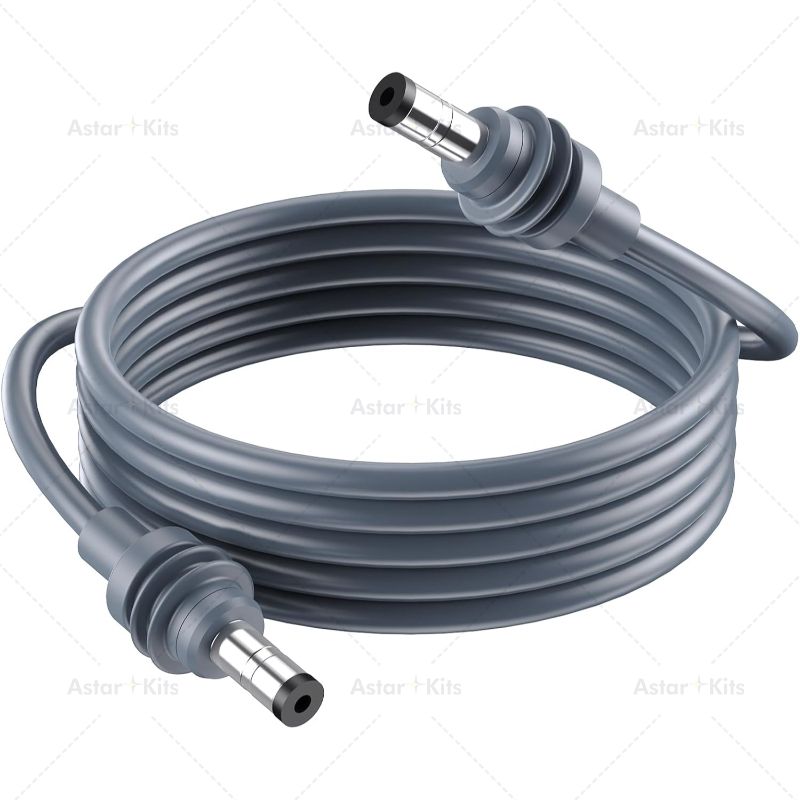
Every additional meter of cable adds resistance to the electrical circuit. As resistance increases, more voltage is lost before the power reaches the Starlink Mini.
For example:
· A 1-meter cable experiences very little voltage loss.
· A 3-meter cable introduces more resistance.
· A 5-meter cable creates even greater voltage drop if the conductor size remains the same.
This is why choosing the shortest practical cable is usually the best solution.
Shorter Starlink Mini Power Cables provide several advantages:
· Better power transmission
· Lower energy loss
· Less heat generation
· Improved device stability
· Higher electrical efficiency
These benefits become especially important when using portable batteries or solar power systems with limited available energy.
Cable length should always be considered together with cable gauge.
The American Wire Gauge (AWG) system measures conductor thickness.
Common sizes include:
Cable Gauge | Recommended Use |
24 AWG | Very short, low-current applications |
22 AWG | Short cable runs |
20 AWG | Medium-length installations |
18 AWG | Longer runs requiring minimal voltage drop |
A lower AWG number means a thicker conductor with lower electrical resistance.
Many professional installers choose 18 AWG cables because they:
· Carry higher current safely
· Reduce voltage drop
· Improve efficiency over longer distances
· Generate less heat
· Increase overall reliability
For installations requiring longer cable runs, thicker conductors are highly recommended.
A 1-meter cable works well when:
· The battery is mounted close to the Starlink Mini
· Using portable power stations
· Temporary camping setups
· Desktop or indoor installations
This option provides the lowest possible voltage loss.
A 2-meter cable is suitable for:
· Small RV installations
· Vehicle dashboards
· Compact marine setups
· Portable workstations
It offers additional flexibility while maintaining excellent electrical performance.
Three-meter cables are commonly selected for:
· Roof-mounted Starlink Mini installations
· Camper vans
· Pickup trucks
· Small trailers
This length balances installation flexibility with efficient power delivery.
Five-meter cables are useful when:
· Routing through vehicle interiors
· Installing rooftop antennas
· Mounting equipment on boats
· Reaching external battery compartments
When choosing longer cables, selecting thicker conductors such as 18 AWG becomes even more important.
Different field installations require different cable lengths.
In RVs, routing cables through walls, ceilings, and storage compartments often requires additional length. Measure the complete cable path instead of estimating the straight-line distance.
Boats require cables that withstand moisture, vibration, and constant movement. Waterproof connectors and UV-resistant insulation are essential.
Solar-powered systems benefit from shorter cable runs to maximize battery efficiency and reduce unnecessary power loss.
Reliable communication is critical. High-quality cables with minimal voltage drop help maintain uninterrupted Starlink Mini operation during emergency deployments.
Even the best cable gauge cannot compensate for poor connector performance.
Quality Starlink Mini Power Cables should include:
Secure connections prevent intermittent power interruptions caused by vibration or movement.
Gold-plated terminals improve conductivity while resisting corrosion, especially in outdoor environments.
Extra reinforcement protects internal conductors from repeated bending near the connector.
Outdoor installations benefit from connectors designed to resist rain, dust, humidity, and temperature changes.
To achieve the best performance, follow these practical recommendations:
Always measure the actual routing path rather than estimating the distance between devices.
Avoid purchasing unnecessarily long cables that increase resistance and clutter your installation.
Pure copper provides lower resistance than copper-clad aluminum, resulting in more efficient power delivery.
For longer installations, choose thicker conductors such as 18 AWG to minimize voltage loss.
Each additional connector introduces another potential point of resistance. Using a single, properly sized cable is usually the most reliable solution.
Astarkits designs premium Starlink Mini Power Cables specifically for demanding mobile and outdoor applications. Every cable is engineered to provide reliable power transmission while minimizing voltage loss.
Key features include:
· High-quality pure copper conductors
· Low-resistance 18 AWG and 20 AWG options
· Precision-fit connectors
· Durable weather-resistant insulation
· Reinforced strain relief
· Excellent flexibility for vehicle and field installations
· Reliable performance in RV, marine, camping, and off-grid environments
These features help ensure stable power delivery, allowing users to enjoy uninterrupted satellite internet wherever they travel.
Selecting the proper length for Starlink Mini Power Cables is one of the simplest ways to reduce voltage drop and improve system reliability. While longer cables provide greater installation flexibility, they also introduce additional electrical resistance that can affect performance.
By choosing the shortest practical cable, using the appropriate conductor gauge, selecting pure copper construction, and investing in premium products from Astarkits, users can build efficient, dependable Starlink Mini installations that deliver stable power in even the most demanding field conditions.
Previous: None.
Next: Vending Machine with Healthy Food: What Products Actually Sell Well?
Copyright:@2020-2021

Comments Please sign in or sign up to post.
0
0 of 500 characters used