
The performance and lifespan of a Flake Ice Machine depend not only on its refrigeration system but also on the materials used in its construction. One of the most important decisions manufacturers make is whether to use stainless steel or carbon steel for key machine components. Each material offers distinct advantages in terms of durability, corrosion resistance, cost, and maintenance.
For industries such as seafood processing, food manufacturing, supermarkets, healthcare, and industrial cooling, selecting the right material can significantly impact equipment reliability and long-term operating costs. This article compares stainless steel and carbon steel in Flake Ice Machine construction and explains why Daxtro prioritizes high-quality materials to deliver dependable performance.
A Flake Ice Machine operates in a cold, wet environment where constant exposure to water and low temperatures creates challenging working conditions. Components must withstand moisture, temperature fluctuations, and continuous operation without compromising performance.
The right construction materials help ensure:
· Long service life
· Stable ice production
· Low maintenance costs
· Food safety compliance
· Resistance to corrosion
· High mechanical strength
Understanding the differences between stainless steel and carbon steel allows buyers to make informed investment decisions.
Stainless steel is widely regarded as the preferred material for food-grade and industrial ice-making equipment due to its excellent resistance to corrosion and hygienic properties.
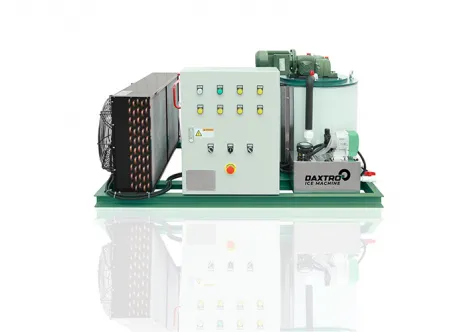
One of the greatest advantages of stainless steel is its ability to resist rust, even in humid or saline environments.
This makes stainless steel particularly suitable for:
· Seafood processing plants
· Coastal facilities
· Food factories
· Medical cold chain operations
· High-humidity production environments
A stainless steel Flake Ice Machine maintains its appearance and structural integrity over many years of operation.
In applications where ice comes into direct contact with food or medical products, hygiene is essential.
Stainless steel features a smooth, non-porous surface that:
· Resists bacterial growth
· Is easy to clean
· Supports food safety standards
· Minimizes contamination risks
For this reason, many food processing companies require stainless steel contact surfaces.
Although stainless steel components often involve a higher initial investment, they generally provide lower lifetime ownership costs due to reduced corrosion and fewer replacement parts.
Carbon steel is another commonly used material in industrial equipment because of its strength and affordability.
Carbon steel provides excellent mechanical performance and is capable of supporting heavy equipment and large production systems.
It is often used for:
· Machine frames
· Structural supports
· Base platforms
· External mounting components
Properly designed carbon steel structures offer reliable stability during continuous operation.
Compared with stainless steel, carbon steel is less expensive to manufacture.
For businesses with limited budgets, carbon steel construction can reduce the initial purchase price of a Flake Ice Machine.
However, buyers should also consider long-term maintenance and replacement costs.
Unlike stainless steel, carbon steel is vulnerable to rust when exposed to moisture.
To improve durability, manufacturers typically apply:
· Powder coatings
· Galvanized finishes
· Anti-corrosion paint
· Protective surface treatments
While these coatings provide effective protection, they require regular inspection and maintenance to prevent corrosion over time.
Stainless steel offers outstanding resistance to rust and corrosion, making it the preferred choice for wet and humid environments.
Carbon steel requires protective coatings and regular maintenance to achieve comparable durability.
For food-grade applications, stainless steel clearly provides superior sanitation.
Its smooth surface is easier to clean and helps businesses comply with food safety regulations.
Carbon steel is generally used in structural areas where direct food contact does not occur.
A stainless steel Flake Ice Machine typically requires less maintenance because it naturally resists corrosion.
Carbon steel components may require periodic repainting, coating repairs, or rust prevention treatments depending on the operating environment.
Carbon steel reduces upfront equipment costs, while stainless steel offers better long-term value through:
· Longer lifespan
· Lower maintenance
· Improved corrosion resistance
· Reduced downtime
When evaluating equipment, businesses should consider total cost of ownership rather than purchase price alone.
The best Flake Ice Machine designs often combine both materials strategically.
Stainless steel is ideal for:
· Ice-making drums
· Evaporators
· Ice contact surfaces
· Water tanks
· External panels
· Food-grade processing areas
Carbon steel performs well in:
· Equipment frames
· Machine supports
· Structural bases
· Non-contact mechanical assemblies
This balanced approach helps optimize both performance and cost.
Daxtro carefully selects premium materials to maximize the durability, hygiene, and efficiency of every Flake Ice Machine.
Key features include:
Critical ice-contact areas are manufactured from high-quality stainless steel to ensure excellent corrosion resistance and hygienic operation.
Strong structural components provide stability for continuous industrial production while maintaining long-term reliability.
Advanced fabrication techniques improve component accuracy, reducing wear and enhancing overall machine performance.
Daxtro engineers its machines for easy servicing, helping customers minimize downtime and reduce maintenance expenses throughout the equipment's lifecycle.
Before purchasing a Flake Ice Machine, businesses should consider:
Facilities located in coastal or humid regions benefit greatly from stainless steel construction.
Food processing, seafood, pharmaceutical, and healthcare industries typically require stainless steel for hygienic compliance.
Although stainless steel equipment costs more initially, its durability and lower maintenance often result in better long-term value.
Material selection plays a crucial role in the performance, reliability, and lifespan of a Flake Ice Machine. Stainless steel provides exceptional corrosion resistance, superior hygiene, and long-term durability, making it the preferred choice for food-grade and medical applications. Carbon steel offers excellent strength and lower upfront costs, making it suitable for structural components when properly protected.
By combining premium materials with advanced engineering, Daxtro manufactures Flake Ice Machine systems that deliver dependable performance, efficient operation, and outstanding long-term value. Whether your business serves seafood processing, food manufacturing, industrial cooling, or medical cold chain logistics, investing in high-quality construction materials ensures reliable ice production for years to come.
Previous: Vial Filling Machine Sourcing Strategies for Pharma Enterprises
Next: Vial Filling Machine Guide for New Pharma Production Facilities
Copyright:@2020-2021

Comments Please sign in or sign up to post.
0
0 of 500 characters used