
As an important branch of physical health therapy, cryotherapy has deeply penetrated sports rehabilitation, health management, aesthetic body shaping, wellness conditioning and other fields with its prominent advantages of being non-invasive and side-effect-free, emerging as a popular track in the current health industry. At present, the mainstream cryotherapy equipment on the market is mainly divided into two categories: liquid nitrogen cryotherapy chambers and electric cryotherapy chambers. Based on entirely different refrigeration technical paths, the two have distinct characteristics in core principles, efficacy performance and user experience, and form a good complementary relationship in application scenarios and operation management. They are not simply substitute competitors, but rather leverage their respective strengths and develop in coordination through technological innovation. They not only meet the demand for high-precision cryotherapy in professional fields, but also promote the popularization of cryotherapy technology in the mass consumer market, jointly building a diversified and multi-level ecosystem for the cryotherapy health industry.
With the growing public health awareness and the rapid development of sports medicine and rehabilitation medicine, the market demand for cryotherapy equipment is rising steadily. Cryotherapy equipment can be seen in professional sports institutions, high-end wellness centers, ordinary fitness clubs and even household wellness scenarios. The parallel development of liquid nitrogen and electric refrigeration technical paths enables cryotherapy services to accurately meet the needs of different groups and scenarios, continuously driving the industry to make breakthroughs in technological innovation and product upgrading, and injecting diverse impetus into the development of physical health therapy.
The essential difference between liquid nitrogen and electric cryotherapy chambers lies in their core refrigeration principles, which is the root of their differentiated performance.
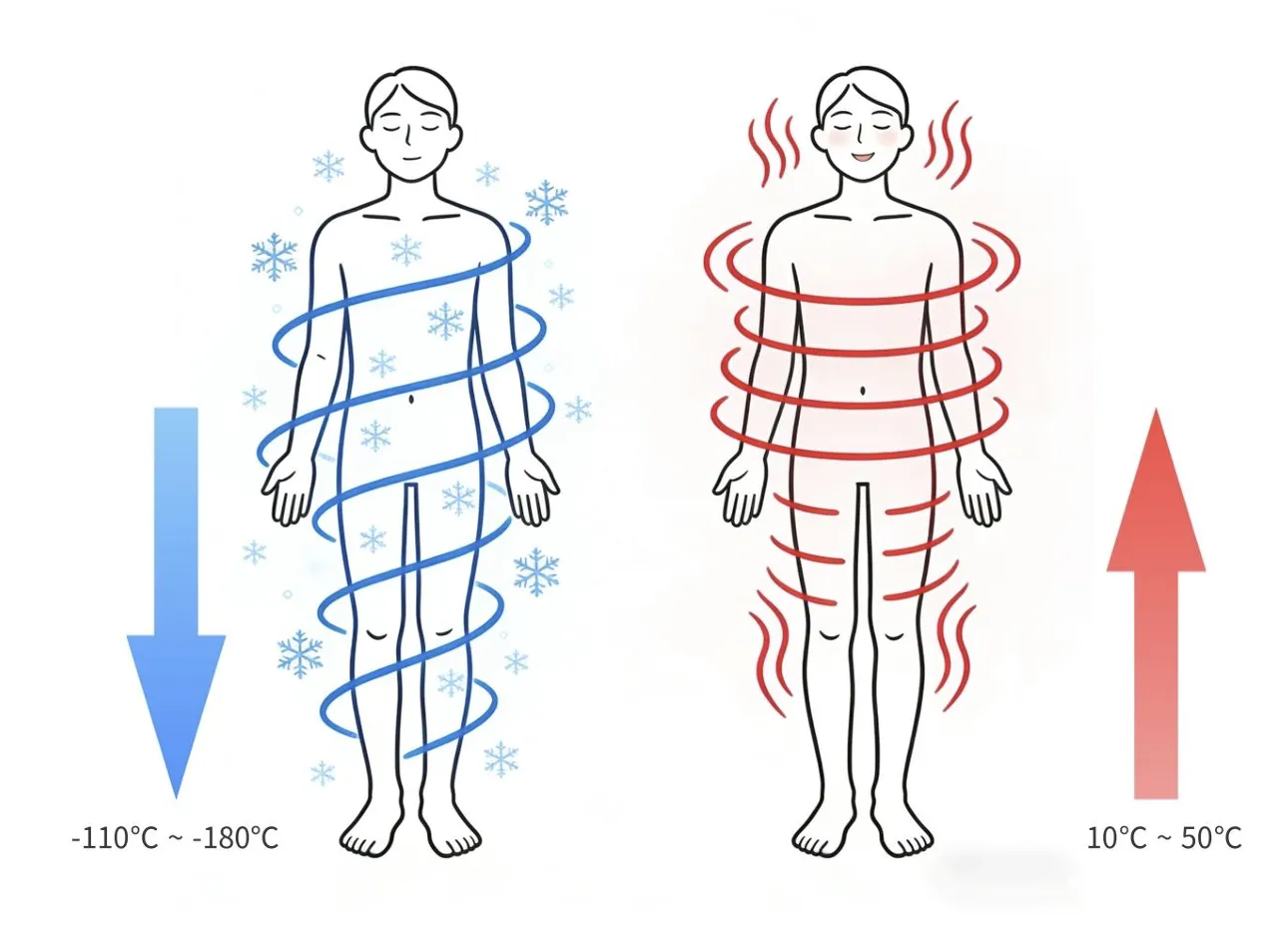
● Liquid nitrogen cryotherapy chambers take liquid nitrogen as the core cold source, utilizing its ultra-low temperature physical characteristic of -196℃. Through professional evaporators, high-speed fans and other devices, liquid nitrogen is fully vaporized; then, with scientific air duct design, low-temperature cold air is evenly delivered into the chamber, quickly creating an ultra-low temperature environment of -110℃ to -180℃. Its refrigeration process is instant and explosive. Meanwhile, relying on the classic Leidenfrost effect, an insulating layer of vaporized nitrogen forms on the skin surface before the human body comes into contact with the ultra-low temperature environment, effectively avoiding the risk of low-temperature frostbite in principle and ensuring the safety of ultra-low temperature cryotherapy.
● Electric cryotherapy chambers follow the traditional mechanical refrigeration principle, driven by electricity, and realize temperature regulation through the coordinated work of core components such as compressors, condensers, evaporators and refrigerants, falling into the category of medium and low temperature refrigeration. Their refrigeration process is gradual, with a temperature adjustment range that is more in line with the human body's normal tolerance to low temperatures. No additional refrigeration consumables are needed, and continuous and stable temperature control can be achieved only with electricity. This technical path allows electric cryotherapy chambers to break free from the reliance on special cold sources, featuring higher operational convenience and laying a solid foundation for their popularization in mass scenarios.
Due to different technical paths, the two types of cryotherapy chambers have their own focuses in user experience and core efficacy, and can meet differentiated therapy needs respectively.
The core advantages of liquid nitrogen cryotherapy chambers are ultra-fast cooling and high efficiency in a short time. Mainstream products can drop to -120℃ in 30 seconds and reach -180℃ in 50 seconds, with a single cryotherapy session taking only 3 to 5 minutes. The ultra-low temperature environment can quickly trigger the human body's natural stress response, making blood flow back to protect the body's core areas. After cryotherapy, blood rapidly spreads to the whole body and releases more endorphins and hormones. This process not only enables rapid lactic acid metabolism and effective relief of muscle fatigue, but also stimulates collagen synthesis, boosts the natural metabolism of fat cells and enhances the body's immunity, achieving multiple effects of sports rehabilitation, aesthetic body shaping and whole-body health conditioning. Users can quickly regain physical vitality after cryotherapy, making it particularly suitable for the demand for efficient recovery therapy.
Electric cryotherapy chambers are characterized by being gentle, comfortable and widely adaptable. Their gradual cooling method allows the human body to adapt to temperature changes step by step, delivering a milder sensory experience and being more friendly to people with low tolerance to ultra-low temperatures, such as the elderly, women and cryotherapy beginners. Due to the relatively mild temperature range, a single therapy session of electric cryotherapy chambers is usually slightly longer than that of liquid nitrogen ones, with core efficacy focusing on basic body relaxation, relief of muscle soreness, improved blood circulation and other aspects, suitable for daily wellness conditioning and mild fatigue recovery. This gentle therapy experience makes electric cryotherapy chambers more easily accepted by the public, becoming a common way for daily health management.
Liquid nitrogen and electric cryotherapy chambers form a clear market segmentation in application scenarios, each playing an important role in its exclusive field.
With the characteristics of ultra-low temperature and high-efficiency recovery, liquid nitrogen cryotherapy chambers have become the preferred equipment for professional high-end scenarios. At present, they are widely used in professional sports institutions such as national sports teams, physical fitness centers of the General Administration of Sport and professional sports clubs, meeting the stringent needs of rapid post-competition physical recovery and sports injury rehabilitation for athletes. Meanwhile, they have also entered professional places such as aerospace wellness centers, military sanatoriums and public medical institutions for health conditioning and rehabilitation treatment of special groups. In addition, five-star deluxe hotels, high-end aesthetic clinics and premium fitness clubs have become important application scenarios for liquid nitrogen cryotherapy chambers, satisfying the demand for health management and aesthetic body shaping of high-end groups.
Electric cryotherapy chambers are more suitable for mass consumption and small and medium-sized institutions. Their low access threshold, simple operation process and controllable operation and maintenance costs make them the mainstream choice for ordinary fitness centers, community wellness centers and small rehabilitation clinics, providing basic cryotherapy services for ordinary sports enthusiasts and community residents. At the same time, industry enterprises continue to launch lightweight and portable electric cryotherapy chamber products, promoting the gradual entry of this technology into household wellness scenarios, offering a new solution for daily body relaxation and fatigue relief at home, and truly realizing the popularization of cryotherapy technology from professional fields to the mass consumer market.
In terms of operation and maintenance as well as technological innovation, the two types of cryotherapy chambers have different development directions. Industry enterprises continue to optimize their products according to the characteristics of their own technical paths, constantly improving the practicality, safety and intelligence of the products.
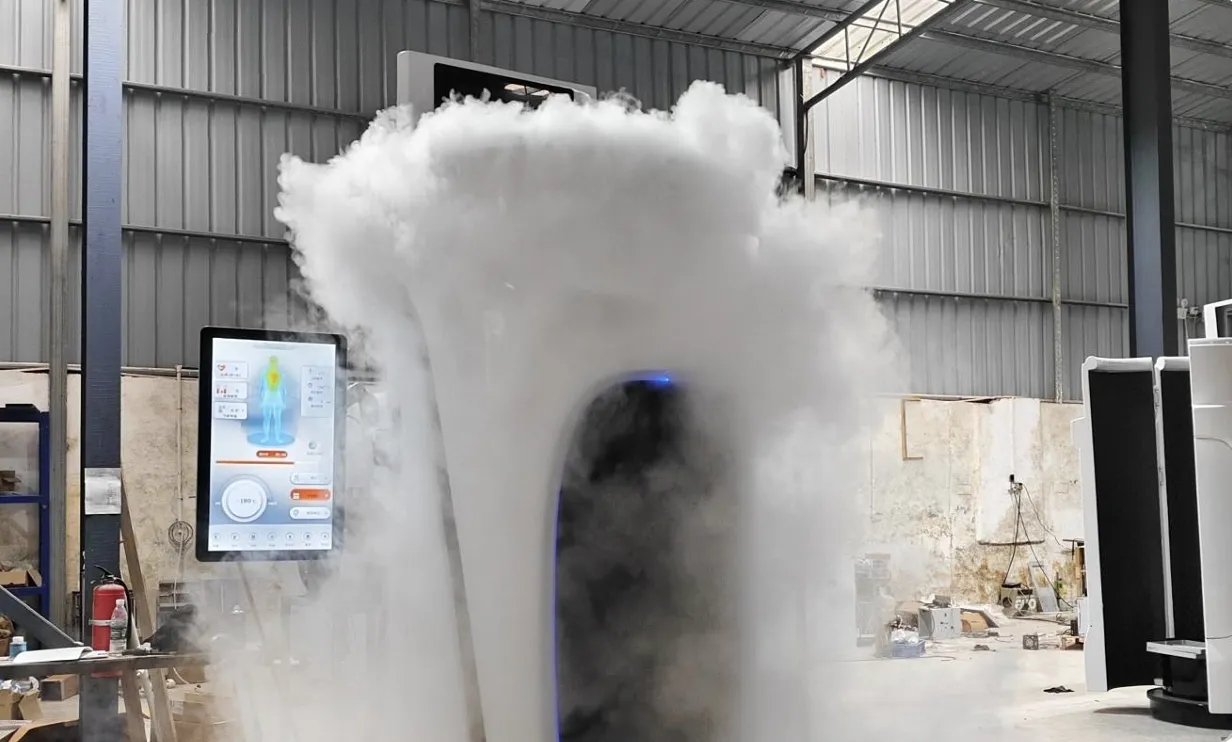
The core of operation and maintenance for liquid nitrogen cryotherapy chambers lies in the storage, supply of liquid nitrogen and safety control of equipment. In response to this feature, technological innovation in the industry mainly focuses on reducing liquid nitrogen consumption, avoiding safety risks and improving intelligence. For example, the intelligent flow control system is adopted to precisely control liquid nitrogen consumption, keeping the liquid nitrogen usage of a single cryotherapy session within a reasonable range and reducing energy consumption by more than 40% compared with traditional equipment; the integrated cold source design shortens system pipelines, greatly reducing the risk of liquid nitrogen leakage; smart wristbands are equipped to realize real-time monitoring of vital signs such as heart rate, body temperature and blood oxygen, and the system shuts down automatically in case of abnormalities, further ensuring usage safety. Meanwhile, the innovative application of accessories such as muffler valves and voltage stabilizers further reduces the natural loss of liquid nitrogen and improves the user experience of the equipment.
The operation and maintenance of electric cryotherapy chambers mainly focuses on the daily maintenance of the refrigeration system, such as routine compressor inspections, refrigerant replenishment and pipeline tightness tests. No additional consumable supply is needed, and the overall operation and maintenance process is simpler. Technological innovation in this track mainly centers on portability, miniaturization and high efficiency. Enterprises continuously optimize the structural design of the refrigeration system, reduce the equipment volume on the premise of ensuring refrigeration effect, and launch portable models such as desktop and mobile ones. They also upgrade the intelligent temperature control system to improve the accuracy and stability of temperature regulation, making the operation of household models simpler and further lowering the access threshold for the public.
Currently, the cryotherapy industry is developing rapidly towards intelligence, personalization and safety. The two technical paths of liquid nitrogen and electric refrigeration continue to deepen in their respective tracks, and at the same time show a trend of integration and joint upgrading in the industry.
Enterprises in the liquid nitrogen cryotherapy chamber track are constantly breaking through core technologies such as variable frequency temperature control and cold-heat cycle therapy, making the temperature regulation of ultra-low temperature cryotherapy more precise to meet the personalized needs of different users. They also expand more therapy functions, promoting the evolution from simple cryotherapy to comprehensive physical conditioning. By integrating intelligent sensing and Internet of Things technologies, electric cryotherapy chambers have realized functions such as remote control and data monitoring, making household cryotherapy more intelligent and convenient. They also continuously optimize refrigeration efficiency, reduce energy consumption and improve product cost performance.
Insiders point out that the complementary development of liquid nitrogen and electric cryotherapy chambers is an important symbol of the maturation of the cryotherapy industry. In the future, with continuous technological innovation, the two categories will continue to focus on their strengths in professional and mass scenarios, and integrated innovation for cross-border scenarios will become a new development direction. Cryotherapy technology will also deeply integrate with other physical therapies such as float therapy and hyperbaric oxygen therapy to form more comprehensive health management solutions, meeting the increasingly diverse health needs of people. The continuous upgrading and symbiotic development of the two technical paths will surely drive the continuous expansion of the cryotherapy industry, making physical health therapy a daily choice for more people and boosting the high-quality development of the big health industry.
Previous: Barrier coatings in flexible vs rigid packaging
Next: What are the safety guidelines for handling potassium peroxymonosulfate?
Copyright:@2020-2021

Comments Please sign in or sign up to post.
0
0 of 500 characters used