
In industrial heat transfer systems, gasket design plays a vital role in ensuring efficient and leak-free operation. Plate heat exchangers, widely used in HVAC, chemical processing, food production, and power systems, rely heavily on properly designed sealing solutions known as Plate Heat Exchanger Gaskets.
As a professional sealing solutions provider, Hongcan develops high-performance gasket systems designed for demanding industrial environments. Among the many gasket designs used in exchangers, two configurations are most commonly seen in practice. Understanding these configurations helps engineers choose the right sealing system for performance, safety, and durability.
Plate Heat Exchanger Gaskets are elastic sealing components installed on heat exchanger plates. Their primary function is to prevent leakage between fluid channels while maintaining efficient heat transfer between two media.
They are designed to:
· Prevent mixing of hot and cold fluids
· Maintain pressure integrity
· Direct fluid flow through specific channels
· Ensure safe and efficient heat exchange
Because heat exchangers operate under varying pressure and temperature conditions, gasket configuration is just as important as gasket material.
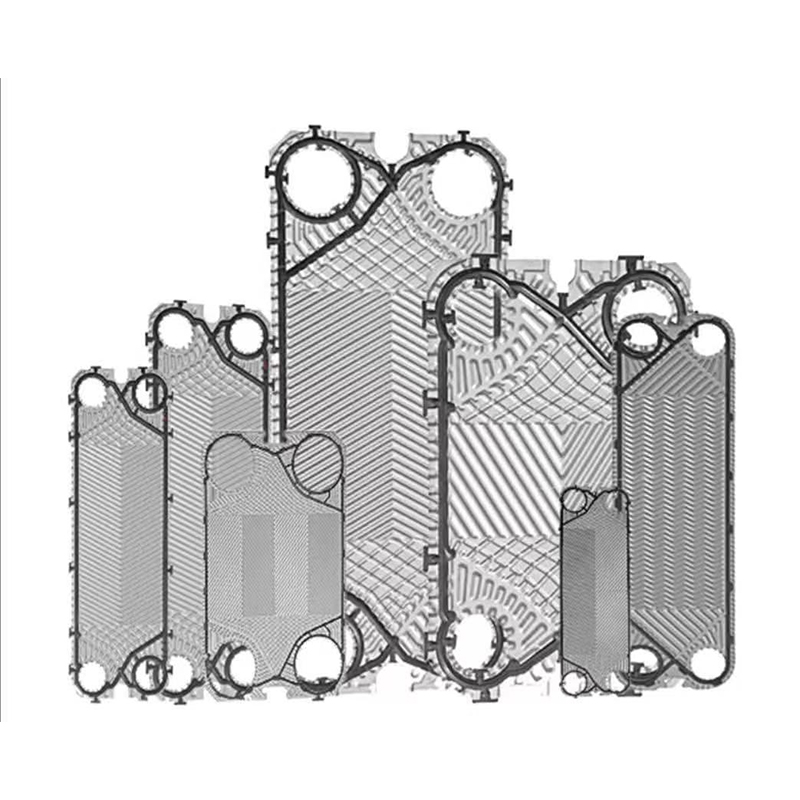
The configuration of a gasket determines how fluids flow inside the heat exchanger and how effectively leakage is prevented.
A proper gasket configuration ensures:
· Correct flow path control
· Prevention of cross-contamination
· Optimized heat transfer efficiency
· Reduced maintenance and downtime
· Longer equipment service life
Incorrect configuration can lead to serious operational issues, including leakage, reduced thermal performance, and system failure.
In most industrial applications, two main gasket configurations are widely used in Plate Heat Exchanger Gaskets systems:
· Ring gasket configuration
· Full-face (FF) gasket configuration
These two designs differ in structure, sealing area, and application suitability.
The ring gasket configuration is one of the most widely used designs in plate heat exchangers.
In a ring gasket configuration, the gasket is placed only around the inner sealing area of the plate. It seals the fluid channels without covering the entire surface of the plate.
The sealing occurs along a narrow ring around the fluid ports and channels.
Less material is required, making it a cost-effective solution.
The sealing force is concentrated in a smaller area, improving performance under higher pressure conditions.
· Strong sealing performance under pressure
· Lower material cost
· Compact and efficient design
· Suitable for high-performance systems
· Chemical processing systems
· Industrial cooling systems
· High-pressure heat exchangers
· Compact plate designs
Ring gasket configurations are commonly used in systems where performance and pressure resistance are critical.
The full-face gasket configuration is another widely used sealing design in heat exchangers.
In a full-face configuration, the gasket covers the entire surface of the heat exchanger plate, including the sealing area and bolt holes. This provides a complete surface seal between plates.
The gasket seals the entire plate surface, offering broader contact.
Better tolerance to surface irregularities and assembly variations.
Simplified positioning during assembly and maintenance.
· Enhanced sealing reliability in low-pressure systems
· Better protection against leakage from misalignment
· Easier installation and replacement
· Suitable for large surface areas
· HVAC systems
· Water treatment systems
· Food and beverage processing
· Low to medium pressure industrial systems
Full-face configurations are often preferred in applications where ease of maintenance and reliability are more important than high-pressure performance.
Understanding the differences between these two Plate Heat Exchanger Gaskets configurations helps ensure proper system design.
Ring gaskets seal only the inner flow area, while full-face gaskets cover the entire plate surface.
Ring configurations are better suited for high-pressure systems, while full-face designs are more effective in low to medium pressure environments.
Ring gaskets use less material, making them more economical. Full-face gaskets require more material due to their larger coverage.
Ring gaskets require more precise alignment, while full-face gaskets are easier to install.
Ring gaskets are used in performance-critical industrial systems, while full-face gaskets are common in general utility applications.
Both gasket configurations in Plate Heat Exchanger Gaskets systems can be manufactured from various materials depending on operating conditions.
Ideal for water, steam, and HVAC applications.
Best for oil-based fluids and hydrocarbon systems.
Suitable for high temperature and chemically aggressive environments.
Used in highly corrosive or high-purity applications.
Material selection often plays an equally important role as gasket configuration.
Hongcan provides advanced engineering and manufacturing solutions for plate heat exchanger sealing systems. With a focus on quality and durability, Hongcan ensures that Plate Heat Exchanger Gaskets meet demanding industrial requirements.
Proper selection of gasket configuration and material helps improve system efficiency, reduce maintenance costs, and extend equipment lifespan.
The two most common gasket configurations in heat exchangers are ring gasket and full-face (FF) gasket designs. Ring configurations are best suited for high-pressure, performance-focused systems, while full-face configurations are ideal for low to medium pressure applications requiring easier installation and broader sealing coverage.
Choosing the right Plate Heat Exchanger Gaskets configuration is essential for ensuring efficiency, safety, and long-term reliability. With advanced sealing technology and industry expertise, Hongcan delivers reliable gasket solutions for a wide range of industrial applications worldwide.
Previous: How Drill Bit Wear Rates Differ Between Top-Hammer and DTH Drilling Applications
Next: China Excavator Manufacturer- Dezhou Baoding Hydraulic
Copyright:@2020-2021

Comments Please sign in or sign up to post.
0
0 of 500 characters used