
Effective maintenance strategies are essential for maximizing the lifespan and performance of Truck Tires in commercial fleet operations. Among these strategies, tire rotation and position management are two of the most important practices for ensuring even wear, improving safety, and reducing overall operating costs.
Because different axle positions experience different levels of stress, heat, and wear patterns, proper rotation and positioning can significantly extend tire service life. As a trusted commercial tire manufacturer, LONGMARCH provides durable truck tire solutions designed for long-lasting performance across highway, regional, and mixed-service applications.
Tire rotation involves periodically changing the position of tires on a vehicle to promote even wear across all axles.
Proper rotation helps fleets achieve:
· More even tread wear
· Extended tire lifespan
· Improved fuel efficiency
· Better vehicle stability
· Reduced maintenance costs
· Higher retreadability value
Without rotation, certain tires wear out much faster than others, increasing replacement frequency and total cost of ownership.
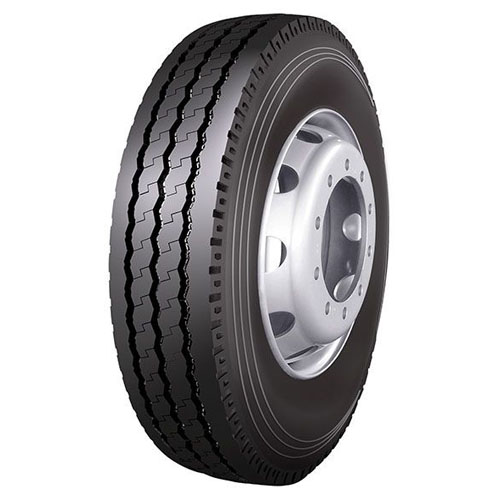
Different axle positions place different demands on truck tires.
Steer tires are responsible for:
· Directional control
· Steering precision
· Braking stability
Because of continuous road contact and steering movement, steer tires often experience:
· Shoulder wear
· Feathering patterns
· Uneven edge wear
Drive tires handle engine torque and traction demands.
They typically experience:
· Rapid tread wear
· Center lug stress
· Irregular wear under heavy loads
Trailer tires carry load weight but do not receive driving force.
Common wear patterns include:
· Even wear under proper alignment
· Shoulder wear from misalignment
· Stone retention damage in rough environments
Understanding these differences is key to effective rotation planning.
Fleet operators should establish a rotation schedule based on:
· Mileage intervals
· Load conditions
· Road environments
· Tire wear rates
Typical rotation intervals range from 20,000 to 40,000 kilometers, depending on usage.
Common rotation patterns include:
· Steer to drive position
· Drive to trailer position
· Cross-axle rotation for balanced fleets
This helps distribute wear more evenly across all tires.
Before rotating truck tires, always check for:
· Uneven tread wear
· Sidewall damage
· Inflation issues
· Alignment problems
Identifying issues early prevents further damage after rotation.
Beyond rotation, position management is a proactive approach that assigns tires based on performance characteristics.
Different tires perform best in specific positions:
· Steer tires: precision and stability
· Drive tires: traction and torque resistance
· Trailer tires: load support and rolling efficiency
Proper placement improves overall fleet performance.
Incorrect positioning can lead to:
· Accelerated wear
· Reduced fuel efficiency
· Poor handling
· Increased safety risks
For example, using drive tires on steer axles can negatively affect steering control.
Best practices include:
· Using rib-pattern tires for stability
· Ensuring even left-right wear balance
· Replacing early for safety margin
LONGMARCH steer-position truck tires are designed for consistent handling and long-lasting stability.
For drive axles:
· Prioritize traction and durability
· Monitor torque-related wear
· Rotate frequently to balance wear
LONGMARCH drive tires are engineered for strong traction and resistance to heavy load stress.
For trailer axles:
· Focus on low rolling resistance
· Monitor for irregular wear patterns
· Maintain proper inflation levels
Trailer tires significantly impact fuel efficiency over long distances.
Failing to rotate tires leads to uneven wear and early replacement.
Combining tires with significantly different tread depths can cause:
· Uneven load distribution
· Handling instability
· Increased wear on newer tires
Rotation alone is not enough. Poor alignment or incorrect inflation can still cause irregular wear.
Each axle requires specific tire performance characteristics. Incorrect placement reduces efficiency and safety.
Rotation helps distribute vehicle weight evenly across all tires, reducing stress on individual units.
Balanced tire wear improves rolling resistance consistency, leading to better fuel efficiency.
Even wear patterns help preserve tire casings, improving retread potential and lifecycle value.
Retreading is widely used in commercial fleets to reduce tire costs.
Proper rotation ensures:
· Uniform casing wear
· Better retread quality
· Increased number of retread cycles
· Lower total cost per mile
Well-maintained truck tires provide greater long-term value in retread programs.
LONGMARCH designs truck tires with durability and lifecycle efficiency in mind. Key product advantages include:
· Even wear tread design
· Strong casing construction
· High retreadability potential
· Stable performance across axle positions
· Reliable durability under heavy loads
These features support effective rotation and position management strategies in commercial fleets.
Tire rotation and position management are essential practices for maximizing the performance and lifespan of Truck Tires. By understanding axle-specific wear patterns and implementing structured rotation schedules, fleet operators can achieve more even wear, improved fuel efficiency, and lower operating costs.
When combined with proper tire selection and maintenance practices, rotation strategies help extend tire life and enhance safety. With durable and well-engineered solutions from LONGMARCH, commercial fleets can optimize tire performance across all axle positions while achieving greater operational efficiency and cost control.
Previous: Why Every Tesla Owner Needs Tesla Paint Protection Film Today
Next: Tesla Window Tint Irvine: Cost, Benefits & Best Options Explained
Copyright:@2020-2021

Comments Please sign in or sign up to post.
0
0 of 500 characters used