
Proper maintenance plays a vital role in maximizing the performance and lifespan of Truck Tires. Among all maintenance practices, wheel alignment and tire balancing are two of the most important yet often underestimated factors. When correctly performed, they help prevent irregular wear, improve fuel efficiency, enhance driving safety, and reduce long-term operating costs.
For fleet operators, dealers, and logistics companies, maintaining correct alignment and balance is essential to ensuring consistent tire performance. As a trusted commercial tire manufacturer, LONGMARCH designs truck tires that deliver stable performance under demanding conditions, but even the best tires require proper vehicle maintenance to achieve maximum service life.
Truck tires operate under heavy loads and long-distance conditions. Even small mechanical misalignments or imbalance issues can quickly lead to uneven wear patterns.
When alignment and balancing are correctly maintained, fleets benefit from:
· Even tread wear
· Improved fuel efficiency
· Better steering control
· Reduced vibration
· Extended tire lifespan
· Lower maintenance costs
Ignoring these factors can significantly shorten tire service life and increase operational risks.
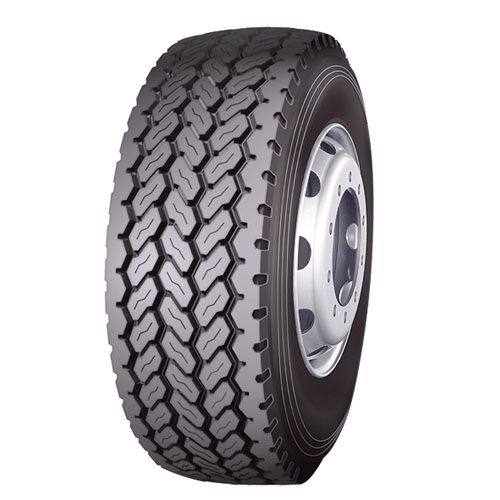
Wheel alignment refers to adjusting the angles of the wheels so they are set to the manufacturer’s specifications.
There are three main alignment parameters:
· Camber: inward or outward tilt of the wheel
· Toe: direction the tires point relative to the centerline
· Caster: steering axis angle affecting stability
Each angle influences how truck tires contact the road.
When alignment is incorrect, tires may experience:
· Uneven tread wear
· Shoulder wear on one side
· Feathering patterns across the tread
· Increased rolling resistance
· Poor steering response
Over time, misalignment leads to premature tire replacement and higher operating costs.
Tire balancing ensures that the weight of the tire and wheel assembly is evenly distributed around the axle.
Even small weight imbalances can cause:
· Vibrations at certain speeds
· Uneven tread wear
· Stress on suspension components
· Driver discomfort
· Reduced tire life
Balanced truck tires rotate smoothly, ensuring consistent road contact and performance.
· Static imbalance: vertical vibration
· Dynamic imbalance: side-to-side vibration
Both types can negatively affect tire performance if not corrected.
Correct alignment ensures that all tires make uniform contact with the road surface, distributing load evenly across the tread.
Misalignment often causes excessive wear on inner or outer edges. Proper alignment eliminates this issue.
Aligned wheels help trucks maintain straight-line stability, reducing steering corrections and tire stress.
LONGMARCH truck tires are engineered to perform consistently, but proper alignment ensures they deliver maximum tread life and efficiency.
Unbalanced tires create vibration that leads to uneven tread wear patterns over time.
Balanced wheels reduce mechanical stress on:
· Bearings
· Shock absorbers
· Steering systems
This indirectly helps preserve tire condition.
Even wear distribution allows truck tires to maintain optimal performance throughout their service life.
Fleet operators should watch for early warning signs, including:
· Vehicle pulling to one side
· Steering wheel vibration
· Uneven tread wear patterns
· Increased fuel consumption
· Steering wheel off-center when driving straight
Early detection helps prevent costly tire damage.
Potholes, rough roads, and curbs can easily disrupt alignment settings.
Constant heavy loads can gradually shift suspension geometry.
Worn suspension components affect wheel positioning and tire contact angles.
Incorrect tire mounting or wheel assembly can lead to imbalance issues from the start.
Fleet best practice recommends:
· Every 20,000–30,000 km
· After suspension repairs
· When uneven wear is detected
Balancing should be performed:
· During every tire installation
· After tire rotation
· When vibration is detected
Regular maintenance ensures consistent tire performance.
Proper alignment minimizes resistance between tire and road, improving fuel economy.
Balanced and aligned tires roll more efficiently, requiring less engine power.
Even small improvements in efficiency can significantly reduce fuel expenses over a fleet’s lifetime.
Truck tire retreading is a cost-effective practice widely used in commercial fleets.
Alignment and balancing help:
· Preserve casing integrity
· Prevent structural damage
· Ensure uniform wear patterns
· Improve retread success rates
Well-maintained tires offer greater lifecycle value and sustainability benefits.
LONGMARCH designs durable truck tires that deliver consistent performance across various applications, including highway, regional, and mixed-service operations.
Key advantages include:
· Strong casing construction
· Even tread wear design
· Heat-resistant compounds
· High retreadability potential
· Stable performance under heavy loads
However, optimal results are achieved only when tires are supported by proper alignment and balancing practices.
Wheel alignment and tire balancing are essential maintenance practices that directly influence the lifespan and performance of Truck Tires. Proper alignment ensures even road contact and prevents edge wear, while balancing eliminates vibration and promotes uniform tread wear. Together, they significantly improve safety, fuel efficiency, and operational cost control.
For fleet operators, integrating regular alignment and balancing checks into maintenance routines is one of the most effective ways to maximize tire value. With durable and performance-driven solutions from LONGMARCH, commercial fleets can achieve longer tire life, improved efficiency, and more reliable transportation operations.
Previous: Touring vs Performance Passenger Car Tires: Comfort, Grip, and Noise Compared
Next: Load Index and Speed Rating Checks Before Buying Truck Tires
Copyright:@2020-2021

Comments Please sign in or sign up to post.
0
0 of 500 characters used