
Glass wool insulation is one of the most widely used thermal and acoustic insulation materials in modern construction and industrial applications. Manufactured from molten glass fibers, it provides excellent thermal resistance, sound absorption, and fire safety performance. However, glass wool is available in different formats, primarily Glass Wool Roll and glass wool board, each designed for specific application needs.
Choosing the correct format is essential for achieving optimal insulation performance, installation efficiency, and long-term durability. As a professional insulation manufacturer, Huana provides high-quality glass wool solutions designed to meet diverse construction and industrial requirements.
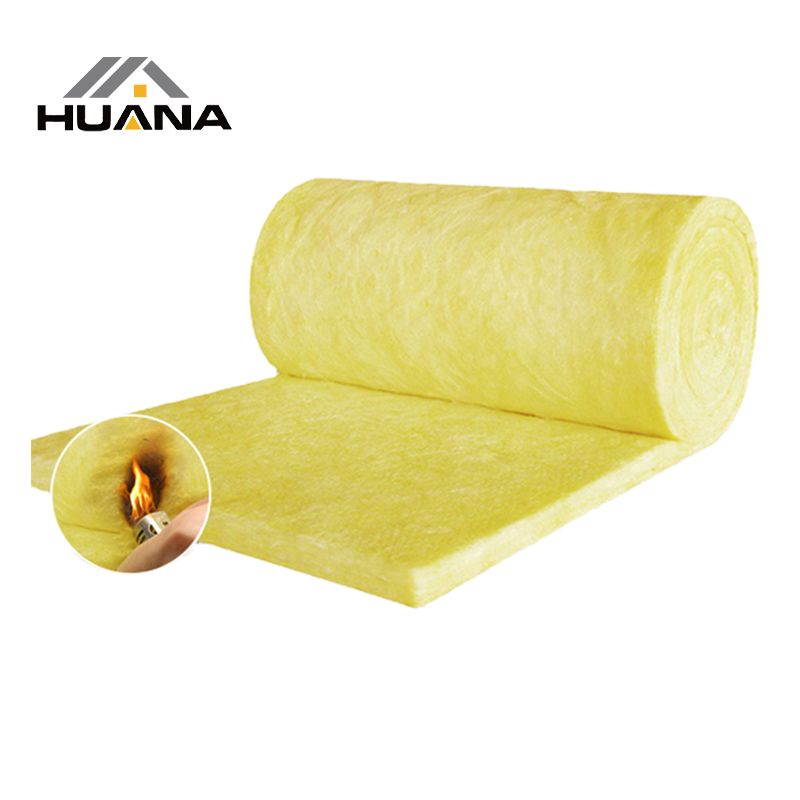
A Glass Wool Roll is a flexible insulation material supplied in rolled form. It is lightweight, compressible, and easy to transport and install. Glass wool rolls are typically used in large-area applications where flexibility and coverage are more important than structural rigidity.
Common characteristics include:
· Flexible and lightweight structure
· Easy cutting and installation
· High coverage efficiency
· Suitable for irregular surfaces
Glass wool board is a rigid or semi-rigid insulation panel formed by compressing glass fibers with a binder. It offers higher structural strength compared to rolls and is used where dimensional stability is required.
Common characteristics include:
· High density and rigidity
· Strong mechanical stability
· Precise dimensional control
· Suitable for vertical or load-bearing surfaces
Glass Wool Roll is highly flexible, making it ideal for uneven or curved surfaces. It can be easily unrolled and cut to fit different spaces, which significantly reduces installation time in large-scale projects.
Glass wool board, on the other hand, is rigid and maintains a fixed shape. This makes it more suitable for flat surfaces that require structural stability and precise alignment.
Both formats offer excellent thermal insulation, but performance can vary depending on density and application.
· Glass Wool Roll: Best for continuous coverage in large areas such as roofs and attics
· Glass Wool Board: Provides more stable insulation in walls and facades
In general, both materials deliver similar thermal conductivity values, but installation quality significantly affects real-world performance.
Both materials provide strong sound absorption, but their effectiveness depends on density and installation method.
· Glass Wool Roll: Better for filling large cavities and absorbing airborne noise
· Glass Wool Board: More effective for partition walls and soundproof panels
One of the most common uses of Glass Wool Roll is in roof and attic insulation. Its flexibility allows it to easily cover large horizontal surfaces, reducing heat loss and improving energy efficiency.
Benefits include:
· Easy installation over large areas
· Reduced thermal bridging
· Cost-effective insulation solution
Glass wool rolls are widely used in heating, ventilation, and air conditioning (HVAC) systems. Their flexibility allows them to wrap around ducts of various shapes and sizes.
Key advantages:
· Effective thermal control
· Noise reduction in air ducts
· Lightweight and easy handling
In industrial environments, glass wool rolls are used for insulating pipelines, tanks, and equipment where irregular shapes require adaptable materials.
Glass wool board is commonly used in exterior wall systems where rigidity and dimensional stability are required. It helps maintain insulation performance while supporting cladding systems.
Benefits include:
· Strong structural support
· Stable thermal performance
· Suitable for curtain wall systems
In commercial and residential buildings, glass wool boards are used in interior partitions to improve both thermal and acoustic insulation.
Advantages include:
· Enhanced soundproofing
· Fire resistance
· Improved indoor comfort
Glass wool boards are also used in industrial applications requiring flat, stable insulation surfaces, such as machinery enclosures and thermal protection panels.
· Irregular or curved surfaces: Glass Wool Roll is preferred
· Flat and structured surfaces: Glass wool board is more suitable
If fast installation and flexibility are priorities, rolls are more efficient. If structural strength and precision are required, boards are the better choice.
Glass wool boards are better suited for applications that require load resistance or external cladding support. Rolls are mainly used in non-load-bearing applications.
Glass Wool Rolls are generally more cost-effective for large-area coverage, while boards may have higher material costs but offer better structural performance.
Regardless of format, high-quality glass wool provides:
· Excellent thermal insulation
· Strong acoustic performance
· Non-combustible fire safety
· Long service life
· Energy efficiency improvements
These benefits make glass wool a preferred insulation material across residential, commercial, and industrial sectors.
As a professional insulation manufacturer, Huana provides premium glass wool solutions in both roll and board formats to meet diverse project requirements.
Key advantages include:
· High thermal efficiency and stable performance
· Excellent fire resistance properties
· Reliable density and fiber structure
· Wide application compatibility
· Consistent manufacturing quality control
Huana products help engineers, contractors, and architects select the right insulation format for optimal performance and efficiency.
Both Glass Wool Roll and glass wool board offer excellent insulation performance, but each serves different application needs. Glass wool rolls are ideal for flexible, large-area, and irregular surfaces such as roofs, ducts, and industrial pipelines. Glass wool boards are better suited for structured, load-bearing, and precision applications such as walls, partitions, and façade systems.
Copyright:@2020-2021

Comments Please sign in or sign up to post.
0
0 of 500 characters used