
Curtain wall systems are widely used in modern commercial buildings because they offer lightweight structure, aesthetic flexibility, and excellent natural lighting. However, these systems also require high-performance insulation to improve thermal efficiency, fire resistance, and acoustic control. This is where rock wool boards play a critical role.
As a professional Rockwool Insulation Manufacturer, Huana provides high-density rock wool board solutions designed specifically for curtain wall assemblies. These products help meet strict building codes while improving overall energy performance and safety standards.
Rock wool boards are made from natural basalt rock and recycled slag, melted and spun into fibers. The result is a non-combustible insulation material with excellent thermal and acoustic properties.
In curtain wall systems, rock wool boards are commonly used as cavity insulation behind glass panels, aluminum framing, or opaque spandrel sections. Their main functions include:
· Reducing heat transfer between indoor and outdoor environments
· Enhancing fire resistance in high-rise buildings
· Improving sound insulation in urban environments
· Preventing condensation within wall assemblies
Because curtain walls are often exposed to wind pressure and temperature fluctuations, selecting a reliable Rockwool Insulation Manufacturer like Huana ensures consistent density, durability, and performance.
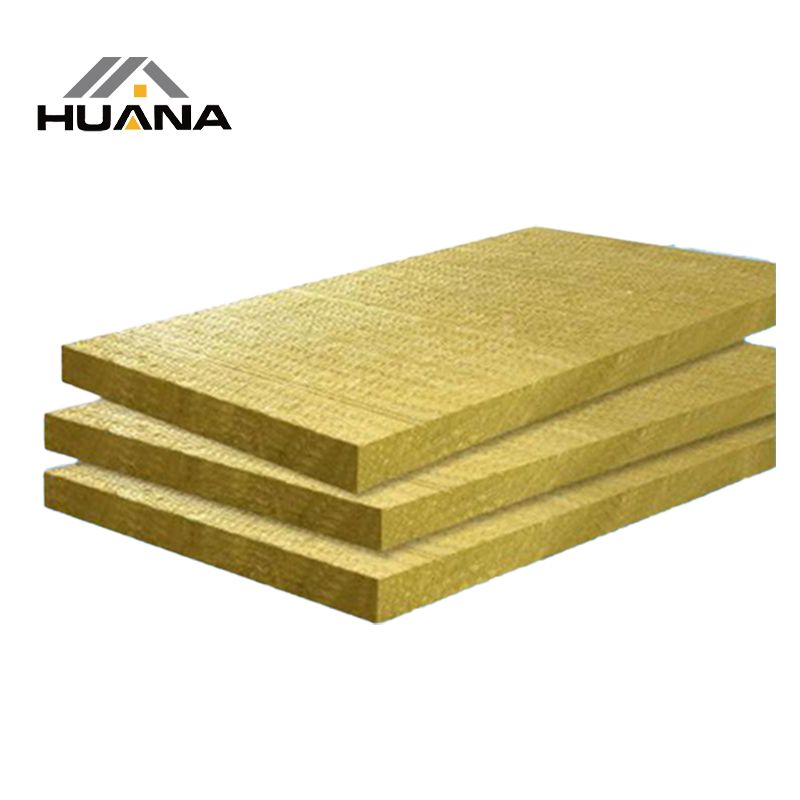
Before installing rock wool boards on a curtain wall system, proper preparation is essential. This step ensures safety, accuracy, and long-term performance.
First, inspect the curtain wall framework to confirm it is properly aligned and structurally sound. Any gaps, corrosion, or misalignment should be corrected before insulation begins.
Next, ensure all necessary tools and materials are available, including:
· Rock wool boards cut to required dimensions
· Mechanical fasteners or adhesive systems
· Vapor barrier membranes (if required by design)
· Measuring tools and cutting knives
· Protective gloves, masks, and eyewear
Huana recommends storing rock wool boards in a dry environment before installation to maintain material integrity.
Accurate measurement is critical in curtain wall insulation. Measure the cavity dimensions carefully and cut the rock wool boards slightly larger than the opening to ensure a snug fit. This prevents air gaps that could reduce thermal efficiency.
Use a sharp insulation knife for clean cuts and avoid compressing the material excessively during handling.
Place the rock wool boards into the curtain wall cavity between structural frames. Ensure the boards are evenly aligned and fully cover the designated insulation area.
For vertical installations, start from the bottom and work upward to support the weight of the upper sections. This helps maintain stability during installation.
Depending on the system design, rock wool boards can be secured using mechanical fasteners, retaining pins, or specialized adhesives. Ensure the fastening method complies with curtain wall engineering requirements.
Proper fixation prevents displacement caused by wind pressure or building movement. Huana’s high-density boards are designed to maintain shape even under mechanical stress.
In many curtain wall systems, vapor barriers or waterproof membranes are installed over the insulation layer. These barriers help prevent moisture infiltration, which could otherwise reduce insulation performance over time.
Carefully seal all joints and overlaps to ensure a continuous protective layer.
After installation, inspect the entire insulated area. Look for gaps, misalignment, or excessive compression of the rock wool boards. Any gaps should be filled with additional material to maintain thermal continuity.
Avoid over-compressing the insulation, as this can reduce its thermal resistance and acoustic performance.
Proper installation is only part of achieving optimal curtain wall performance. Quality control ensures that the system functions effectively over its service life.
When working with materials from a trusted Rockwool Insulation Manufacturer like Huana, contractors benefit from consistent density, fire-rated performance, and stable thermal conductivity.
Key quality checks include:
· Ensuring full cavity coverage without voids
· Verifying correct board thickness and density
· Checking fire barrier continuity across floors
· Confirming vapor seal integrity
These checks are especially important in high-rise commercial buildings where safety and energy efficiency are critical.
Huana rock wool boards are engineered for demanding curtain wall applications. They offer several advantages:
· Excellent fire resistance with non-combustible properties
· Stable thermal insulation performance across temperature ranges
· Strong acoustic absorption for urban buildings
· High dimensional stability under wind load and vibration
· Compatibility with various curtain wall framing systems
These features make Huana a reliable choice for architects, contractors, and developers seeking long-term performance.
Installing rock wool boards in curtain wall systems requires careful planning, precise execution, and quality materials. From accurate cutting and positioning to proper sealing and inspection, each step plays a crucial role in achieving optimal building performance.
By choosing a professional Rockwool Insulation Manufacturer like Huana, construction teams can ensure that their curtain wall systems meet modern standards for safety, energy efficiency, and durability. Proper installation not only enhances building performance but also extends the lifespan of the entire façade system.
Copyright:@2020-2021

Comments Please sign in or sign up to post.
0
0 of 500 characters used