
Polyurethane adhesives are widely used across industries such as construction, composite panel manufacturing, automotive production, furniture assembly, and insulation systems. Known for their excellent bonding strength, flexibility, and durability, polyurethane adhesives are available in two primary forms: one-part and two-part systems.
When selecting the right adhesive, manufacturers often compare the advantages and limitations of each option. Understanding the differences between a two component polyurethane adhesive and a one-part polyurethane adhesive can help businesses optimize production efficiency, product performance, and overall costs.
In this guide, we'll explain how both adhesive types work, their key differences, and which applications they are best suited for.
Polyurethane (PU) adhesives are reactive bonding materials that create strong and durable connections between a variety of substrates, including:
· Aluminum
· Steel
· Plastics
· Wood
· Composite materials
· Insulation boards
Their unique combination of strength and flexibility makes them ideal for applications where materials experience vibration, thermal expansion, or environmental stress.
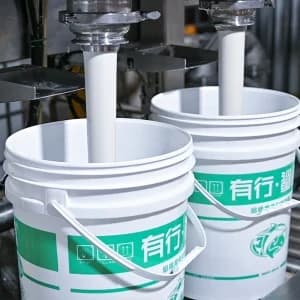
A one-part polyurethane adhesive is supplied ready to use and does not require mixing before application.
One-component PU adhesives typically cure by reacting with moisture from the air or the bonded substrates.
As moisture penetrates the adhesive layer, a chemical reaction occurs, gradually forming a strong and flexible bond.
Since no mixing is required, application is simple and convenient.
Manufacturers do not need specialized mixing or metering equipment.
The adhesive is supplied in a pre-formulated state, eliminating ratio inconsistencies.
Unopened containers often have a relatively long storage life when properly handled.
· Slower curing in low-humidity environments
· Limited control over cure speed
· Less suitable for very thick bond lines
· May require longer production cycles
A two component polyurethane adhesive consists of two separate parts:
1. Resin component
2. Hardener (curing agent)
The components are mixed together immediately before application.
Unlike one-part systems, two-component adhesives cure through a chemical reaction between the resin and hardener rather than relying on ambient moisture.
This allows for more predictable and controlled curing.
The curing process begins immediately after mixing, regardless of environmental humidity.
Two-component systems often provide superior mechanical strength for demanding applications.
They perform well in thicker adhesive layers where moisture curing may be insufficient.
Manufacturers can select formulations designed for specific cure speeds and production requirements.
· Requires accurate mixing
· Additional dispensing equipment may be necessary
· Limited working time after mixing
· More complex application process
Cures through exposure to moisture in the environment.
Cures through a chemical reaction between resin and hardener.
This makes two component polyurethane adhesive systems less dependent on environmental conditions.
For high-volume manufacturing, cure speed is often a critical factor.
Two-component adhesives generally provide:
· Faster production cycles
· More predictable curing
· Improved throughput
One-part systems may require longer curing times before further processing.
Both adhesive types can provide excellent adhesion, but two-component formulations are often preferred when maximum structural strength is required.
Applications involving heavy loads or demanding environmental conditions frequently utilize two-part systems.
One-part adhesives offer greater simplicity and ease of use.
Two-part adhesives require:
· Accurate ratio control
· Proper mixing equipment
· Trained operators
The choice depends on production requirements and available resources.
One-part systems are more influenced by:
· Humidity levels
· Temperature conditions
· Substrate moisture content
Two-component adhesives provide more consistent performance across varying environmental conditions.
Panel manufacturers often use two component polyurethane adhesive systems because they provide strong metal-to-core bonding and reliable curing throughout large laminated surfaces.
Sandwich panels used in cold storage facilities and industrial buildings require durable structural bonds that can withstand thermal stress.
Vehicle components frequently experience vibration, temperature changes, and dynamic loads, making two-component systems a popular choice.
Architectural panels and structural assemblies often benefit from the strength and durability provided by two-part polyurethane technology.
· Simplicity is a priority
· Production volumes are moderate
· Environmental conditions are controlled
· Longer cure times are acceptable
· High structural strength is required
· Fast production cycles are important
· Thick bond lines are present
· Environmental conditions vary significantly
Understanding the demands of your application is essential when selecting the most appropriate adhesive solution.
As industrial bonding requirements continue to evolve, YouXing Shark provides advanced polyurethane adhesive solutions tailored to modern manufacturing needs.
The company's adhesive portfolio offers:
· High-performance one-part systems
· Reliable two component polyurethane adhesive solutions
· Excellent bonding strength
· Superior durability
· Compatibility with automated production lines
By combining technical expertise with strict quality control, YouXing Shark helps manufacturers achieve consistent and reliable bonding performance across a wide range of industries.
Both one-part and two-part polyurethane adhesives offer unique advantages. One-part systems provide convenience and ease of application, while two component polyurethane adhesive technologies deliver faster curing, greater structural strength, and improved process control.
The best choice depends on factors such as production speed, environmental conditions, bond strength requirements, and manufacturing complexity. By carefully evaluating these considerations and working with trusted suppliers like YouXing Shark, manufacturers can select the ideal polyurethane adhesive solution for their specific applications and long-term business goals.
Copyright:@2020-2021

Comments Please sign in or sign up to post.
0
0 of 500 characters used