
Water quality is one of the most important factors affecting the performance, hygiene, and lifespan of Industrial Ice Machines. No matter how advanced the equipment is, poor water quality can reduce ice production efficiency, damage internal components, and negatively affect ice cleanliness and taste.
For industries such as food processing, hospitality, healthcare, and fishing, maintaining proper water standards is essential for safe and efficient operation. Daxtro designs industrial ice systems with high-performance engineering, but proper water treatment and installation planning remain critical for long-term reliability.
This article explains the water quality requirements and pre-treatment needs for industrial ice machine installation.
Water is the primary raw material used in ice production. Any impurities, minerals, or contaminants present in the water supply directly affect both the machine and the final ice product.
Poor water quality can lead to:
· Scale buildup inside the system
· Reduced cooling efficiency
· Blocked water lines
· Increased maintenance frequency
· Poor ice clarity and taste
· Bacterial contamination risks
High-quality water helps Industrial Ice Machines maintain stable performance and reduce long-term operating costs.
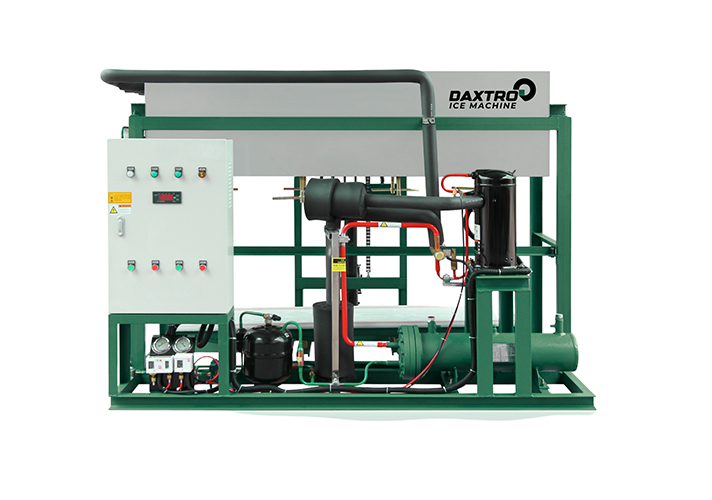
Before installing an industrial ice machine, businesses should evaluate the local water supply.
The incoming water should be free from harmful contaminants and excessive impurities.
High TDS levels may cause mineral buildup and reduce freezing efficiency.
Hard water contains high levels of calcium and magnesium, which contribute to scaling.
Extremely acidic or alkaline water can damage machine components over time.
Excess chlorine may affect ice taste and accelerate corrosion of internal parts.
Daxtro recommends testing water quality before installing Industrial Ice Machines to ensure compatibility with the system.
Different regions may experience different water quality challenges.
Hard water is one of the most common issues in industrial ice production.
· Reduced heat transfer efficiency
· Higher energy consumption
· Blocked evaporators and pipes
· Compressor strain
· Increased maintenance costs
Even thin layers of scale can significantly reduce machine efficiency.
Water supplies may contain sand, rust, or other suspended particles.
· Blocked filters and valves
· Reduced water flow
· Damage to pumps and internal components
Sediment filtration is often necessary before installation.
Untreated water can contain bacteria, algae, or microorganisms.
· Ice hygiene concerns
· Odor problems
· Slime buildup inside the system
Food and healthcare industries especially require strict sanitary control.
Pre-treatment systems improve water quality before it enters the ice machine.
Filtration removes suspended solids and contaminants from the water supply.
Remove sand, rust, and large particles.
Reduce chlorine, odor, and taste-related impurities.
Capture smaller contaminants for cleaner ice production.
Proper filtration protects Industrial Ice Machines from premature wear and contamination.
Water softeners help reduce mineral hardness.
They remove calcium and magnesium ions responsible for scale buildup.
· Improved energy efficiency
· Reduced maintenance frequency
· Longer equipment lifespan
· Better ice quality
Softened water is especially important in areas with naturally hard water supplies.
Some industries require extremely pure water for ice production.
Reverse osmosis systems remove:
· Dissolved minerals
· Heavy metals
· Bacteria
· Chemical contaminants
· Healthcare facilities
· Food processing plants
· Premium hospitality applications
RO systems improve ice clarity, taste, and overall hygiene quality.
In addition to water quality, proper water pressure is also essential.
Low water pressure can reduce production efficiency, while excessive pressure may damage internal components.
· Inconsistent ice production
· Water leakage
· Incomplete freezing cycles
Proper plumbing design helps maintain stable operation of Industrial Ice Machines.
Industrial ice machines require proper drainage systems during installation.
Melting ice, cleaning cycles, and excess water must be safely discharged.
· Water accumulation
· Hygiene problems
· Mold growth
· Equipment damage
Professional installation planning ensures efficient drainage management.
Pre-treatment systems also require regular maintenance.
Dirty filters reduce water flow and filtration efficiency.
Water softeners require periodic salt replenishment and cleaning.
RO membranes must be checked regularly for performance loss.
Proper maintenance helps ensure continuous protection for Industrial Ice Machines.
Investing in water treatment systems provides multiple long-term advantages.
Cleaner water produces clearer, safer, and better-tasting ice.
Clean systems operate more efficiently with less compressor strain.
Reduced scaling and contamination lower repair frequency.
Protected components experience less wear and corrosion.
Daxtro recommends customized water treatment solutions based on local water conditions and industry requirements.
Every installation environment is different. Professional evaluation helps determine the correct filtration and treatment systems for each application.
Daxtro supports customers with:
· Water quality assessment guidance
· Equipment compatibility recommendations
· Pre-treatment system integration
· Long-term maintenance support
Proper installation planning helps maximize machine efficiency and operational reliability.
Water quality plays a critical role in the performance, hygiene, and lifespan of industrial ice production systems. Hard water, sediment, chlorine, and biological contaminants can all negatively affect machine efficiency and ice quality.
Proper pre-treatment systems such as filtration, water softening, and reverse osmosis help protect Industrial Ice Machines from scale buildup, contamination, and premature failure. With advanced engineering and professional installation support, Daxtro delivers reliable industrial ice solutions designed for long-term efficiency and high-quality ice production.
Previous: How to Choose the Right Deburring Equipment for Sheet Metal Fabrication
Next: Choosing a Reliable Scraped-Surface Heat Exchanger Manufacturer for Industrial Processing
Copyright:@2020-2021

Comments Please sign in or sign up to post.
0
0 of 500 characters used