
As global infrastructure investment accelerates and climate resilience becomes a top priority for urban planning, the demand for high-performance emulsions—particularly acrylic emulsions—has seen an exponential surge. Construction and waterproofing industries, both integral to the built environment, are now key drivers behind this shift. This article explores the intersection of construction trends, waterproofing technologies, and the rising demand for emulsions, especially in regions like Europe, Asia-Pacific, and the Middle East.
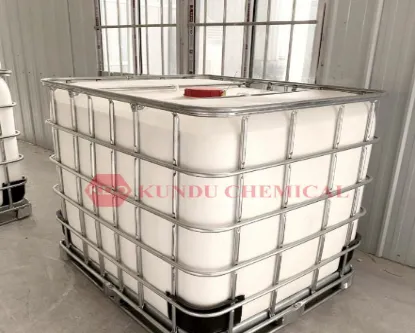
Acrylic and styrene-acrylic emulsions are water-based polymers widely used in paints, coatings, sealants, adhesives, and waterproofing systems. Their versatility, environmental compliance, and performance under varying conditions make them indispensable in today's construction supply chain.
According to a 2024 market report by MarketsandMarkets, the global emulsion polymer market is projected to grow from USD 29.5 billion in 2023 to USD 39.3 billion by 2028, at a CAGR of 5.9%. A significant portion of this growth is attributed to the construction and waterproofing sectors, particularly in emerging economies and regions experiencing climate-related infrastructure upgrades.
Across Europe and the Asia-Pacific, construction projects are booming post-pandemic due to renewed investments in affordable housing, urban renovation, and green buildings. For example:
In Germany, the government pledged over €18 billion to support new housing projects by 2026.
In India, smart city initiatives are projected to add over $65 billion to the construction economy by 2030.
China’s 14th Five-Year Plan includes a significant push for high-performance eco-construction materials.
These trends directly translate to increased demand for exterior paints, interior wall coatings, sealers, and insulation adhesives—all of which rely heavily on high-quality emulsions.
Large-scale infrastructure initiatives such as roadways, tunnels, bridges, and rail systems also require advanced waterproofing and protective coatings. The European Union’s Green Deal has further prioritized energy-efficient public buildings, which necessitates robust sealants and weather-resistant paints formulated with emulsion polymers.
Waterproofing is no longer a reactive need—it's a strategic investment. Property owners and developers are proactively integrating waterproofing membranes and coatings into the earliest phases of construction to avoid future structural damage and moisture-related degradation.
The global waterproofing market is estimated to reach USD 72.5 billion by 2027, up from USD 58.3 billion in 2022, with a CAGR of 4.5% (source: Global Market Insights).
The roofing segment alone accounts for over 30% of the total waterproofing demand.
The adoption of liquid-applied membranes using styrene-acrylic emulsions has risen by 20% year-over-year due to ease of application and durability.
Styrene-acrylic emulsions are a top choice in waterproofing formulations due to:
Excellent UV resistance and water repellency
Compatibility with cementitious materials
Crack-bridging capability and long-term elasticity
Low VOC content, meeting green building certification standards
European contractors increasingly prefer low-VOC, eco-friendly emulsion-based coatings for compliance with REACH and other EU directives. The demand is also driven by:
The renovation wave across France, Italy, and Spain targeting old buildings.
Expansion of green roofs and eco-facade systems using emulsion-bonded waterproofing membranes.
Growth in prefabricated concrete structures, requiring factory-applied coatings.
Due to extreme temperatures and flash flooding, waterproofing is a top priority in Gulf Cooperation Council (GCC) countries. Emulsion-based coatings with heat resistance and moisture control features are essential in markets like Saudi Arabia, UAE, and Qatar, where mega-projects like NEOM are underway.
Cost-effective emulsions that balance performance and affordability are in high demand in fast-developing nations like Vietnam, Indonesia, and Thailand. Here, styrene-acrylic emulsions are a common substitute for more expensive elastomeric coatings.
Large-scale procurement teams—whether in construction firms, real estate developers, or waterproofing contractors—prioritize the following in emulsion selection:
Consistency in batch quality
Customizability for region-specific performance (e.g., freeze-thaw stability, UV tolerance)
Regulatory compliance
Logistics reliability for phased project deliveries
Eco-labeling certifications to meet sustainability goals
With project timelines shortening and material traceability gaining importance, buyers are increasingly working closely with trusted emulsion manufacturers to:
Co-develop tailored formulations
Optimize viscosity and drying time for automated spray systems
Ensure durability through on-site testing and warranty-backed performance
As construction and waterproofing sectors continue to intersect with climate resilience and green architecture, the role of emulsions will only expand. From enhancing paint adhesion to sealing complex substrates, styrene-acrylic and pure acrylic emulsions are becoming foundational components in material design.
For developers, contractors, and distributors aiming to future-proof their supply chains, investing in high-quality, high-performance emulsions isn’t just an option—it’s a necessity.
At Kundu, we specialize in providing high-performance styrene-acrylic emulsions designed for both construction coatings and waterproofing applications. Whether you are sourcing for residential renovation or mega infrastructure, our technical support and tailored solutions help ensure your coatings deliver durability, safety, and sustainability. Contact Kundu today and strengthen your supply chain with confidence.
Previous: How Chinese Factories Supply High-Quality Aluminum Panel Adhesives
Next: Dingnuo Polymer - Your Reliable Partner for PVC Raw Materials & Additives
Copyright:@2020-2021

Comments Please sign in or sign up to post.
0
0 of 500 characters used