
Choosing the right insulation material is essential for industrial facilities, commercial buildings, and energy-efficient construction projects. Among the most widely used thermal insulation products, rock wool and glass wool are two leading options. Both materials offer excellent thermal insulation performance, but their behavior under high temperatures can vary significantly.
For engineers, contractors, and project owners, understanding the differences between these materials is critical when selecting insulation for fire resistance, heat protection, and long-term durability. As a professional Rockwool Insulation Manufacturer, Huana provides high-performance insulation solutions designed for demanding industrial and construction environments.
Rock wool, also known as mineral wool or stone wool, is manufactured from natural volcanic rock such as basalt and slag. The raw materials are melted at extremely high temperatures and spun into fine fibers to form insulation products.
Rock wool insulation is widely used in:
Industrial pipelines
Power plants
Petrochemical facilities
Commercial buildings
Fireproof wall systems
HVAC systems
A reliable Rockwool Insulation Manufacturer like Huana focuses on producing materials with strong thermal stability, fire resistance, and long service life.
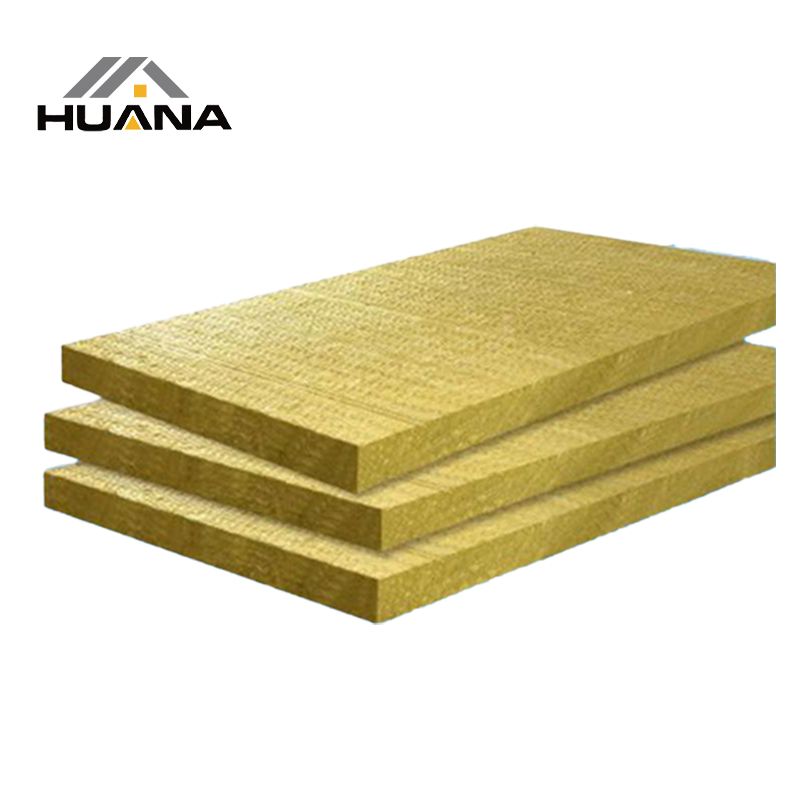
Glass wool insulation is made from recycled glass and sand that are melted and spun into fibrous insulation material. It is lightweight, flexible, and commonly used in residential and commercial building insulation.
Glass wool is often used for:
Wall insulation
Roof insulation
HVAC duct systems
Acoustic insulation
Ceiling applications
Although glass wool offers good thermal performance, its temperature resistance is generally lower than rock wool.
When evaluating insulation for high-temperature applications, several performance factors must be considered.
Temperature resistance is one of the biggest differences between rock wool and glass wool.
Rock wool can typically withstand temperatures above 600°C and, in some industrial applications, even higher depending on product density and design.
Because it is made from volcanic rock, rock wool maintains structural stability under extreme heat.
This makes products from a professional Rockwool Insulation Manufacturer ideal for:
Industrial furnaces
Boilers
High-temperature pipelines
Fire-resistant systems
Glass wool generally performs well at moderate temperatures but has a lower maximum service temperature compared with rock wool.
In many cases, glass wool begins to lose structural integrity at temperatures above 250°C to 400°C.
This limits its suitability for extreme industrial heat applications.
Fire safety is a major concern in modern construction and industrial operations.
Rock wool is naturally non-combustible and offers outstanding fire protection.
Key advantages include:
High melting point
Minimal smoke generation
Excellent flame resistance
Stable performance during fire exposure
These features make rock wool a preferred material for fire-rated building systems.
Huana, as an experienced Rockwool Insulation Manufacturer, produces insulation solutions designed to improve fire safety in demanding applications.
Glass wool is also generally considered non-combustible, but its lower melting temperature can reduce performance under prolonged fire exposure.
In high-temperature fire conditions, glass wool may soften more quickly than rock wool.
Both materials provide effective thermal insulation, but performance can vary depending on application conditions.
Rock wool maintains consistent insulation performance even under fluctuating high temperatures.
Its dense fiber structure helps reduce heat transfer effectively in industrial systems.
Glass wool provides excellent thermal insulation in residential and commercial environments where operating temperatures are lower.
However, prolonged exposure to high heat may reduce its long-term insulation effectiveness.
Durability is another important factor in high-temperature environments.
Rock wool typically offers:
Higher compressive strength
Better dimensional stability
Improved vibration resistance
Longer service life in industrial conditions
These characteristics are especially important for heavy industrial equipment and high-temperature piping systems.
Glass wool is lighter and softer, which makes installation easier in some building applications. However, it may compress more easily under mechanical stress.
In demanding industrial environments, rock wool often provides better long-term structural stability.
Both materials also offer additional functional benefits.
Rock wool insulation can provide good water repellency while maintaining breathability, helping reduce condensation problems.
Glass wool may lose insulation efficiency if excessive moisture enters the material.
Both rock wool and glass wool offer sound absorption properties, but rock wool’s higher density often provides superior acoustic control in industrial and commercial applications.
For applications involving extreme heat, fire resistance, and industrial durability, rock wool generally performs better than glass wool.
Rock wool is ideal for:
Industrial insulation
Petrochemical facilities
High-temperature piping
Fireproof construction systems
Power generation plants
Glass wool is often better suited for:
Residential insulation
Lightweight building systems
Standard HVAC insulation
Cost-sensitive projects
The right material depends on temperature requirements, project budget, and performance priorities.
Working with an experienced Rockwool Insulation Manufacturer ensures consistent product quality and technical support.
Huana provides:
High-temperature insulation solutions
Custom insulation specifications
Stable product quality
Industrial-grade fire resistance
Professional manufacturing standards
Reliable insulation materials help improve energy efficiency, safety, and long-term operational performance.
When comparing rock wool vs glass wool for high-temperature performance, rock wool clearly offers superior heat resistance, fire protection, mechanical strength, and industrial durability. While glass wool remains effective for many commercial and residential applications, rock wool is the preferred choice for demanding high-temperature environments.
As a trusted Rockwool Insulation Manufacturer, Huana delivers high-quality insulation solutions designed to meet the growing needs of industrial, commercial, and energy-efficient construction projects.
Previous: Thermal Conductivity Comparison: Rock Wool Board vs Glass Wool Board for Walls
Next: Things You Should Check Before Buying Glass Fused Glass Fused Steel Tanks
Copyright:@2020-2021

Comments Please sign in or sign up to post.
0
0 of 500 characters used