
In industrial filtration, micron rating is one of the most important factors when selecting the right filter media. It directly determines how effectively a filter can capture particles and protect downstream equipment. For applications requiring durability, high-temperature resistance, and long service life, stainless steel filter cartridges are one of the most reliable solutions available.
Among metal filtration options, the sintered mesh filter element is widely used because it combines precise filtration control with strong mechanical performance. Brands like ZHUAN LV manufacture high-performance stainless steel filter cartridges designed to meet strict industrial filtration requirements across a wide range of micron ratings.
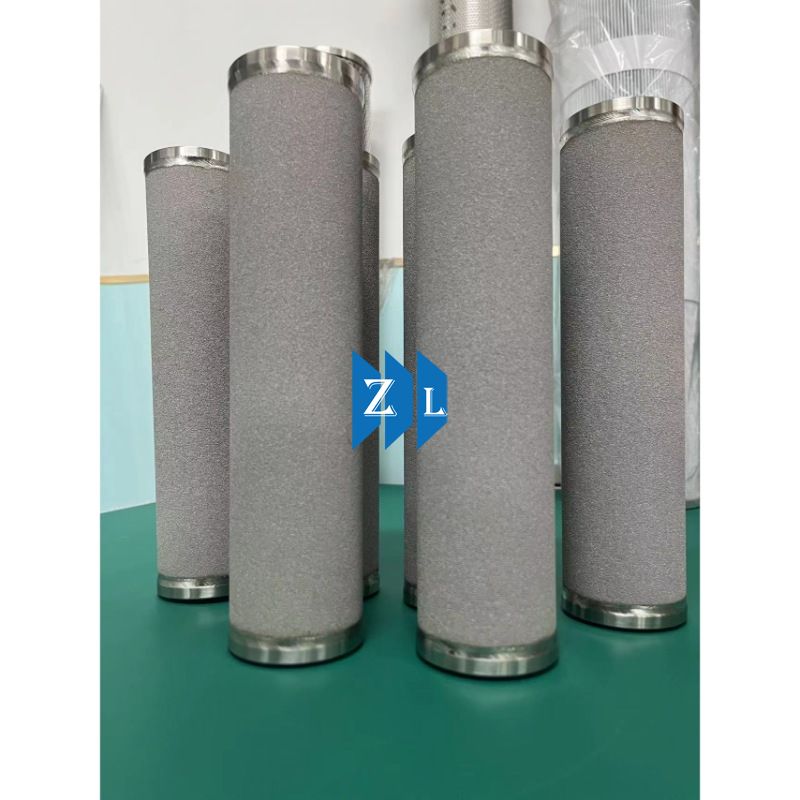
A micron rating refers to the size of particles a filter is designed to capture, measured in micrometers (µm). One micron equals one-millionth of a meter.
In simple terms, the lower the micron rating, the finer the filtration.
For example:
· 100 micron filters capture larger visible particles
· 25 micron filters remove medium-sized contaminants
· 5 micron filters trap much finer particles
· 1 micron filters are used for precision filtration
Micron rating is a critical specification when selecting stainless steel filter cartridges because it directly affects filtration efficiency, pressure drop, and process performance.
A sintered mesh filter element is a porous metal filter made by sintering multiple layers of woven stainless steel mesh into a single rigid structure. This process creates a durable and uniform filtration medium with precise pore control.
Compared with disposable filters, a sintered mesh filter element offers:
· Stable pore distribution
· High mechanical strength
· Excellent pressure resistance
· High-temperature tolerance
· Reusability and long service life
These features make stainless steel filter cartridges ideal for demanding industrial filtration applications.
One of the biggest advantages of stainless steel filter cartridges is the wide range of available micron ratings.
A sintered mesh filter element is commonly available in filtration grades ranging from coarse particle removal to precision filtration.
Common micron ratings for stainless steel filter cartridges include:
· 1 micron
· 2 micron
· 5 micron
· 10 micron
· 20 micron
· 40 micron
· 60 micron
· 75 micron
· 100 micron
· 200 micron
This wide range allows engineers to select the right sintered mesh filter element based on the required particle retention and process conditions.
Choosing the correct micron rating is essential because it affects multiple aspects of system performance.
Lower micron ratings capture smaller particles and provide cleaner output. For example, a 1 micron sintered mesh filter element offers much finer filtration than a 50 micron element.
This is important in precision applications such as pharmaceuticals, fine chemicals, and food processing.
As micron rating decreases, flow resistance usually increases.
A finer sintered mesh filter element may create a higher pressure drop because smaller pores restrict fluid flow more than coarse filtration media.
Balancing filtration precision with flow efficiency is important when selecting stainless steel filter cartridges.
Higher micron ratings generally allow greater dirt-holding capacity because larger pores can retain more contaminants before clogging.
Lower micron filters offer finer filtration but may require more frequent cleaning.
When evaluating stainless steel filter cartridges, it is important to understand the difference between nominal and absolute micron ratings.
A nominal micron rating means the filter captures a percentage of particles near the rated size, often around 60% to 90%.
This is less precise and usually used for general filtration.
An absolute micron rating means the filter captures nearly all particles at the rated size, typically 98% or higher.
A sintered mesh filter element is often preferred in critical applications because it offers more consistent and predictable filtration performance.
Different micron ratings are suitable for different industrial processes.
Best for:
· Fine chemical filtration
· Pharmaceutical processing
· Precision gas filtration
· Catalyst recovery
These applications require high filtration precision.
Best for:
· Hydraulic oil filtration
· Lubrication systems
· Fine liquid filtration
· Process fluid protection
This range balances filtration efficiency and flow rate.
Best for:
· Pre-filtration
· Water treatment
· Coarse particle removal
· Equipment protection
These ratings are commonly used in upstream filtration stages.
Best for:
· Bulk solids separation
· Coarse screening
· Heavy particle removal
These are used where fine filtration is not required.
The layered construction of a sintered mesh filter element gives it superior micron stability compared with many disposable filter materials.
Because the mesh layers are sintered into a rigid structure, pore size remains stable during operation.
Unlike softer filter media, stainless steel filter cartridges resist deformation under pressure, helping maintain filtration accuracy.
Even after repeated cleaning, a sintered mesh filter element retains more consistent filtration performance than many disposable alternatives.
To select the best stainless steel filter cartridges, consider:
· Particle size to be removed
· Required filtration efficiency
· Flow rate requirements
· Pressure drop limits
· Cleaning frequency
· Process sensitivity
The right micron rating ensures optimal performance and longer filter life.
Micron ratings for stainless steel sintered filter cartridges play a critical role in filtration performance, process efficiency, and equipment protection. From coarse filtration to precision particle control, the sintered mesh filter element offers reliable and consistent filtration across a wide micron range.
For industrial users seeking durable and precise stainless steel filter cartridges, ZHUAN LV provides high-performance filtration solutions engineered for accuracy, strength, and long-term reliability.
Previous: What Are Mechanical Seals Used in Pumps?
Next: Drain Valves Selection Guide: Types, Features, Applications
Copyright:@2020-2021

Comments Please sign in or sign up to post.
0
0 of 500 characters used